Google launches Android emergency live video to stream 911 calls in real time
Google’s Android Emergency Live Video lets users stream live footage to 911 dispatchers, giving first responders vital real-time context to save lives faster.
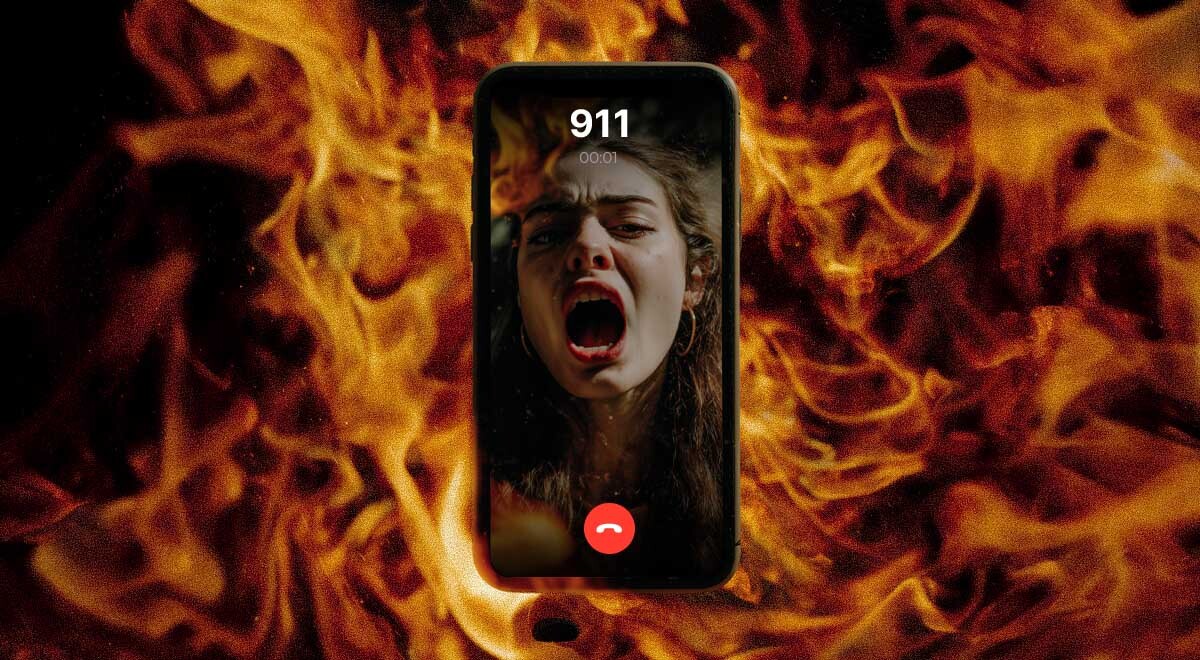
Image by Cybernews

 Follow us
Google’s Android Emergency Live Video lets users stream live footage to 911 dispatchers, giving first responders vital real-time context to save lives faster.
A relative of mine works in emergency communication, and he often tells me the situation becomes more and more perilous due to miscommunication concerning verbal description under stress.
Panic and injury can make explaining details impossible, as distress hits maximum in extreme adrenalin-inducing conditions.
Google’s announcement that as of December 10th, Android 8 users can live stream an emergency “whether it’s a car accident, a medical crisis or a rapidly moving wildfire” is extremely welcome news for both the services, and those caught in an unfortunate accident.
Dispatchers can see injuries, hazards, and obstacles – some of which may be hard to explain, as well as provide precise guidance, like CPR or evacuation.





They could also reduce response times, especially in busy cities or difficult to access areas.
Stream to get help
A few years ago, I was running by a canal, in a rural area of the UK, which is infamous for protracted ambulance arrivals.
Feeling weary after running over 12km, I soon spiked with adrenalin, when I saw an older man laying on his back, with blood leaking from his head.
I promptly called the emergency services, but felt unable to articulate much, as the pressure of the situation felt like it was weighing over and crushing me.
It turned out that the gentleman had consumed a lot of alcohol and fallen on the cobbled path, cracking his head in the process. And because he was on heavily prescribed medication, his blood was less viscous and flowed out easier.
Though he was conscious, he certainly wasn’t able to articulate much. And because I was in the dark about his situation, all I could do was comply with the call handlers' laborious flow-chart.
Luckily, a few minutes later some cyclists passed through, and they were able to access a first aid-kit from the nearby village shop.
But now I wonder if a video live stream might have helped pinpoint some of the context easier, and calmed everyone a little, acting as an orientation to help save the man's life more effectively.
Aid arrives faster
The video call function is heavily encrypted, so users can feel at ease security-wise, plus it can be switched off at any time, maximizing user control.
Also no technical setup is required, and it’s been rolled out in the US, Germany, and Mexico first. And, the integration of emergency service location, plus satellite SOS can help the emergency services locate the caller.
The flipside is that the reporting party may feel vulnerable if they're the victim, or shocked and fazed as a bystander, like I was. If the case was, say, domestic violence, what would the personal and legal implications be if an injured party switched to video?
User consent is central to the equation, and while one can hypothesize all day, I wonder if the emergency services agent would be able to take full authority of activating the call, should it be declined under the harshest of situations
The depth and breadth of accidents too needs to be factored in. Car accidents, broken trees, choking, severe bleeding, rescue operations, broken infrastructure, neighborhood hazards – incidents such as these would surely benefit from a direct video call to emergency services.
But what constitutes an emergency? The function may be also abused by users seeking advice in less serious and even petty situations that waste valuable time.
However, if video tech has the potential to help save lives, the benefits certainly outweigh the drawbacks.






Unlock more exclusive Cybernews content on YouTube.