From politicians to financial gurus: how scammers build trust with fake endorsements


In 2023, a video hit my feed: financial journalist Martin Lewis, seemingly interviewing Elon Musk, personally recommended a crypto platform called Quantum AI. It looked like a real TV segment, down to Lewis‘s voice and his show‘s on-screen graphics. I clicked through to the signup page before it dawned on me: Musk has never launched a platform called Quantum AI, and Lewis has spent years warning people about scams exactly like this one.
Turns out, it wasn‘t a leaked interview. It was a deepfake, with his face and voice cloned for a fake endorsement. I immediately closed the tab. That said, a Brighton tradesman who saw the same ad wasn‘t so lucky. He took out roughly $101K in loans chasing the platform‘s promised returns.
This just shows how cheap trust has gotten. A synthetic identity kit, complete with an AI-generated face, a cloned voice, and fake credentials, sells for as little as $5 on dark web markets nowadays. Faking a celebrity endorsement no longer takes a production studio or intricate skills, just a laptop and a few minutes of public footage.
So why do we fall for it, and more importantly, how do you actually protect yourself? Below, I cover how these deepfakes get made, why they work on people, the red flags to watch for, and exactly what to do if you‘ve already fallen for one.

Why fake endorsements work: the psychology of borrowed trust
Fake endorsements work because they exploit deference to authority, a psychological pattern researchers have been documenting and studying for a century. When a recognizable, trusted face appears to personally vouch for something, your brain assumes it has already been vetted, and critical thinking drops.
Here‘s how it plays out in practice:
- Borrowed credibility. Financial gurus, politicians, and celebrities are prime targets because their credibility isn‘t earned by the product being sold, it‘s borrowed instantly the moment their face or voice gets attached to it.
- Skipped skepticism. A crypto platform endorsed by a trusted market commentator, a supplement recommended by a supermodel, or a cause backed by a politician all skip the skepticism a stranger‘s ad would normally trigger.
- A barrier removed, not a new tactic. A peer-reviewed study applying these principles directly to deepfakes found scammers deliberately use prominent figures to borrow authority. AI just removed the last obstacle: needing skill to forge someone’s identity.
Inside the deepfake toolkit: how these scams are actually made
A deepfake isn‘t a cleverly edited video. Editing rearranges real footage, while a deepfake generates entirely new footage using AI models trained on real images, video, and audio of a person. Scammers lean on three building blocks, and none of them require extensive resources anymore.
| Technique | How it works | What it‘s used for |
| AI-generated faces | Models trained on thousands of real faces produce a photorealistic person, fictional or a close likeness, that can be animated to speak and react on camera | Building a spokesperson for a fake product |
| Voice cloning | Tools replicate someone‘s voice and speech patterns from as little as a few seconds of public audio, like a news clip | Making a fake endorsement sound like the real person |
| Face-swap video | Cloned face and voice get layered onto existing footage, with the mouth synced to new, fabricated dialogue | Making it look like a real person said something they never said |
It‘s important to note that scammers have now taken this a step further with fully synthetic people, faces that don‘t belong to any real human at all. These fabricated faces increasingly show up as fake satisfied customers in testimonial ads.
Since the face isn‘t tied to a real identity, it can‘t be reverse-searched back to a previous scam the way a stolen real photo can, which makes it harder to catch at a glance.
The fake endorsement playbook: where these scams show up most
Fake endorsements have spread across nearly every industry where trust can be monetized. Here‘s where you‘re most likely to run into one, and what to actually do about it:
- Crypto and investment scams. Deepfake videos of financial gurus or business leaders guaranteeing outsized returns are the most common and costly version of this scam. They‘re usually built to appear like leaked footage or an exclusive interview. If an investment is personally endorsed by a celebrity in a video ad, treat it as fake until proven otherwise.
- Pharma and wellness trust manipulation. Fake endorsements showing doctors or celebrities promoting unapproved supplements have exploded in recent years. For example, a weight-loss supplement called LipoMax was pushed across Facebook and Instagram using deepfakes of celebrities and medical professionals.
- Political misinformation. Fabricated clips of politicians endorsing a candidate, policy, or product they never touched get used for both financial scams and targeted disinformation, and can blend into legitimate coverage long enough to do damage before it‘s debunked.
- Fake product reviews. AI-generated people with entirely synthetic faces increasingly pose as everyday customers in testimonial-style ads. Since these faces aren‘t tied to a real person, they get reused across dozens of unrelated scam listings. I suggest reverse-searching a customer photo before trusting a testimonial. If it turns up attached to five other unrelated products, it‘s most likely fake.
- Romance and AI clone scams. Cloned voices or faces of a victim‘s real acquaintances, sometimes even family members, get used to impersonate a trusted contact and request emergency money. That makes these specific fakes harder to question compared to regular celebrity scams. If a family member calls asking for emergency money, hang up and call them back on a number you already have saved, never the number they contacted you from.
- Social media ad fraud. Paid ads featuring deepfake celebrities directing users to fraudulent giveaway or investment sites remain one of the most common delivery methods. Don‘t click ad links directly, go to the company‘s official site yourself and search for the offer there instead.
How to detect AI-generated photos and videos of people
Today‘s AI models are good enough that some fakes pass a casual glance without issue, just look at the recent Zendaya and Tom Holland wedding photos debacle. That said, most deepfakes still leave small, detectable cracks if you know where to look.
Visual red flags in AI-generated faces
Start with the eyes. Real people blink 15 to 20 times per minute, but AI-generated video often gets this wrong, either blinking too rarely, too often, or with an oddly mechanical rhythm. Check the ears and teeth next, as these are notoriously hard for AI to render, so look for blurring or unnatural smoothness.
Scan the background for any warped lines or objects that shift between frames, since deepfake generation prioritizes the face and treats everything else as an afterthought. Finally, check the shadows: if they don‘t match the light source in the rest of the scene, or the skin looks waxy and airbrushed, you‘re likely looking at synthetic media.
Audio and lip-sync inconsistencies
Listen for a flat, slightly robotic vocal tone, along with sentence endings that sound abruptly clipped instead of trailing off naturally. Watch the mouth closely during B, M, and P sounds, which require the lips to fully close.
If the lip movement doesn‘t match what you‘re hearing there, you‘re likely watching a deepfake. Unnatural pacing or missing breathing sounds are also worth treating as red flags rather than a bad connection.
Context and source verification
Check whether the endorsement actually appears on the person‘s verified official channels, not just a random ad or a reposted clip with no clear origin. Cross-reference the claim with the main source – a genuinely viral celebrity endorsement would almost certainly be covered somewhere trustworthy within days.
Be suspicious of anything paired with urgency-driven language like “invest now” or “limited time only.” Legitimate endorsements rarely come bundled with pressure tactics.
Reverse image search and AI detection tools
Run a suspicious photo through a reverse image search. Sometimes the exact same fake customer photo turns up attached to a dozen unrelated scam listings. Keep in mind that dedicated AI-detection tools like Bitdefender Scam Protection Pro, which is a part of the Bitdefender Ultimate Security suite, can also flag signs of synthetic generation that aren‘t obvious to the naked eye.
Evidently, neither method is foolproof alone, but combining a manual check with a detection tool narrows your odds of falling for it significantly.
What to do if you already trusted a fake endorsement
If you‘ve already sent money or bought something based on a fake endorsement, speed matters more than anything else. Here‘s a comprehensive breakdown of what you can do:
- Contact your bank or payment platform immediately and request a chargeback or initiate a fraud dispute. This is genuinely time-sensitive: with wire transfers, banks and the FBI can sometimes intervene within the first 24 to 72 hours, but have far less power after that window closes.
- Report the ad, video, or account that the fake endorsement is associated with so it can be pulled down before it reaches more people.
- File a report with the FTC at ReportFraud.ftc.gov, and if the scam happened online, with the FBI‘s Internet Crime Complaint Center at IC3.gov. These reports help investigators track patterns across victims even when individual recovery isn‘t possible.
- Warn others by reporting the account and, where appropriate, sharing what happened publicly. Fake endorsement scams typically hit many victims through the exact same fabricated clip.
- Get a trusted scam prevention tool like Bitdefender Scam Protection Pro, which can help you avoid similar incidents in the future, check whether the link or account you interacted with is part of a known scam campaign, and keep monitoring for any further misuse of your data after the fact.
How Bitdefender helps you outsmart AI-powered scams
I wanted to test how one of the best identity protection tools in 2026, Bitdefender, performs against possible scam threats.
I opted for trying out the Bitdefender Ultimate Security plan, which provides an all-around individual security package for $69.99/year, covering 1 account and 5 devices with AI-powered Scam Protection Pro, email protection, an ad blocker, and an anti-tracker.
This plan also provides unlimited VPN traffic, a password manager, Digital Identity Protection, and more – all features we‘ve already covered in our explicit Bitdefender review. You’re covered by the Data Breach Detection tool, as well.
Bitdefender Scam Protection Pro: premier scam and phishing prevention
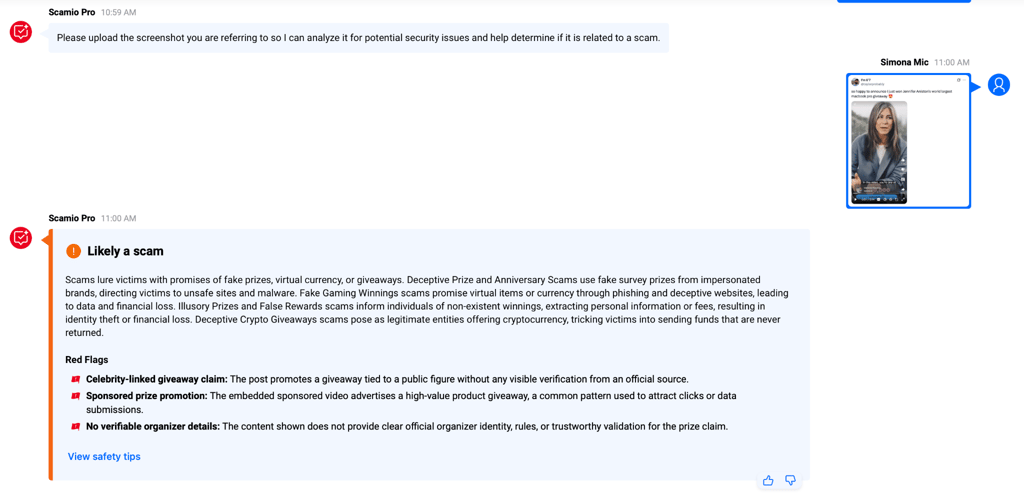
I started with Scamio Pro, Bitdefender’s AI chatbot built specifically to check suspicious content on request. I fed it a screenshot of a fake celebrity giveaway post from X, promising a free MacBook to anyone who clicked through.
Scamio Pro flagged it as likely a scam within seconds, and didn‘t just stop at a verdict. It broke down exactly why: no verifiable organizer behind the giveaway, a sponsored prize promotion, a classic pattern for harvesting clicks and data, and a celebrity tie-in with zero verification from an official source.
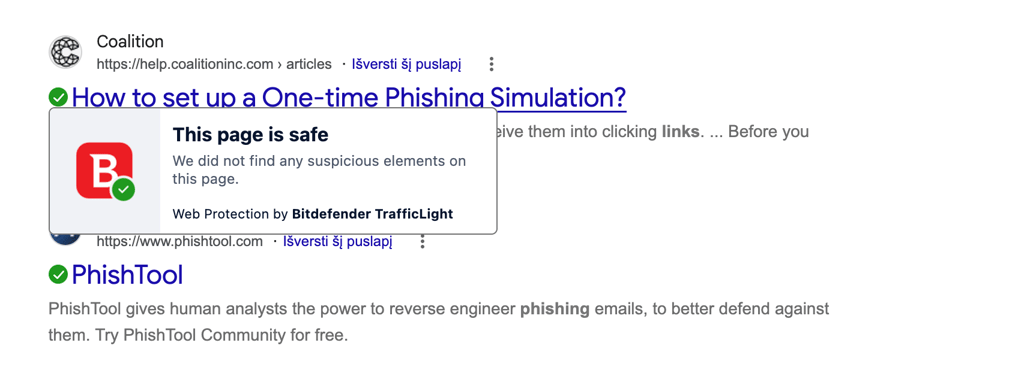
Next, I tested Web Scam Protection, which runs quietly in the background through the Bitdefender TrafficLight extension while you browse. It marks links directly in search results, so safe results were listed before I even clicked anything.
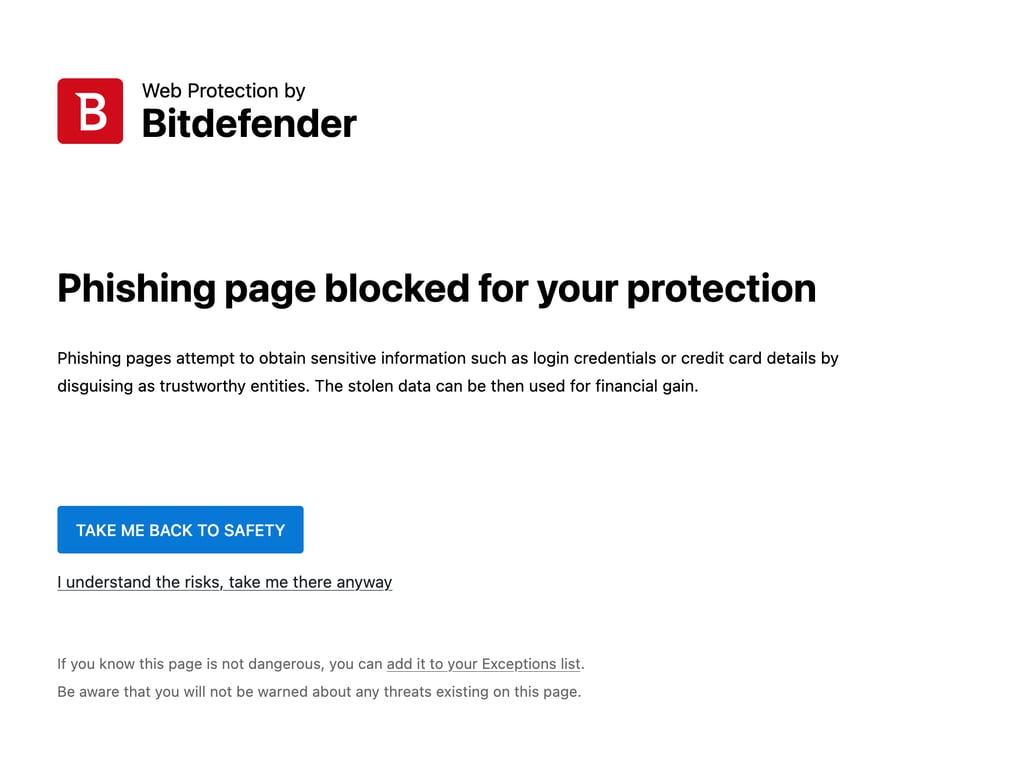
To see what happens when a link isn‘t safe, I tried visiting a known phishing page designed to harvest login credentials. Bitdefender blocked it outright with a full-page warning before the site could load. I could technically override it and proceed anyway, but the extra click is exactly the kind of friction that stops someone from handing over their password on autopilot.
I didn‘t get to see Scam Radar catch a live scam wave firsthand since it depends on what‘s actively circulating in your area. That said, the concept is straightforward and useful: Bitdefender Scam Radar monitors local scam activity and proactively alerts you when something is spreading nearby. Whether that‘s a coordinated text message campaign or a wave of fake Facebook ads.
Bitdefender also runs Remote Access Scam Protection. It specifically watches for remote access apps running while you‘re logging into online banking, a common setup in tech support and refund scams. It lets you stop those apps from launching automatically. Meanwhile, Mobile Protection extends scanning to SMS, app notifications, and chat apps like WhatsApp and Telegram, plus calendar invite scanning on iOS.
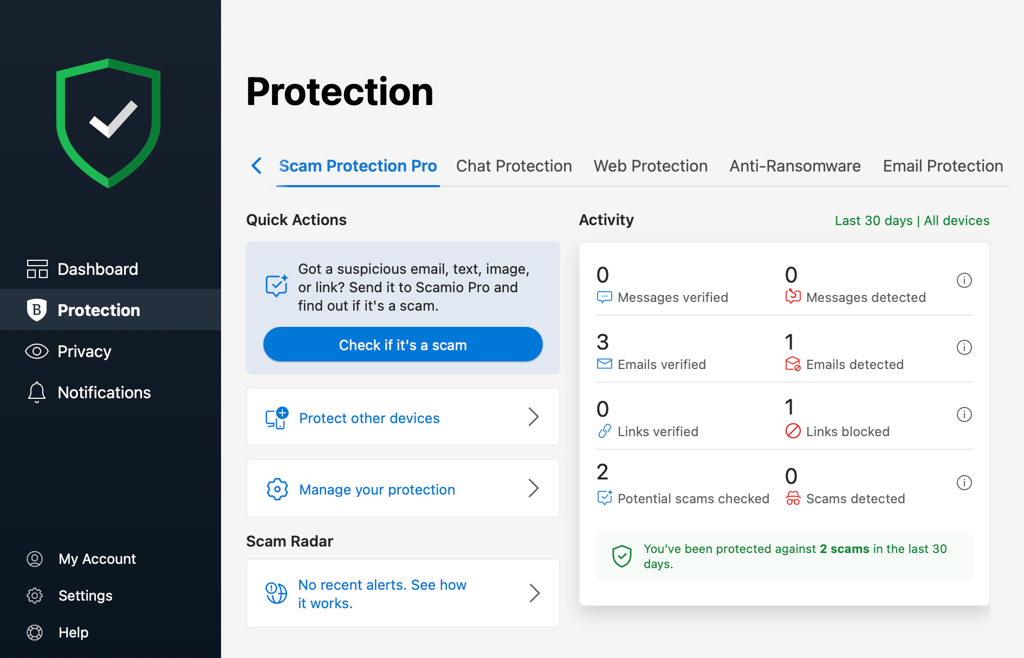
It‘s worth mentioning that there‘s a dashboard that sums up suspicious activity clearly.You can see how many emails were verified and how many were flagged, how many links Bitdefender blocked, and potential scams checked through Scamio, all without me having to dig through logs to find it.
What happens if you already fell for a phishing scam
What I like most about Bitdefender is that it doesn‘t stop at prevention. If you do fall for a phishing scam, its Digital Identity Protection, which is also a part of the Bitdefender Ultimate Security suite, proactively helps you catch the fallout before it spirals, rather than leaving you to figure out the next steps alone.
Digital Footprint monitoring scans your inbox to surface companies and services holding your personal data that you may have forgotten you signed up for, giving you a starting point for cleaning up your exposure.
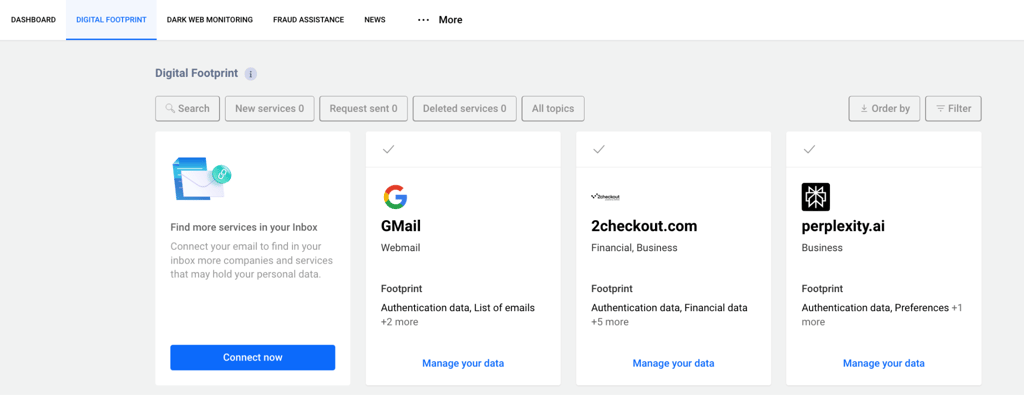
Meanwhile, the dark web monitoring tool checks whether any of your monitored accounts have shown up in a data breach. With it, you can track up to 10 email addresses at once. Plus, it runs 24/7, notifying you immediately about any changes.
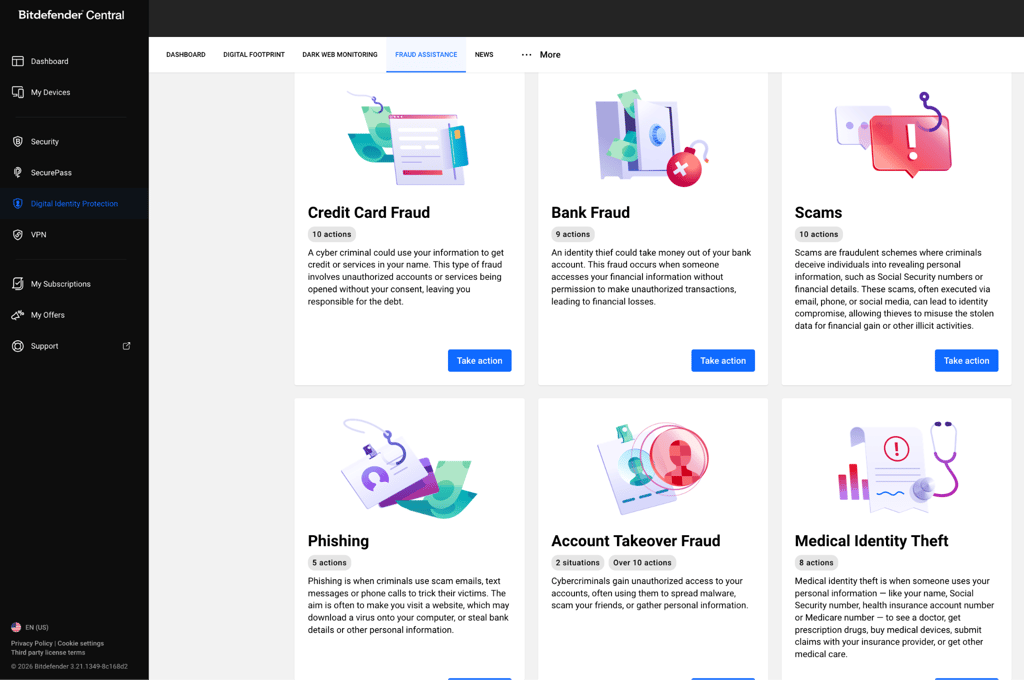
Where Bitdefender really stands out, in my opinion, is Fraud Assistance. Instead of generic tips, it breaks recovery down by the specific type of fraud you‘re dealing with. It then provides a step-by-step action list for phishing, scams, credit card fraud, bank fraud, account takeover fraud, medical identity theft, tax identity theft, child identity theft, or unemployment benefit fraud.
Conclusion
AI has made it trivially easy to fabricate trust. No public figure, politician, financial guru, or celebrity is immune from being impersonated to sell a scam, and the fakes are only getting harder to catch by eye. Skepticism toward endorsements that seem to be too good to be true and basic verification habits aren‘t optional caution anymore, they‘re essential digital literacy in 2026.
The old rule of “seeing is believing” no longer applies. The new rule is: verify before you trust, and that‘s where trusted scam protection solutions like the ones from Bitdefender earn their keep. Bitdefender’s technology watches, flags, and blocks the scams your own eyes can no longer catch, and helps you recover if one still gets through.
FAQ
How can I tell if a celebrity endorsement video is a deepfake?
Look for visual clues, like irregular blinking, blurred ears or teeth, and inconsistent lighting, along with audio mismatches like flat vocal tone or lips that don‘t sync with consonant sounds. Just as important, check whether the endorsement actually appears on the public figure‘s verified official channels before trusting it.
Why are politicians and financial gurus targeted so often for fake endorsements?
Politicians and financial gurus are targeted for fake endorsements because the pre-existing public trust transfers instantly to whatever they appear to endorse. Scammers are essentially borrowing credibility they didn‘t earn, using a face and voice the audience already trusts.
Are AI-generated photos of people illegal to create?
No, creating synthetic media isn‘t inherently illegal, but using it to defraud, impersonate, or manipulate consumers violates FTC and other consumer protection laws. The legal risk comes from how the fake is used, not the underlying technology itself.
What should I do if I already sent money based on a fake endorsement?
Contact your bank immediately to request a chargeback or fraud dispute if you‘ve sent money based on a fake endorsement, since recovery odds drop sharply after the first 24 to 72 hours. That‘s especially important with wire transfers. Afterward, report the scam to the FTC at ReportFraud.ftc.gov and the FBI‘s IC3 at IC3.gov, and monitor your accounts for further fraud.
Is there software that can detect deepfakes automatically?
Yes, emerging AI-detection tools can flag synthetic media and phishing content tied to fake endorsement campaigns. For example, Bitdefender Scam Protection Pro, which is included in the Bitdefender Ultimate Security plan, analyzes suspicious links, ads, and messages in real time and explains why something was flagged as a likely scam.