Welcome to the Palette: the 5-star Las Vegas hotel that doesn't exist
Nightmare hotel in the AI age.
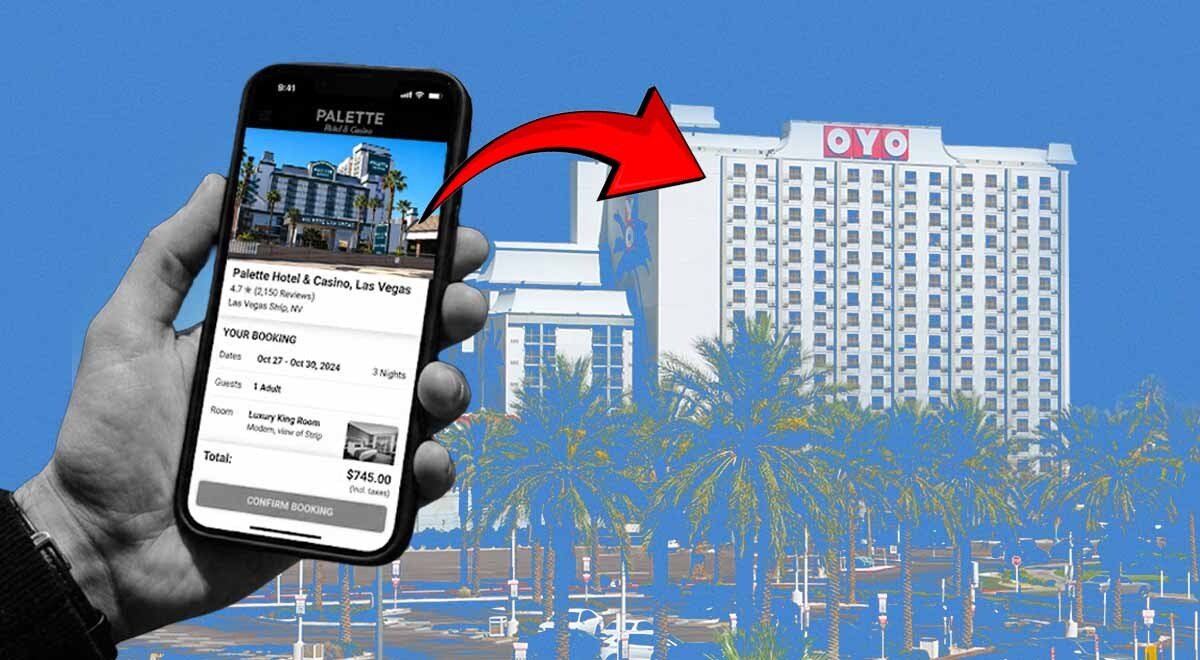
A scam hotel booking on a cell phone. Image by Cybernews.

 Follow us
- Las Vegas influencer Ariana Patiño says she booked Palette Las Vegas, a luxury hotel listing that did not exist.
- The fake listing appeared on major travel sites, using a real address tied to OYO Hotel & Casino Las Vegas.
- AI-generated photos and branding made the hotel look credible, exposing weaknesses in booking platforms’ verification systems.
- Patiño said her booking was refunded, while travel platforms investigated and Palette became unavailable or marked sold out.
Key Takeaways by nexos.ai, reviewed by Cybernews staff.
Las Vegas influencer Ariana Patiño thought she had booked a stay at a luxury hotel called Palette Las Vegas, but arrived to discover that she had been duped.
“It was listed on every reputable travel site, and they had these fantastic pictures. It looked so nice. Only all the pictures are AI-generated, and this hotel does not exist,” she said on TikTok.
Listings appeared across major booking platforms including Booking.com, Expedia, Travelocity, Orbitz and Trip.com – offering a legitimate address, just that it was for a different chain entirely.
Instead there was OYO Hotel & Casino Las Vegas (formerly the building of Hooters), a grimy place, with filthy walls, dodgy elevators, and broken AC, according to reviews.






A bit like a classic “bait-and-switch” dishonest sales trick, the main mystery is how so many booking systems fell foul to such a scam, especially when online verification is usually such a vigorous part of their ecosystems.
@vegasstarfish Update on the OYO Las Vegas and the fake AI generated hotel they created “Palette” to trick guests into booking, only to refuse them a refund and force them to stay somewhere that’s dirty, smells bad and unsafe. OYO ranked among the worst in Vegas with broken elevators, air conditioners and dirty rooms with stained walls & bedding. Thanks to your help all of the reputable travel sites have removed the listing and for now at least, this predatory scam has been paused. #vegas #lasvegas #vegasstarfish #travel #hotel ♬ Suspense, horror, piano and music box - takaya
AI makeover
It could be that AI did such a convincing job of generating a luxury Vegas hotel that the photos didn’t look suspicious at all, bypassing the system's vetting.
Travelers weren’t being asked to believe that a hotel exists somewhere in the desert – they were shown a real address, a legitimate property and images, totally plausible for downtown Vegas, with palm trees, a swimming pool, and a plush lobby, among other things.

Though one dark net narrative channel (on X) conflated it with hacking, it was essentially social engineering with a checkout button, an issue of cybersecurity, where descriptions, logos, and alternative branding can be generated cheaply.
And as the social media commentator pointed out, it all happened during DEF CON, a hacking conference happening in Vegas around the same time as the incident, adding a slice of irony to boot.
I just saw this news. Apparently during DEF CON, someone in Vegas made a fake hotel called Pallete with a website and all. And listed it in booking dot com, expedia, travelocity etc. The hotel didn't exist! People reserved rooms and paid for it!
undefined Jack Rhysider 🏴☠️ (@JackRhysider) August 18, 2026
Strangely if you go to the… pic.twitter.com/6q3Ha5H4zf
What happened next?
Patiño concluded in her TikTok video that, as well as being mentioned in The New York Post and major travel sites, opening investigations, Palette could, consequently, no longer be booked within 12 hours.
Thankfully, her own reservation was automatically cancelled and refunded.
Expedia apparently still showed the Palette page, but it now appears “sold out” rather than bookable.
OYO employees allegedly told the creator there was “pure chaos internally,” as some travelers were forced into staying there. Patiño hasn’t directly accused OYO of scamming her, though it is heavily implied.
AI can make fake listings look legitimate, but the real vulnerability is the trust layer provided by major platforms.