US Senators demand Tinder parent Match Group reveal how it protects users from dating scams
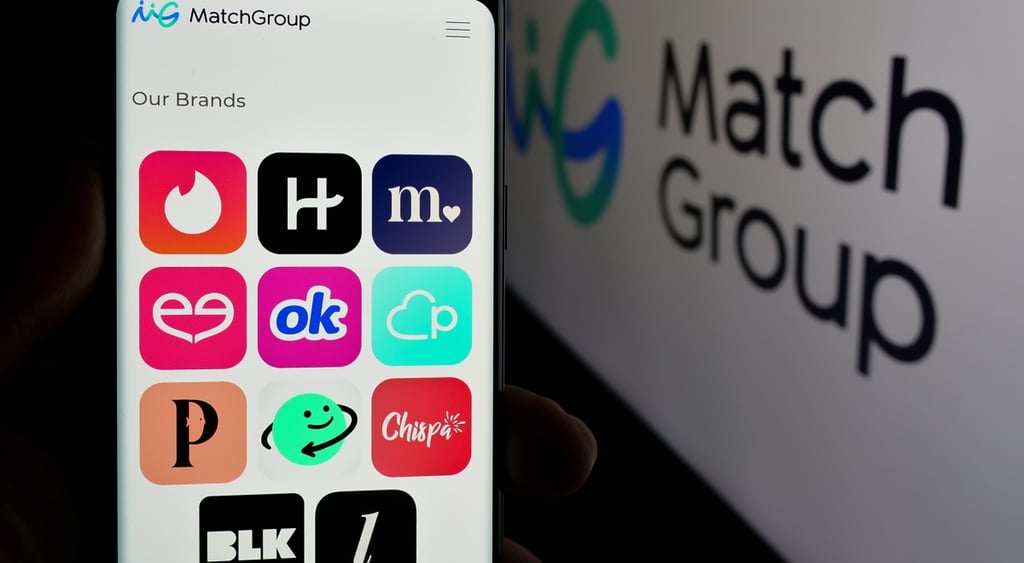
Match Group, the parent company of a portfolio of popular online dating apps, including Tinder and Hinge, is being called on by US lawmakers to prove that the company has adequate user protections against romance scams and dating fraud.

Image by Ivan Baranov | Shutterstock

 Follow us
Match Group, the parent company of a portfolio of popular online dating apps, including Tinder and Hinge, is being called on by US lawmakers to prove that the company has adequate user protections against romance scams and dating fraud.
- US Senators demand that dating app conglomerate Match Group explain how it protects users from romance scams, citing losses of $1.3B annually.
- Lawmakers requested a plethora of information, including detailed records on scam detection, account removals, and algorithmic practices by October 15th.
- Match is accused of prioritizing profit over safety, with past FTC findings showing 30% of its app's new users were scammers.
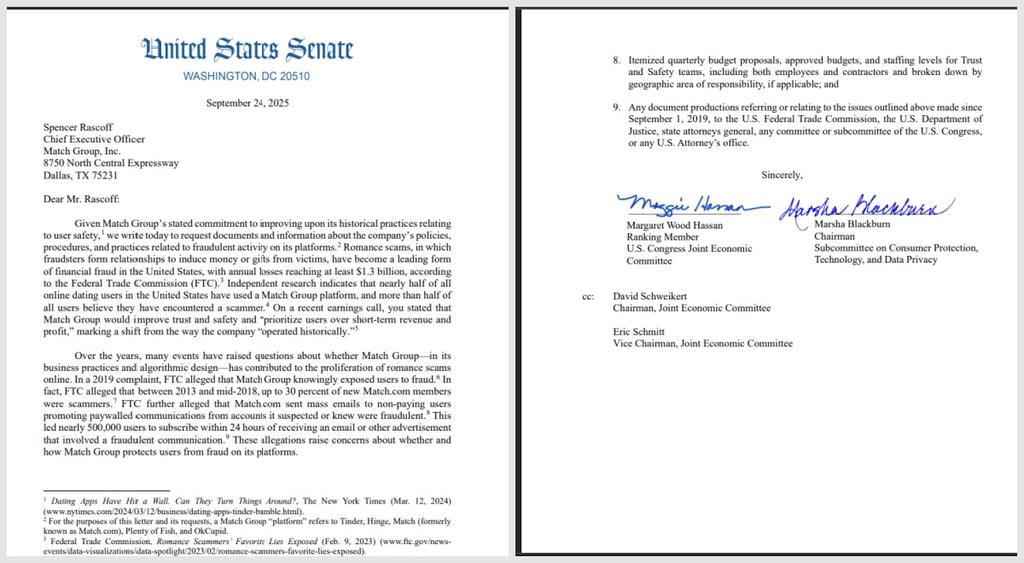
In a five-page letter addressed to Match Group CEO Spencer Rascoff – and penned by Republican US Senator Marsha Blackburn of Tennessee, and Democrat, Sen. Maggie Hassan of New Hampshire – the lawmakers presented the CEO with eight requests for more information about the company’s business practices and algorithmic design.
“Romance scams, in which fraudsters form relationships to induce money or gifts from victims, have become a leading form of financial fraud in the United States, with annual losses reaching at least $1.3 billion,” the Senators write.
Furthermore, the letter states that almost 50% of online daters in the US say they have used at least one Match Group app, and 50% believe they have encountered a scammer.





Senators demand answers
The Senators cite a recent earnings call in which the company promised to improve trust and safety, "prioritize users over short-term revenue and profit," and shift away from how it “operated historically.”
The pointedly blunt demands ranged from wanting a copy of Match’s Trust and Safety team’s fraud review process to documents breaking down internal statistics on the number of scam accounts found per quarter, how many messages were sent and received from those accounts, and if the company removed them within 24 hours.
Other informational requests included all reports, studies, or analyses on the demographics of the user accounts taken down, the user accounts interacting with the scammers, and how much Match regularly invests in safety initiatives, such as social advocacy and law enforcement operations.
What’s more, the Senators are asking to scrutinize all “memoranda, presentations, reports, studies, analyses, audits, and meeting notes referring or relating to the algorithmic recommendation of accounts suspected or known to be fraudulent or scammers.”
Match, which was instructed to cover everything dating back to January 1st, 2022, now has until October 15th to submit its evidence to the lawmakers.
Holding Match accountable
With nearly a dozen dating app brands, including Tinder, Hinge, Match.com, OkCupid, Plenty of Fish, OurTime, and The League, the Dallas-based Match Group reports having recorded over 18.4 million paying subscribers as of January 2024.
Match Group apps have been downloaded over 750 million times and are available in 40 languages, according to the company's website. Its largest market share is in North America and Japan.
Written on its Trust and Safety Center page, Match says it “remains engaged in conversations with elected officials and safety experts in order to work together to identify and take steps to help improve safety, not only on the platforms within our portfolio, but beyond our industry as well.”

In the letter, the Senators call out the online dating giant for various past transgressions, going so far as to directly accuse the company of contributing to the proliferation of web-based romance scams, referencing several consumer watchdog investigations carried out by the US Federal Trade Commission (FTC).
Quoting the FTC, the Senators bring up allegations that from 2013 through 2018, up to 30 percent of new Match.com members were scammers, and single out a previous mass email marketing campaign that was found to have promoted “paywalled communications” from known scam accounts.
This led nearly 500,000 users to subscribe within 24 hours of receiving the advertisement, the letter said, “raising concerns about whether and how Match Group protects users from fraud on its platforms.”

False compatibility
The Senators call out the CEO for a recent appearance where he was quoted as stating that “Tinder’s ‘selfie-verification’ process – whereby users create and verify their own accounts – is ‘pretty simple for a human to pass,’”
Moreover, the letter alleges that, privately, Match employees have suggested that “[rooting out scammers] wasn’t a real priority backed up by resources,” and that the company’s “obsession with metrics ... [is] potentially dangerous.”
The lawmakers say that the above statements appear consistent with the experiences of many online dating users when it comes to removing fraud accounts, which, according to a 2023 Pew Research Center survey, was “very bad.”






Additionally, the US representatives say the company’s “persuasive” algorithmic design creates trust that romance scammers can exploit, citing examples such as the app tagging people (including scammers) as compatible when they actually weren’t, just to spark communication between users.
For example, Tinder advertises its algorithm as one that can “pick better potential matches” and helps users “see people they’ll vibe with."
The lawmakers explain that scammers often quickly escalate love bombing users who are already “prone to romantic idealization and especially vulnerable.”
In turn, it said these scam interactions can generate false engagement metrics that only benefit the company.