The dumbest employee tech hacks that nearly broke companies
From medical data being shared on Dropbox to an industrial control system connected to a food truck’s hotspot, what are the dumbest employee IT decisions?
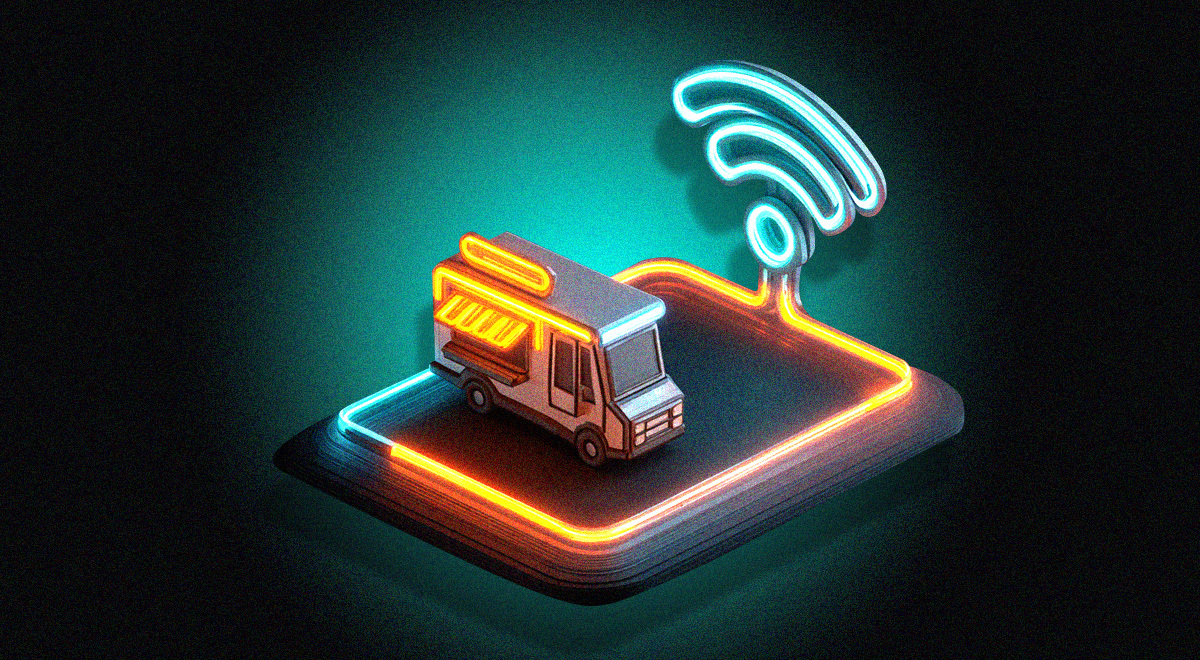
Image by Cybernews

 Follow us
From medical data being shared on Dropbox to an industrial control system connected to a food truck’s hotspot, what are the dumbest employee IT decisions?
For IT teams, the enemy isn’t always a hacker on the outside but an employee on the inside who thinks, "What’s the worst that could happen?"
Downloading an app that isn’t approved, spinning up a cloud service without permission, or skipping security protocols to save time. All of it is human. All of it feels harmless at the time. And all of it could have severe consequences later.
Gartner estimated 41% of employees were using applications invisible to their IT teams, and that number is projected to hit 75% by 2027. Such unregulated digital ecosystems could become Trojan horses as they expand the attack surface, drive up IT costs, and open the doors to data breaches and compliance failures.
On Reddit, employees opened up about the most stupid shadow IT ecosystems they stumbled upon – from medical data being shared on Dropbox to an industrial control system being connected to a food truck’s hotspot.










Using personal accounts to build corporate systems
One of the more serious problems that many Redditors encounter is employees using personal accounts at work. One Redditor shared that their developer decided to build the company's infrastructure on his personal Azure account, charging it all to a corporate credit card.
“Developer leaves, credit card is cancelled, and 30 days later, so is the infrastructure,” complained the commenter.
Another recalled a remote developer who signed up for an Azure trial under his personal account. When he quit, the access was gone.
“All the other engineers were like, ‘We need access to the server Schmapdi was using.’ Took me forever to figure out what server that was, and then I had to give them the bad news,” explained Redditor.
But regaining access is not the only issue. One IT professional remembered a developer who single-handedly built and ran an application for years on his personal Azure tenant. When he quit, the team discovered the server was from Windows 2008 and had never been patched.
“Another developer had to come and rebuild the application to run on 2022.”
Another commenter recalled that their company discovered an entire department had installed remote access clients for work from home without telling the IT team. The secret was only exposed when the intrusion prevention system cut the connection, triggering complaints from 30 people.
One situation involved a programmer installing WhatsApp and downloading pirated software packed with malware. As the Redditor explained, after the IT team stopped the attack and removed WhatsApp, the employee complained that they had deleted the app.
One guy connected industrial control systems to a food truck’s hotspot
Another Redditor worked at a big-name tech firm, where wireless networks were not allowed for safety reasons. The commenter noticed an open WiFi network outside the building and found out that it was the employees who did it.
“Someone had added their own wireless access point so that they could use their laptop from conference rooms and break rooms.”
Not all shadow setups were accidents – some were straight-up acts of rebellion.
“Found an entire separate site-to-site network created by some folks at a subsidiary that didn’t trust ‘corporate’ to handle things. 30k a month under a long-term contract,” one commenter said.
Some stories are completely absurd and don't even sound real. In one industrial facility, a technician borrowed his taco truck’s hotspot to connect equipment, but he forgot to shut it down.
Soon, people who followed an apparently known taco truck started showing up at the plant fence asking for tacos, with GPS leading them straight to the hotspot.
“The guy made a shadow IT WiFi hotspot and 4G connection to an industrial control network!”said the outraged commenter.
They used Dropbox to share patient data because it’s “easier”
In healthcare, the stakes are even higher.
“An acquaintance who worked at a medical facility said that she and her colleagues shared patient records via Dropbox because it was much easier than their original patient record software,” shared one Redditor.
Without giving a second thought, the medical workers thought it was a win because “it also worked on their private home computers.”
Another commenter said that one of the corporate labs decided to use its own Windows domain rather than use corporate standards. That domain controller was compromised via BlueKeep, and attackers used the stolen credentials to move laterally.
Shadow AI use is a growing threat
Another growing threat is shadow AI, or the unmonitored use of generative AI tools, where employees feed corporate and sensitive data into systems outside IT’s control.Employees are using tools like ChatGPT or Claude AI to get work done, but they do not always understand the potential risk they are putting their organizations at by submitting company secrets or customer data.
“I’m seeing a big problem with all of these established apps pushing ‘AI’ in their latest updates, and if orgs are just letting apps auto update, AI gets added unknowingly, people start using it, and data gets exfiltrated into public LLMs,” commented one Redditor about the potential dangers.
“That’s the area of major public concern, nobody is talking about,” responded another. According to a report surveying 200 US IT directors and executives at enterprises with over 1,000 employees, the anxiety is real. Nearly half (46%) said they’re “extremely worried” about shadow AI, while 90% flagged privacy and security as their top concerns.
The recent AI chat leaks that hit ChatGPT and Grok are just one example of how business and private data might be at risk if shared with third-party AI models.