New IPv8 draft proposes doubling IP address length, sparks uproar among tech pros
A controversial new draft for Internet Protocol Version 8 (IPv8) has been submitted, proposing to double the length of IP addresses. This would change an IP address looking like 1.1.1.1 to 1.1.1.1.1.1.1.1. However, the draft is receiving significant criticism from tech pros, and GPTZero flags most of the document as AI-generated.

Image by Cybernews.

 Follow us
A controversial new draft for Internet Protocol Version 8 (IPv8) has been submitted, proposing to double the length of IP addresses. This would change an IP address looking like 1.1.1.1 to 1.1.1.1.1.1.1.1. However, the draft is receiving significant criticism from tech pros, and GPTZero flags most of the document as AI-generated.
A new proposal is trending on social media: ditch IPv6 for a new IPv8, which would bring more familiar, albeit twice as long, IP addresses.
A new draft published on the Internet Engineering Task Force (IETF) website is fueling the enthusiasm.
The new IP protocol version offers 100% backward compatibility, requiring no forced migration on any layer. The author of a new protocol suggests processing existing IPv4 addresses using standard IPv4 rules, so no network device requires modification.
“IPv4 is a proper subset of IPv8. An IPv8 address with the routing prefix field set to zero is an IPv4 address. No existing device, application, or network requires modification,” the document reads.






The new standard would expand the address space from 32 bits to 64 bits. This means that the dwindling supply of 4,294,967,296 IPv4 addresses would increase to a massive total of 18,446,744,073,709,551,616 IPv8 addresses.

Still, the number of addresses falls short when compared to IPv6’s 128-bit address space, which provides about 340 undecillion addresses, a 36-digit number. However, this protocol isn’t backwards compatible.
The new proposal brings many other improvements and “transforms how networks of every scale” are operated, secured, and monitored.
“Every manageable element in an IPv8 network is authorized via OAuth2 JWT tokens served from a local cache,” the document reads.
The protocol promises to unify network telemetry, authentication, name resolution, time sync, access controls, and address translations into a single “Zone Server” platform.
Some users believe this is an official admission that IPv6 has failed. However, many tech pros view the draft as little more than a late April Fool’s joke.
Tech pros aren’t buying it
The proposal is receiving harsh criticism on Hacker News, Silicon Valley’s main social news website.
“Probably someone had an Adderall fueled night with an LLM, that’s just completely mad,” one of the users posted.
First, it is not an official proposal. While the IETF is the organization that oversees technical internet standards, anyone can submit a draft to it.
“This document is an Internet-Draft (I-D). Anyone may submit an I-D to the IETF. This I-D is not endorsed by the IETF and has no formal standing in the IETF standards process,” the notification reads in the status tab of the proposal.
Claims that the document might be an AI creation check out.
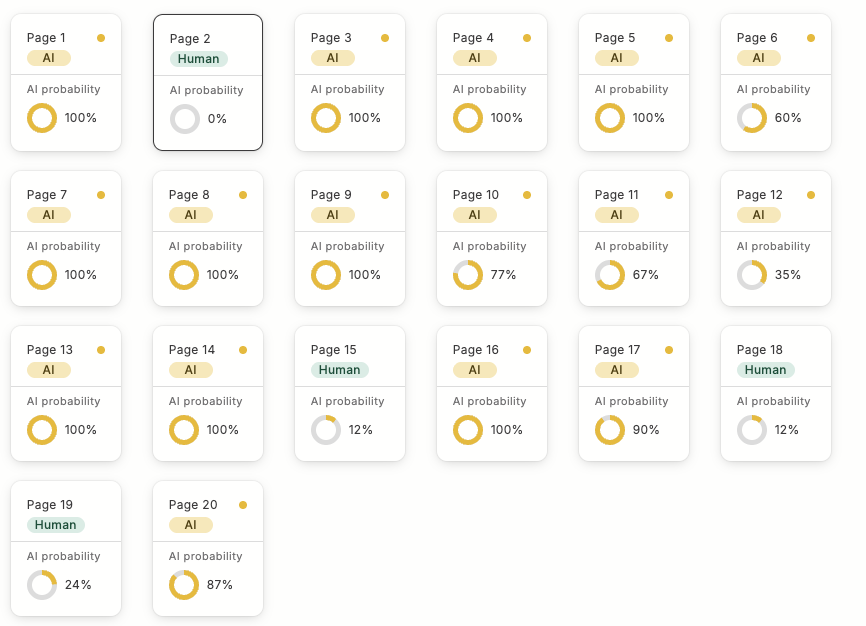
Cybernews ran the full document through a GPTZero scan, which flagged the largest sections of the document as 100% AI generating and gave a 76% overall probability that the document is AI-generated.
The inconsistencies with the OSI (Open Systems Interconnection) model, especially the use of OAuth for authorization of devices, also leave many scratching their heads.
“IP is what, four layers of protocols lower than OAuth?” one of the users noted.
The OSI model is a blueprint for data movement across seven abstraction layers, from the physical (wires) to the application layer.
The IP protocol operates at the third (the network) layer, while OAuth is at Layer 7, the application layer. Many network devices don’t even have the capabilities to process application-layer functions, such as logins.
“Isn’t it two weeks late for April Fool’s?” another Hacker News user posted.






“I’m working on my IPv9 proposal as we speak. It has an LLM validating the contents of every packet. Gotta stay ahead of the curve,” yet another user joked.
Many network experts also disputed the claims of interoperability, arguing that existing devices cannot connect to IPv8 hosts.
“Any existing IPv4 router, switch ASIC, NIC, host stack, or firewall that sees a Version=8 packet will fail to parse it (most will drop it),” one of the users explained.
“The spec simultaneously demands sweeping new machinery everywhere: new socket API, new DNS record type, new ARP, new ICMP, new BGP/OSPF/IS-IS, mandatory certified NIC firmware with hardware rate limits, mandatory Zone Servers, mandatory OAuth2 on switch ports, mandatory persistent TCP/443 to the Zone Server from every end device, and a new IANA version-number assignment. ‘No modification required’ is contradicted on nearly every page.”
Moreover, IP version 8 was already assigned in the past to an obsolete P Internet Protocol (PIP).
Unless it gains traction within the IETF, the draft, posted by a single individual, is currently set to expire six months after publication.
Unlock more exclusive Cybernews content on YouTube.