Poland proposes a sovereignty test to push big tech out of its public sector
Poland joins the European tech sovereignty chat.
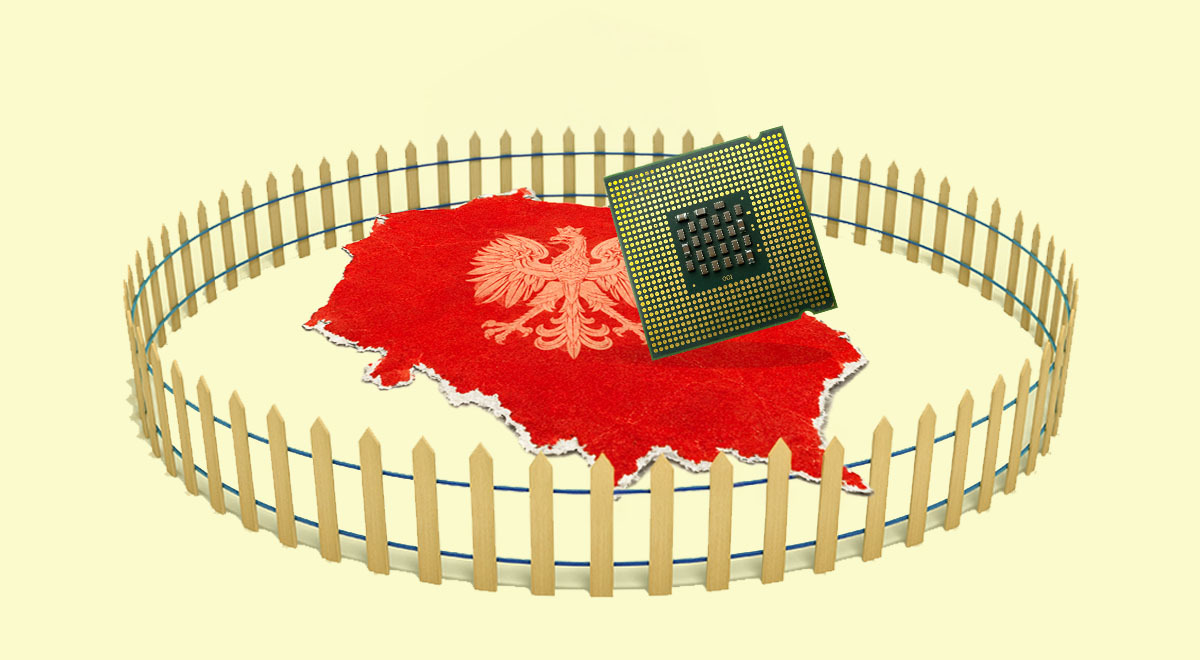
Image by Cybernews

 Follow us
- Poland plans a sovereignty test for major state technology purchases to reduce reliance on foreign providers.
- The test would cover public IT projects over $1.39 million and infrastructure projects over $3.95 million.
- Microsoft, AWS, and Google dominate Poland’s cloud market, raising concerns about costs, competition, and control of public data.
- The move reflects Europe’s wider push for digital sovereignty amid privacy fears and worries about dependence on US tech.
Key Takeaways by nexos.ai, reviewed by Cybernews staff.
Even one of the staunchest US allies in Europe, Poland, is trying to wean its public sector off American tech giants.
The “technological sovereignty test,” announced by Polish Prime Minister Donald Tusk in June 2026, will assess the risks of digital dependence on global vendors in IT projects purchased or co-financed by the state.
The proposed mechanism aims to ensure that the Polish state remains in control of its systems and its own data, according to a Rzeczpospolita report that Cybernews machine-translated.
The test will apply to every technology purchase for the state administration valued at over 5 million zloty ($1.39 million) and infrastructure projects worth more than 15 million zloty ($3.95 million).





Warsaw’s push to reduce its dependence on foreign providers reflects a broader digital sovereignty trend in Europe, championed by Western European governments, primarily France, Germany, and the Netherlands, according to Cybernews analysis.
Meanwhile, their Eastern European counterparts have demonstrated a more restrained approach to breaking ties with the US and its businesses. This may be due to their reliance on Washington’s security guarantees in the event of Russian aggression.
Thus far, only Estonia has said it is preparing to find alternatives to Microsoft, Google, and Amazon, but only if the EU imposes a bloc-wide ban on American technologies.




Stay updated with our latest stories and follow us on social media
Be the first to discover new stories, ideas, and updates from our team.
Data suggests that Microsoft, AWS, and Google account for 70% of the Polish cloud computing market, while the vast majority of public procurement contracts for office software rely on a single provider, resulting in high costs and limited competition.
The Polish government is also working on introducing a 3% tax on digital services, which would affect both American and Chinese tech giants.
The legislation is being pushed through parliament despite US President Donald Trump's threats to impose a 100% tariff on goods from countries that impose a digital services tax.
Why are Europeans breaking up with US tech?
Europe’s digital sovereignty efforts are largely motivated by data privacy concerns.
US laws, such as the 2018 Cloud Act, compel American companies to provide data requested by its law enforcement agencies, regardless of where it is stored.
As 70% of the European cloud market is controlled by 3 American tech giants – Amazon Web Services (AWS), Microsoft Azure, and Google Cloud – experts warn that Europeans' data could be accessible to the US’s intelligence agencies.
Digital sovereignty proponents also point to the potential “kill switch” scenario, in which the US government could order American companies to disable their services to European customers.
A recent report by the Future of Technology Institute, a Brussels-based think tank, suggests that 16 European national defense agencies or ministries are at high risk of a potential US “kill switch.”
The risks come from contracting American tech companies for cloud services or not knowing whether the technologies they use are effectively “airgapped,” meaning they are disconnected from the hyperscaler’s global cloud infrastructure.
These fears were further heightened by a recent US government decision to temporarily limit access to Anthropic’s latest models, Fable 5 and Mythos 5, to non-American citizens.