Gabon election tensions spark surge in VPN demand

In Gabon, political tensions escalated sharply around the recent presidential election, creating uncertainty over the stability of the country’s internet access. In the aftermath of the vote, authorities announced the suspension of certain broadcasts and imposed a nationwide curfew, moves that intensified public concern about potential communication restrictions.
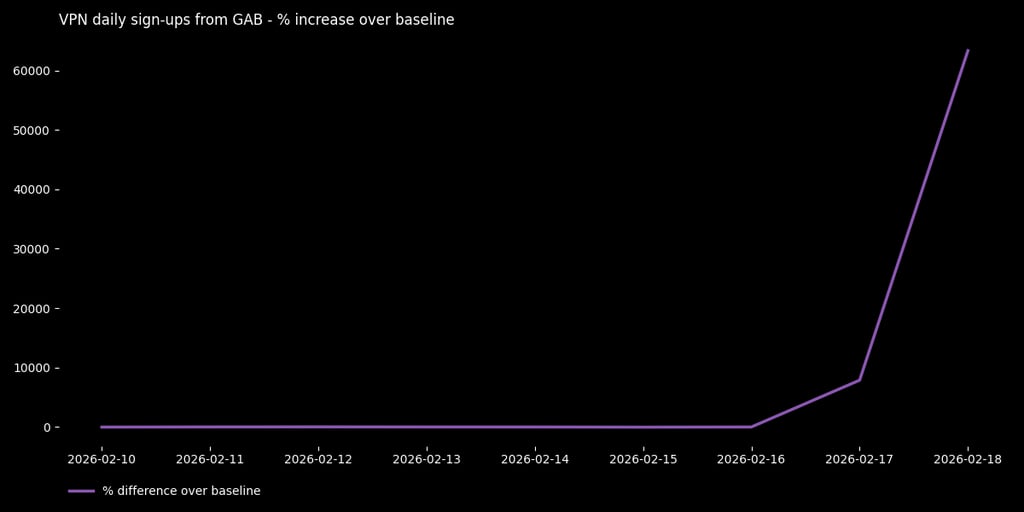
During this period, VPN demand surged sharply. According to Proton VPN, usage in Gabon rose more than +8000% above baseline levels.
The spike suggests that many users acted preemptively to secure access to messaging apps, social platforms, and independent news sources.

What is happening in Gabon
In February 2026, authorities in Gabon have suspended major social media platforms, including Facebook, TikTok, WhatsApp, YouTube, and Instagram, until further notice. Officials say the move targets harmful and destabilizing content that threatens public order and national security.
The ban comes amid growing unrest driven by public-sector strikes, particularly by teachers protesting pay and working conditions. What began in December has expanded to other sectors, increasing political pressure nationwide.
President Brice Oligui Nguema, who led the 2023 coup that removed Ali Bongo and later won the 2025 election, now faces criticism from opposition groups and civil society. Critics argue the shutdown restricts constitutional freedoms and signals shrinking civic space, while the government maintains it is a temporary security measure.
As protests continue, the suspension of social platforms has further intensified debate over free expression and political stability in Gabon.
Proton VPN announces +8,000% daily signups
Gabon has a history of digital blackouts during politically sensitive periods, in an attempt to stifle dissent - such as during the run-up to the elections in 2023, where Proton VPN saw an increase of +25,000% in free sign-ups.https://t.co/pWbgHPSIxs pic.twitter.com/knT2078ZoT
undefined David Peterson (@davidgpeterson) February 19, 2026
As mentioned, Proton VPN’s signups from Gabon surged roughly 8,000% above daily averages, and on some days later in the week reached as much as 60,000% above normal levels as residents sought ways to stay connected while platforms remained blocked.
Search trends also reflected this shift: Google Trends data showed “VPN” as a search term rising sharply immediately after social media restrictions took effect.
These figures reflect not only technical demand but real-time responses to connectivity restrictions, with spikes occurring within hours as access to familiar platforms suddenly disappeared.
Current ProtonVPN deals:
- Proton VPN Plus 2-year plan: 70% – starting at $2.99/month
- Proton VPN Plus 1-year plan: 60% – starting at $3.99/month
The role of VPNs during internet censorship
When governments restrict internet access, virtual private networks (VPNs) often become one of the first tools people turn to. During shutdowns, platform bans, or throttling, VPNs can help users maintain access to blocked websites and messaging apps.
By routing traffic through encrypted servers in other locations, VPNs allow users to bypass targeted platform restrictions and access information as if browsing from another country. They also add a layer of privacy by encrypting internet traffic, which can be especially important during politically sensitive periods.
However, VPNs are not a complete solution. Authorities may attempt to block VPN services, and full infrastructure-level shutdowns cannot be bypassed.
Still, demand for VPNs consistently spikes during censorship events. These surges show how quickly people act to preserve communication, access news, and stay connected when digital access is at risk.