Uganda Sees Massive Spike in VPN Interest After Internet Shutdown — VPN News


VPN news from Uganda drew worldwide attention on January 13 after the government limited public internet access just days before the presidential election. Authorities shut down social media, messaging apps, and streaming services, which caused interest in VPNs to rise fast. Proton VPN reported one of its quickest signup spikes ever in Uganda as people looked for ways to stay online.
This surge shows how internet shutdowns often push users toward VPNs during major political events. Uganda followed a familiar pattern seen in past elections, where limits on online access lead people to use VPNs to stay informed and connected.
After the disputed election, Ugandan authorities partially restored internet access on January 17. Many users said they reconnected around 11 p.m. local time, or 20:20 GMT. Social media platforms, however, remain blocked, which keeps VPN demand high.
Google Trends shows VPN searches spike in Uganda
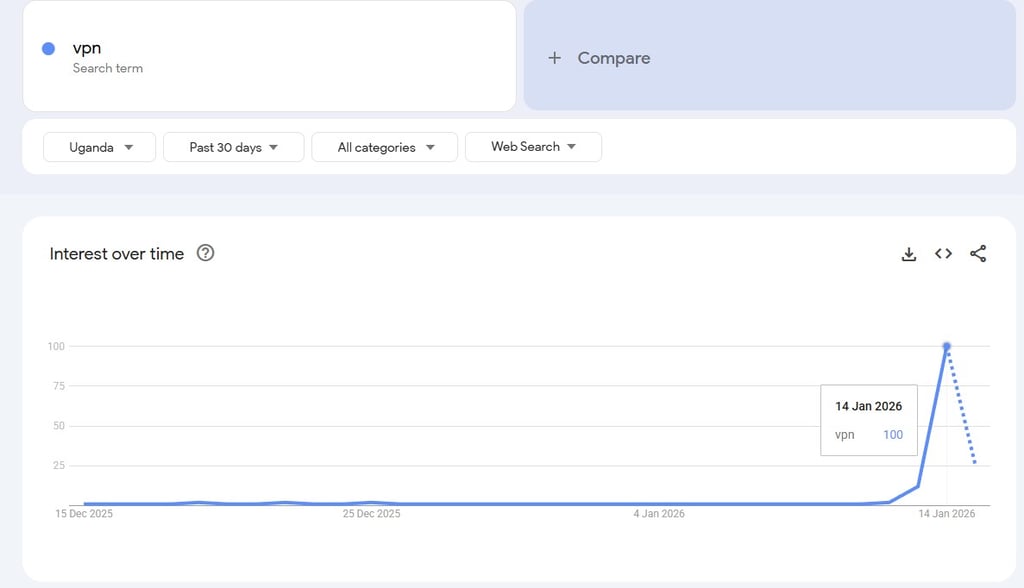
On January 13th, within hours of the shutdown coming into effect, searches for terms like “VPN” began to rise sharply in Uganda. Google Trends data shows a near-instant surge that coincided with the start of the internet limits. These spikes reflect real user demand for tools that can restore access or bypass digital restrictions.
The surge in interest was not limited to search data. VPN providers themselves saw immediate effects on their platforms.
Proton VPN reports 8,000% rise in signups
Between 2pm and 3pm GMT we saw a +8000% @ProtonVPN signup spike in Uganda 🇺🇬 as the government ordered a suspension of public internet access prior to Thursday's election.
undefined David Peterson (@davidgpeterson) January 13, 2026
We had already seen 2 prior spikes in recent weeks, as locals prepared for a predicted Internet blackout: pic.twitter.com/rvvz58jBYx
According to Proton VPN, the company experienced an 8,000 percent increase in signups from Uganda in a single hour on Tuesday. The spike occurred between 2 p.m. and 3 p.m. GMT, highlighting how quickly users sought tools to navigate the restricted internet environment.
Proton VPN officials said this surge was not entirely unexpected. Local residents and organizations had anticipated a shutdown and began preparing in advance, leading to earlier spikes in interest even before public internet access was cut.
Current best prices for ProtonVPN:
- Proton VPN Plus 2-year plan: 70% – starting at $2.99/month
- Proton VPN Plus 1-year plan: 60% – starting at $3.99/month
What was blocked — and what stayed online
The Uganda Communications Commission (UCC) ordered the suspension of public internet use, citing concerns about misinformation, violence, and threats to public confidence during the election period. As a result:
- Social media platforms were blocked
- Messaging apps were inaccessible
- Streaming services were disrupted
- Satellite internet services like Starlink were restricted
Despite these broad blocks, essential services such as banking and government administrative sites remained available, meaning Ugandans could still access some online systems.
The UCC also outlined that only approved personnel could use VPNs lawfully. Officials warned that ordinary citizens using VPNs to bypass restrictions could face legal trouble, a stance that drew criticism from digital rights advocates.
Digital rights groups raise concerns
The government said the shutdown was necessary to prevent the spread of misinformation and violence ahead of the election. However, digital rights groups argue that internet access is vital for free speech, transparency, and the ability to participate in elections.
Access Now, a digital rights organization, has long warned that internet restrictions can undermine free and fair participation at critical moments. Curbing access during elections, they say, limits citizens’ ability to receive information and share their views.
Digital rights groups continue to promote the #KeepItOn campaign, which calls on governments to stop using internet shutdowns and protect access to information during elections and major public events.
Why people turn to VPNs during internet shutdowns
As internet restrictions spread across Uganda, VPN services like Proton VPN became key tools for staying connected. The sharp rise in Proton VPN signups shows how fast demand grows when access to online platforms gets limited. For many users, VPNs offer a way to reach blocked sites, read news, and communicate during partial shutdowns.
VPNs do not work during full internet blackouts, but Uganda’s partial connectivity allowed some users to bypass local blocks using encrypted connections. VPNs can help users bypass location-based restrictions, protect online privacy, access messaging apps, and reach news websites. Users should still understand local laws, as authorities in Uganda warned that unauthorized VPN use could lead to legal consequences.