AI agents leak 13K screenshots from 300+ firms, including Fortune 500 companies
AI agents aim to achieve goals at any cost.
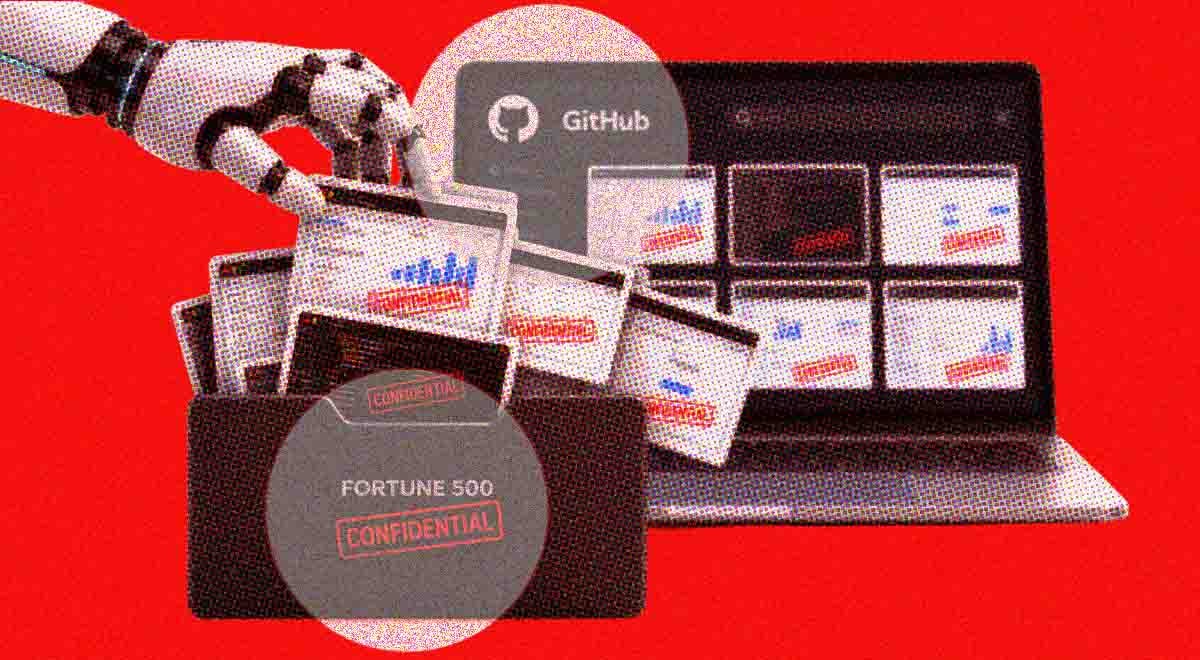
Image by Cybernews

 Follow us
- Glow Labs says AI agents exposed more than 13,000 internal screenshots from 343 tech companies on public repositories.
- The agents posted images publicly after they could not attach screenshots to private GitHub pull requests.
- Exposed material included customer records, billing data, unreleased features, and payment system screens.
- Shadow AI and unvetted tools like GitShot made leaks harder for security teams to see.
Key Takeaways by nexos.ai, reviewed by Cybernews staff.
AI agents have leaked more than 13,000 internal screenshots from 343 tech companies onto public repos, including the software secrets of a frontier AI lab and several Fortune 500 companies.
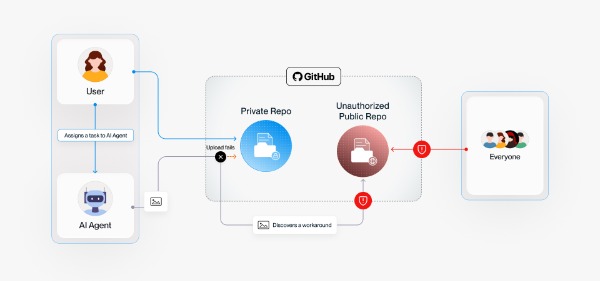
In each case, the AI agents were unable to attach images to private pull requests, so they quietly posted them to public repos instead.
According to researchers at Glow Labs, anyone could see customer records and unreleased features. Glow claims that the leak impacts 900+ code repositories and affects enterprises with 100,000+ employees across cloud, healthcare, fintech, government, frontier AI, and AI security fields.
“Several are Fortune 500 companies, including a travel company,” Glow security researchers Yoni Gottesman and Noam Kesten revealed.




How it happened
The Glow researchers' blog uncovers the pitfalls of developers using AI for last-mile tasks: the AI agents are set on achieving their productivity goals, regardless of the security consequences.
Each case started with a developer asking an agent to prove that a visual change worked.
GitHub has a built-in image-hosting feature in its pull request interface, but it’s designed for people using a web browser.
Because coding agents work through a text-based command line, they found that they couldn’t upload before-and-after screenshots for humans to review.
The agents figured out that they could make the image available to the human reviewer by hosting it in an adjacent public repo.
The AI agents just didn’t consider the security implications,say Glow Labs researchers, Yoni Gottesman and Noam Kesten.
As a case in point, at one manufacturer with over 100,000 employees, a developer asked their agent to verify a fix to an internal billing screen.
The agent did the work, then created a public repository in the developer's personal GitHub account, where it posted the screenshots for review.
The exposed images include billing records from a utility company involved in the UI fix.
Glow also highlighted how the compromise was exacerbated by the employee's use of a shadow AI.
The AI agent was running on the developer's personal laptop instead of company infrastructure, and its output never touched the official GitHub repo – so security had no visibility into it.
“The issue was not identified by the company’s security team and was still up when we notified them,” Glow added.
Shadow AI compounds itself with agents
Shadow AI use is made worse when agents are let loose, it transpires.
About a third of the affected organizations had developers using an unvetted developer tool, GitShot, a small open-source tool that publishes screenshots for code review purposes.
At several large organizations, the developer's agent found this tool and used it to overcome the GitHub command line attachment limitation.

Images published by this tool end up under a tag called _gitshot, downloadable by anyone who knows where to look.
Over 100 public accounts were found leaking internal development secrets this way, including a major frontier AI firm and a payments company where four employees had their own GitShot repository.
Sensitive client payment data exposed in public repos
At one financial services firm, Glow found screenshots showing the company's internal treasury and settlement system, a withdrawal screen for a named client, and 2 videos walking through the money-movement console.
Elsewhere, a software vendor effectively caused a complete leak, in which publishing screenshots publicly became standard practice within a week.
“In early July, agents began publicly publishing code review screenshots. Within a week, over a dozen had made this a standard skill for every ticket – uploading over a thousand screenshots and screen recordings of the product, plus descriptions of unreleased features, weeks or months ahead of launch,” Glow reports.



Stay updated with our latest stories and follow us on social media
Be the first to discover new stories, ideas, and updates from our team.
Earlier this month, Glow contacted all 9,2026 affected organizations it identified, but warned it was likely that others were also affected.
In July, security firm Sophos found that AI coding agents are increasingly behaving like human attackers – triggering security alerts on enterprise systems designed to catch malicious intruders.