“AI token tax” becomes another political idea to protect human jobs
The tax would rise as unemployment increases.
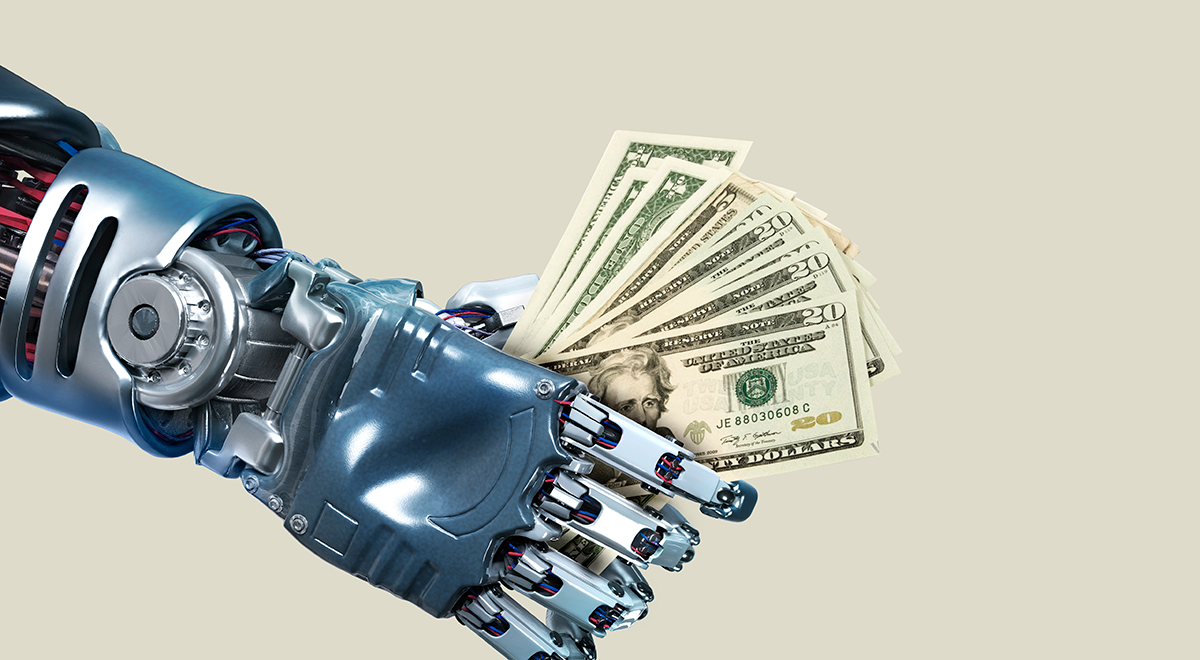
Should AI be taxed? By GettyImages

 Follow us
- US lawmakers proposed an AI token tax on certain foundation-model activity and AI product revenue.
- The tax rate would start at 2% when unemployment is below 5% and rise as unemployment increases.
- The bill would tax companies that use or modify foundation models for automation, not only major AI labs.
- Tax revenue would fund grants for jobs in areas such as education, health care, research, and climate resilience.
Key Takeaways by nexos.ai, reviewed by Cybernews staff.
With the world watching how AI is already changing the job market and with uncertainty about what might come next, politicians keep proposing ideas that are supposed to help people in case of mass unemployment.
This time, in the US, Rep. Greg Casar (D-Texas), joined by Reps. Valerie Foushee (D-N.C.) and Sara Jacobs (D-Calif.), introduced the AI Tax and Work Protection Act.
This bill introduces the seemingly novel idea of taxing AI activity, or an excise tax on "foundation-model" AI activity/token usage. The taxable amount would be calculated using the higher of two bases: the value of the tokens companies sell or the revenue they generate by selling AI products.
Meanwhile, the token tax rate would depend on unemployment and would increase if unemployment rises. For example, if unemployment is below 5%, the tax stands at 2%. If it's above 5%, it would be 2% plus the percentage-point increase above the 5% unemployment rate. Meaning that if unemployment is 6%, the tax rate is 3%. Above the 7% unemployment rate, the tax increases even faster.






However, the bill does not automatically assume that AI caused all unemployment. Also, the Bureau of Labor Statistics would be instructed to analyze data on AI's impact on the job market.
According to the bill, not only big AI labs would be taxed, but also companies deploying or modifying foundation models for automation. Meaning that a business can be taxed if it uses AI to fire people.
The tax money would go into a Treasury trust fund, while the Labor Department would also need to establish the Work Protection Administration, which would be tasked with developing and implementing the jobs program and awarding grants to eligible organizations. Among the eligible projects, the bill lists child care and early childhood education, public education, health care, scientific research and innovation, public art, climate resilience, and more.



Stay updated with our latest stories and follow us on social media
Be the first to discover new stories, ideas, and updates from our team.
Then, grant recipients would use the collected tax money to create jobs and hire people. Per the authors of the bill, grants would be given to states, cities, tribes, localities, nonprofits, unions, and educational institutions.
Curious what others think about this story? Contribute your thoughts to the debate below.
"If Silicon Valley is right about AI replacing millions of jobs, we need a plan. If they're wrong, this proposed tax will raise little revenue. But if they're right and we fail to prepare, American workers will bear the cost," Brown University Assistant Professor of Computer Science Serena Booth is quoted as saying in a joint press release.
Meanwhile, as reported by Cybernews, Bill Gates recently urged the reserving of jobs for humans, arguing that "In terms of equity, AI will either be the greatest equalizer ever invented, or the worst source of injustice. The challenge is monumental."