Is AI child porn legal in the US?
Each state deals with virtual child porn differently.
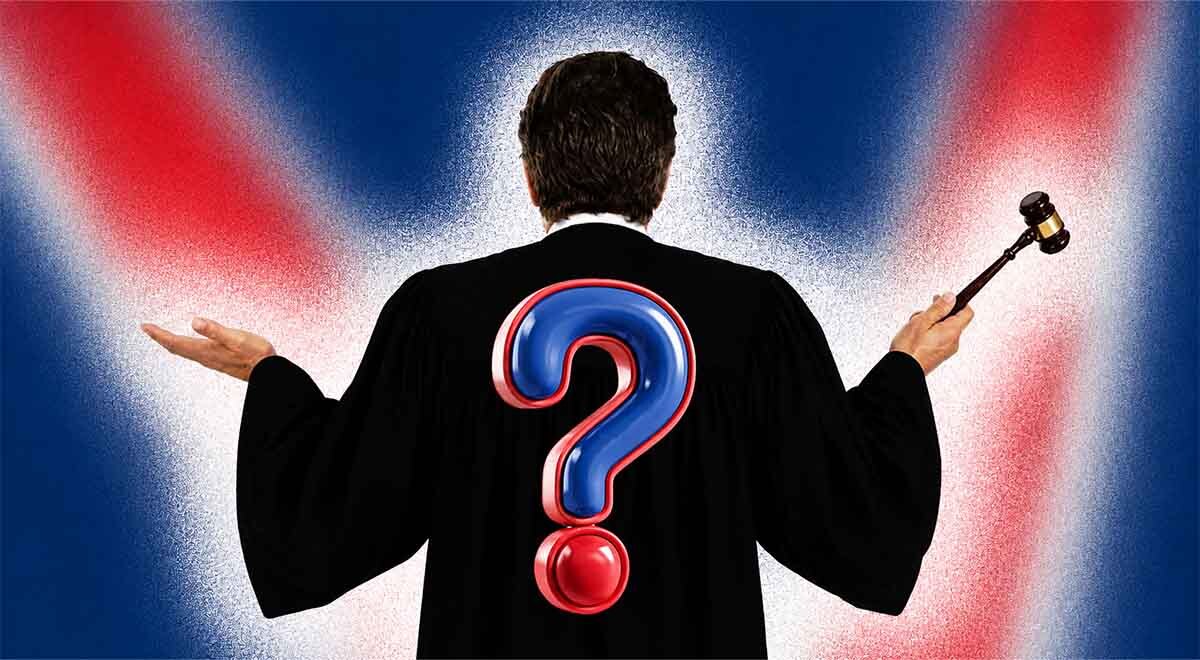
Judge holding gavel. Image by Cybernews.

 Follow us
- A US appeals court dismissed Steven Anderegg’s possession charge over obscene virtual child sexual abuse material kept at home.
- The court relied on Supreme Court rulings protecting private possession of obscenity involving no real children.
- Anderegg could have been sentenced for up to 10 more years if the charge was not dismissed.
- State laws vary, and lawmakers are moving to penalize computer-generated depictions involving children.
Key Takeaways by nexos.ai, reviewed by Cybernews staff.
US judges are letting pedophiles get away with AI porn, citing former legal battles to support their case. But times are changing, and so is the justice system.
The US Court of Appeals agreed that the possession charge against predator Steven Anderegg was “unconstitutional” after he was found with AI child porn.
The First Amendment grants the right to “possess obscenity in the privacy of their home” under Stanley v. Georgia, a landmark case that made it impossible to criminalize the possession of obscene material in one’s home.
The Court of Appeals also said that the government's attempts to justify the charge of possession of virtual child sexual abuse material (CSAM) conflicted with the previous Ashcroft V. Free Speech Coalition case, which deemed the 1996 Child Pornography Prevention Act to be unconstitutional.



The Child Pornography Prevention Act stated that “any visual depiction…or computer-generated image or picture… (that) appears to be of a minor engaging in sexually explicit conduct” should be criminalized.
However, in the case of Ashcroft V. Free Speech Coalition, a majority of the Supreme Court found that the act was overbroad as “it bans materials that are neither obscene…nor produced by the exploitation of real children.”
Therefore, the court refused to ban this type of material on the basis that it might be used to abuse real children.
In essence, the court made it clear that free speech for American adults is more important than criminalizing the possession of child pornography featuring fake children.
“The rights of adults to hear may not be silenced completely in an attempt to shield children from it,” according to the judge who cited another legal case.
So, because these arguments were previously rejected by the Supreme Court in 1969 (Stanley v. Georgia) and in 2002, Anderegg’s possession charge was dismissed.
“The court found that, because the images did not depict real children, the government’s justifications for banning their possession in the home had been expressly rejected by the Supreme Court,” according to Justia.
The Seventh Circuit (Court of Appeals) then echoed the district court’s decision and deemed the possession charge unconstitutional “as applied to the defendant’s in-home possession of obscene virtual CSAM.”
While this wasn’t the only offense Anderegg was charged with, it does mean that the appeals court has shaved as much as 10 years off his potential prison time.
But does this mean that AI child porn is legal in the US?



Stay updated with our latest stories and follow us on social media
Be the first to discover new stories, ideas, and updates from our team.
At the moment, it depends
In the US, distributing, possessing, and creating child pornography is a crime.
If someone is caught with child pornography in their home, the material isn’t subjected to an obscenity test, as it is already deemed to be extremely harmful or dangerous if affecting real children.
However, each state addresses the issue differently, using different verbiage to define CSAM generated with AI.
For example, California’s CSAM law criminalizes AI-generated child porn, whereas Colorado sees this material as child porn if it's “digitally reproduced visual material,” according to child protection organization Enough Abuse.
In 2003, following the Ashcroft V. Free Speech Coalition case, the Protect Act was signed into law, which specifically detailed how technological advancements would make the issue of child pornography a lot harder to deal with.
While Anderegg’s possession charge was dropped, the US House of Representatives recently added an additional offense to the act.
It says that those who simply possess “visual depictions” of child porn, which includes “computer-generated image or picture, whether made or produced by electronic, mechanical, or other means,” will be penalized.
As AI becomes ubiquitous, it’s likely that the justice system will adapt to technological advancements, but only when damage has already been done.