ChatGPT-6 Astra cracks 108-year-old WWI coded message
A German radio message from World War I has confounded coders for decades.
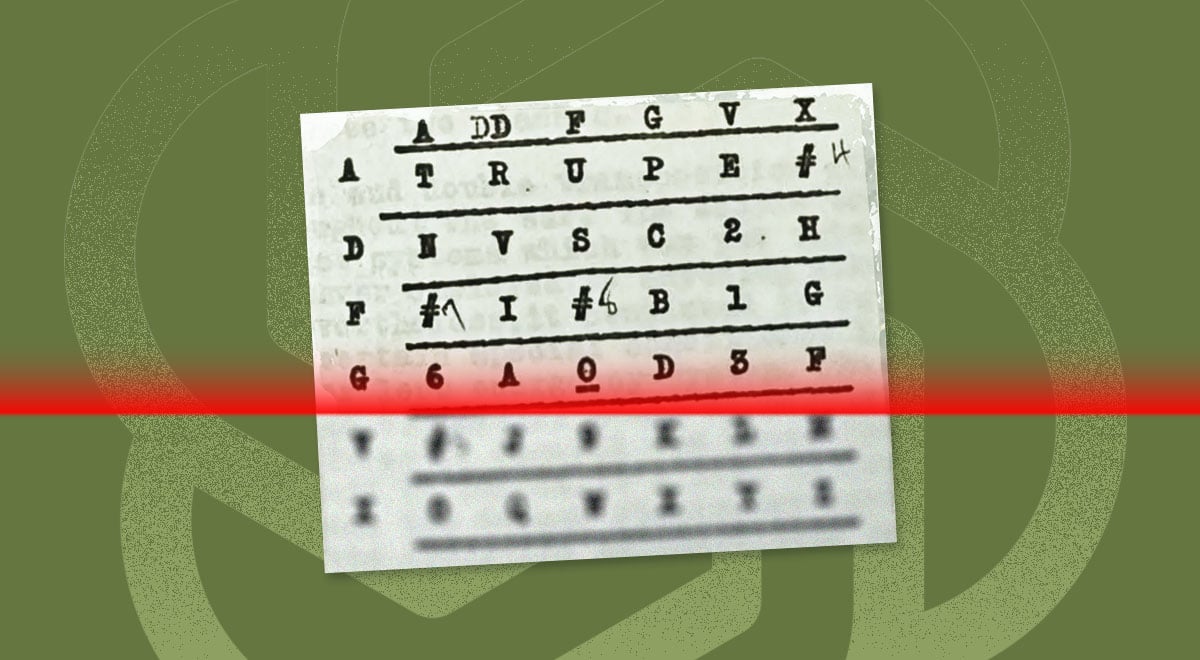
Image by Cybernews

 Follow us
- A developer says ChatGPT-6 Astra decoded a German WWI radio message that had puzzled codebreakers for decades.
- The model used the documented TRUPPENVERSCHIEBUNG key, meaning troop movement, to unscramble the encrypted text.
- The decoded message reported an English cruiser at Sevastopol and an Allied squadron following later.
- Prinz says Astra checked the result against HMS Canterbury logs and other historical evidence.
Key Takeaways by nexos.ai, reviewed by Cybernews staff.
A developer has used OpenAI’s latest frontier model, Astra, to solve a German military radio message that has puzzled codebreakers for more than a century.
Curious about the AI maker’s claims that OpenAI’s new LLM, released this month, can reason through complex problems, a developer named Prinz set GPT-6 Astra the task of solving one of the world’s most famous unsolved puzzles.
It’s one on a list that includes around 50 unsolved ciphers – codes that scramble the meaning of a message so it can't be read without a key.
108-year-old encrypted radio message






Prinz gave Astra the challenge of decoding one of these ciphers from a set of German radio messages from World War I, encoded using the ADFGVX cipher.
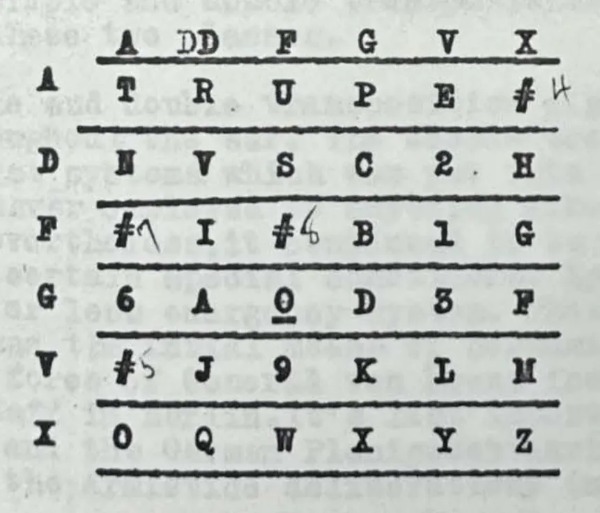
This is a German military cipher that represents letters and numbers using a combination of these 6 characters: A, D, F, G, V, and X.
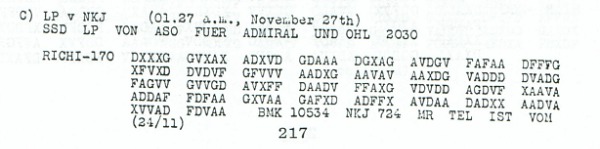
At the time, the German military used a grid of these letters, which shifted depending on the current keyword.
Prinz selected one message transmitted by the German military on November 27th, 1918, and gave it to Astra to investigate.
The challenge was to work backward through the encryption system and identify the key that would turn a long sequence of letters and characters into understandable German.
Prinz reports in their blog that the breakthrough came when Astra decided to use “TRUPPENVERSCHIEBUNG” – a documented German encryption key.
Roughly translated, the word means "troop movement" or "troop transfer."
The word is not part of the message itself, but it acts like a password, letting the codebreaker know how to unscramble the encrypted characters.
To use the key, the letters of "TRUPPENVERSCHIEBUNG" had to be sorted alphabetically first, which determined the order of columns in a decoding table built from the encrypted message.
Then, the same “TRUPPENVERSCHIEBUNG” is written out horizontally, with letters from the encrypted message written under it, in rows of 19.

The resulting German reads:
“EIN ENGLISCHER KREUZER EINLIEG X SEWASTOPOL X S4STEN X EIN GESCHWADER DER X ALLIIERTEN FOLGT 26STEN X.”
Which translates as :
“AN ENGLISH CRUISER ARRIVED AT SEVASTOPOL ON THE 4TH AN ALLIED SQUADRON FOLLOWS ON THE 26TH.”
Contextual analysis was key
What stands out is how the model pulls diverse information from multiple sources.
Prinz notes that Astra checked its answer against independent historical evidence, finding that the English cruiser HMS Canterbury arrived in Sevastopol on November 24th, 1918, based on its original logs.
And an allied squadron did follow on November 26th.
Astra then hypothesizes that the reason this problem wasn’t solved earlier may have been due to an incorrect assumption that “TRUPPENVERSCHIEBUNG” was first used on December 9th, 1918, whereas this message was transmitted a month earlier.



Stay updated with our latest stories and follow us on social media
Be the first to discover new stories, ideas, and updates from our team.
Prinz writes that the task was a cool way of highlighting Astra’s problem-solving capabilities.
Since the dev's initial experiment, Prinz has reported that the model has solved a second message using similar techniques.
Prinz revealed on X that GPT-6 Astra has cracked the previously unsolved German WWI cipher "RICHI-240" by combining cryptographic analysis with historical records from multiple sources, revealing a November 1918 message reporting that Serbian forces had occupied the city of Versec.