Cate Blanchett launches a tool to protect people's likenesses from AI
Acclaimed Australian actor Cate Blanchett has introduced a free tool that helps people prevent their identities from being used by AI without consent.
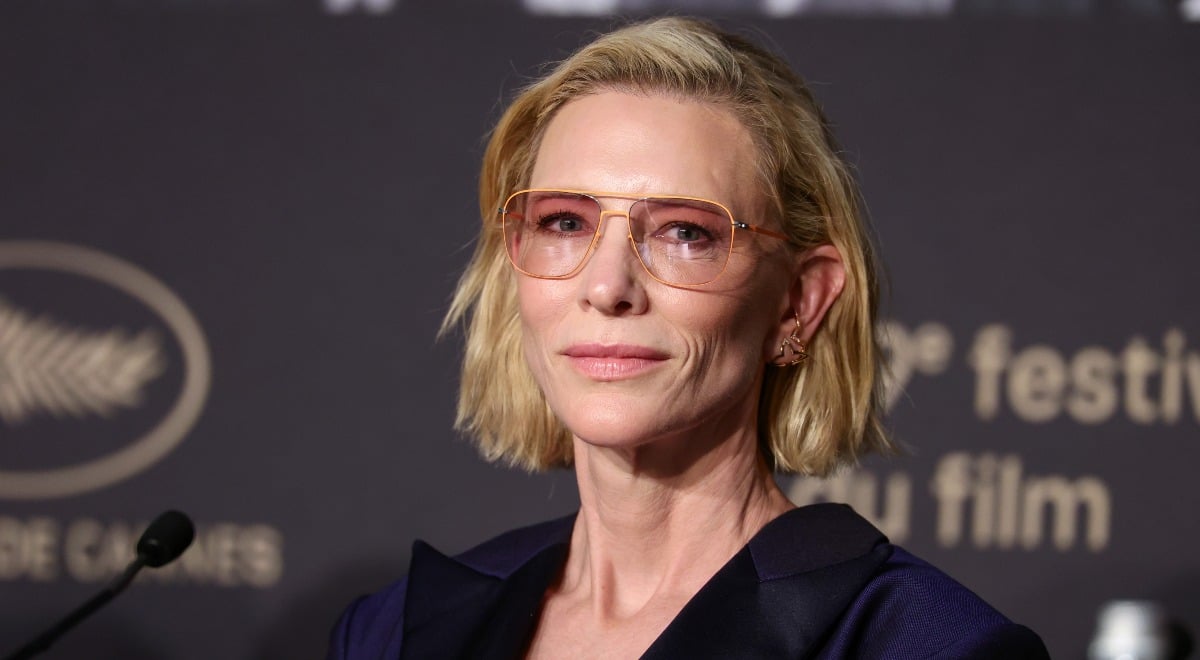
Image by Andreas Rentz/Getty Image

 Follow us
Acclaimed Australian actor Cate Blanchett has introduced a free tool that helps people prevent their identities from being used by AI without consent.
- Cate Blanchett has introduced a free tool designed to protect likeness from being used by AI without consent.
- On the website, people can prohibit AI from using their likeness or give consent for specific uses.
- A growing number of celebrities are trademarking their voices and appearances to prevent their use by AI.
Blanchett presented the website, the Human Consent Registry, in the European Parliament on June 24th, 2026.
The tool allows people to create a record prohibiting AI from using their name, image, voice, and other personal attributes, or to define the terms under which their likeness can be used.
“Your identity is your IP in the age of AI, and every person deserves the right to decide how AI can or cannot use it,” Blanchett is quoted as saying by Euronews.


The tool is available to individuals and third parties, such as agents and managers. The platform is expected to enable people to protect their artworks, characters, or brands in the future.
Ashley Casovan, a managing director at the International Association of Privacy Professionals’ AI Governance Center, says the tool is a great example of ways that impacted groups are identifying issues with how AI technologies are being used.
“Instead of advocating to put an end to their use, what Cate Blanchett has demonstrated is that you can use the same technologies to pinpoint when and how AI is being used to take appropriate action,” Casovan told Cybernews.
Cate Blanchett is one of the many celebrities revolting against the nonconsensual exploitation of their image and art by AI.
Oscar-winning actor Matthew McConaughey trademarked his voice and likeness in early 2026 to prevent them from being used without his consent.
The Cybernews community is talking about this. Be a part of the conversation.
McConaughey also signed a deal with AI voice company ElevenLabs, where he is an investor, to create a Spanish audio version of his newsletter “Lyrics of Livin.”
American superstar Taylor Swift, whose deepfakes were repeatedly used in pornography and scams, applied to trademark her voice and appearance in April.
However, it is not only celebrities whose images are being used without consent. In early 2026, the social media platform X was flooded with over 3 million nonconsensual sexually explicit images of women and children, produced by the in-built chatbot Grok.
The European Union, individual bloc member states, Australia, and Japan are among the countries that have launched investigations into the use of nonconsensual images.
Meanwhile, US legislators are working to keep up with technological advancements.
The landmark Take It Down Act, which came into force in May 2026, bans nonconsensual content that continues to appear across online platforms, making it a federal crime. The law applies to both real and AI-generated images.
The No Fakes Act, which was unanimously advanced in the US Senate Committee on the Judiciary, would create a new intellectual property right giving every individual the right to control how their likeness is used in digital replicas.
Unlock more exclusive Cybernews content on YouTube.