Google DeepMind’s head of community Amit Vadi: “We’re the engine room of Google AI”
“The revolution goes far, far beyond the chatbot,” he says.
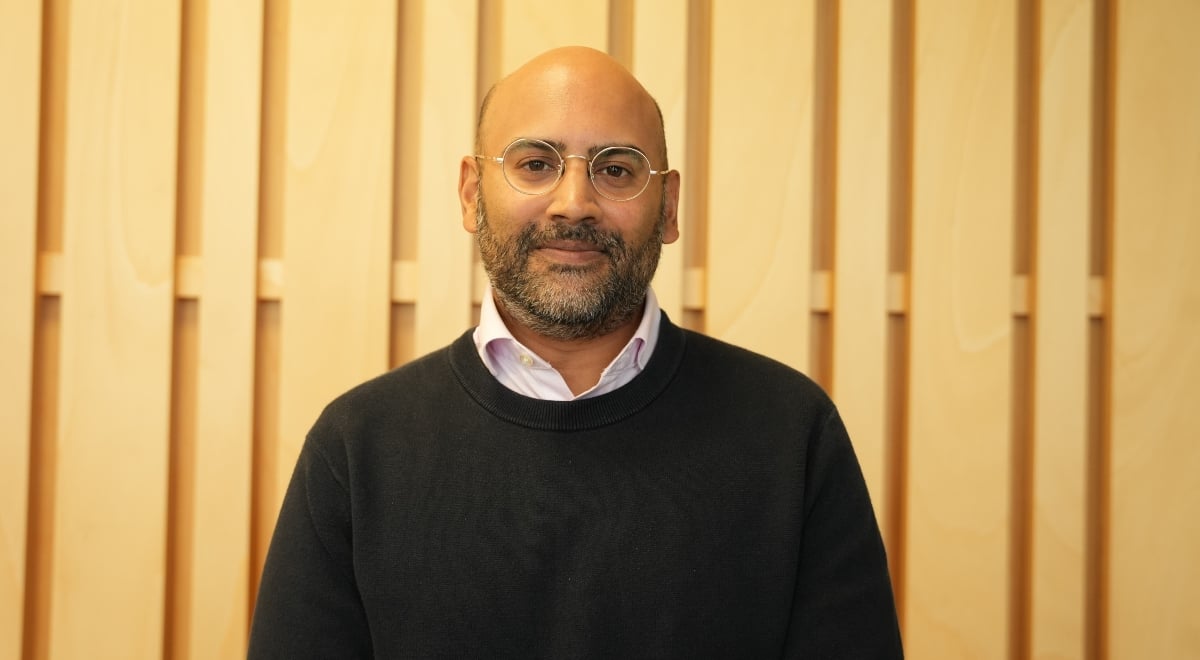
Amid Vadi. By Laurynas Sakalis / Cybernews.

 Follow us
- Google has about 90% of search, so it is investing heavily in AI to find new growth.
- DeepMind says unifying Google’s AI teams helps turn research into products faster.
- Google DeepMind is pushing Gemini, Omni, and agent tools as it works toward artificial general intelligence.
- Some researchers dispute claims that AI can make major scientific discoveries on its own.
Key Takeaways by nexos.ai, reviewed by Cybernews staff.
With essentially no room to grow in search, Google is investing billions in AI development. Its DeepMind lab is striving to ensure that research priorities align with enterprise priorities, Amit Vadi, who leads the community strategy for Developer Experience at DeepMind, told Cybernews.
Google commands a 90% market share in search. This, of course, means that virtually everyone uses Google for search.
Even if you prefer another engine to Google’s, you will need to change your defaults in every browser and device you use – every time you get a new smartphone or laptop. That’s the very definition of a “mature business.”
However, we live in a world where companies, especially in tech, need to show investors that they’re consistently growing.





And since Google’s growth is unlikely to come from signing up new searchers, the tech giant needs to find new lands to conquer.
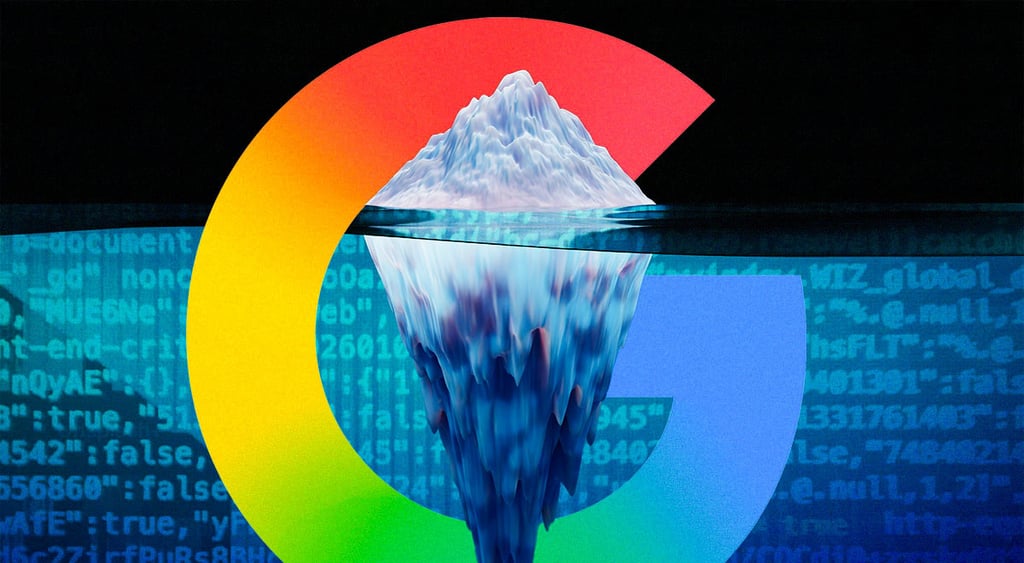
That’s why the company was so desperate to make Google+ happen back in the day – and that’s why it’s now investing so much in Google’s AI story.
Of course, as author Cory Doctorow notes in his new book “The Reverse Centaur's Guide to Life After AI: How to Think About Artificial Intelligence – Before It's Too Late,” convincing Wall Street and enterprise clients that we love AI is very different from convincing us that we love AI.
The idea that people love AI is far from the truth. In 2025, a survey of everyday folks about their attitudes toward AI found that more than 90% of us are less likely to use a product advertised as AI-based or AI-enabled.
Has your password leaked?
But even if the reality doesn’t actually match loud proclamations about widening AI adoption, someone needs to tell that to Google DeepMind’s Vadi.
“Unique compared to other labs”
Speaking at Google Cloud Day in Vilnius, Lithuania, he repeats the word “amazing” dozens of times in his keynote about Google DeepMind’s innovations and says that we’re in the AI agent era now – and that Google DeepMind is now “the engine room of Google AI.”
Vadi’s pace is just as unrelenting as he sits down with Cybernews for an interview. He enthusiastically names all the ways that Google DeepMind – founded in the UK in 2010, acquired by Google in 2014, and merged with Google AI's Google Brain division in 2023 – is transitioning toward actively helping users accomplish tasks.
We brought those divisions together to really unify our push into the frontier model space – that’s where Gemini came from. In 2025, we also brought all model teams into DeepMind as well,explains Amit Vadi, Head of Community, Google DeepMind DevX.
“So now we have all the researchers and all the engineering in the same organization. I think that is very unique compared to other labs to have that ability to turn research into reality.”
The format, according to Vadi, has helped initiatives like Project Genie and Project Astra to emerge from “research endeavors that have made their way into consumer developer applications in a really quick manner.”
“Where other labs might be focused specifically on, say, agentic coding, we have the ability to look at the multimodal approach – audio, video, code, images, and countless other modalities,” Vadi said.
“Having Google’s resources as well allows us to operate a lot of different domains,” he added.

All of those Google models are now “coming together” in Omni, a new model where users can combine images, audio, video, and text as input and generate high-quality videos grounded in Gemini's real-world knowledge.
“As we’re really on this spring towards AGI (artificial general intelligence) right now, it’s critical to unify our teams internally,” Vadi almost casually points out.
Will we cure all diseases?
Indeed, Google DeepMind has just launched the DeepMind Institute, creating a think tank within the company to explore how society should prepare. DeepMind’s co-founder Demis Hassabis predicts that true AGI could arrive around 2030.
Vadi is excited to “continue the march towards AGI” and quotes Hassabis, who won the 2024 Nobel Prize in Chemistry for his pioneering work on protein structure prediction using an AI system called AlphaFold, saying that “maybe within the next decade,” AI will help us cure all diseases.

With that insight, Hassabis has drawn a lot of criticism – for example, Derek Lowe, a US medicinal chemist, reminded on his blog that “machine learning does not create any new knowledge,” and added: “Hassabis’ statements make me want to spend some time staring silently out the window, mouthing unintelligible words to myself.”
To Vadi, Google DeepMind’s work on scientific research is, of course, “amazing.” He stresses: “A lot of scientists feel that right now with AI, they have superpowers.”
“Every medical breakthrough, every pharmaceutical industry is utilizing AlphaFold in one way or another. AlphaFold will be the technology that everybody will keep coming back to in the next 50-100 years,” Vadi told Cybernews.
Google DeepMind has also just released WeatherNext 3, the first global weather model that generates forecasts every hour of the day.



Stay updated with our latest stories and follow us on social media
Be the first to discover new stories, ideas, and updates from our team.
The lab’s Gemma open-weight model family has also just surpassed one billion downloads, and there’s been a lot of medical fine-tuning cases over 100,000 variants of Gemma, Vadi said.
Last year, Google DeepMind and Yale University developed an AI model called C2S-Scale 27B (Cell2Sentence-Scale), built on Gemma, which successfully discovered and validated a new potential cancer therapy pathway.
Positive feedback
This is all important, of course. And yet, is it actual science? That’s what AI skeptics and, well, scientists are asking.
Last year, for example, the MIT and Harvard researchers published a study named “Evaluating Large Language Models in Scientific Discovery,” which concluded that AI models aren’t ready to make scientific discoveries.
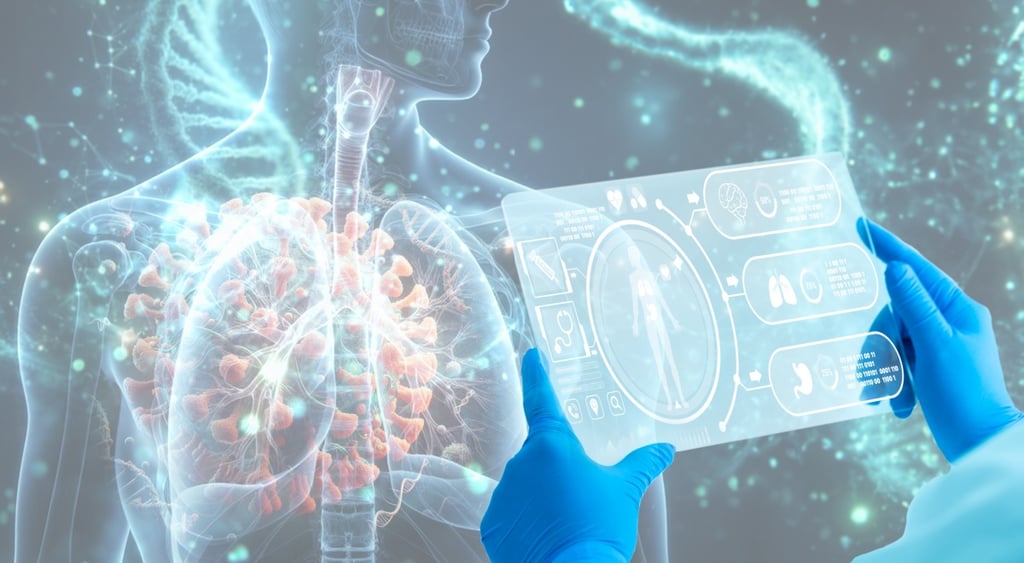
It said that even though large language models are increasingly applied to scientific research, they overlook the iterative reasoning, hypothesis generation, and observation interpretation that drive scientific discovery.
“High benchmark scores do not correlate with scientific discovery ability,” the study reiterated.
In other words, for now, we should forget the discovery of new drugs or AI scientists, the authors of the study said. When asked during the experiments to perform a real scientific discovery, the models consistently failed.
On the other hand, they can just help out and ease the workload for scientists. Earlier this year, Google DeepMind introduced Co-Scientist, a multi-agent AI partner accelerating research by generating, debating, and evolving novel hypotheses for complex scientific problems.
“It’s rolled out in some institutions in the US, and there’s been very positive feedback. A lot of scientists, who historically would be in a lab on their own for so many years without much backing, now feel like they have an army of agents supporting them,” said Vadi.
