The “three-finger” method won’t help detect a deepfake: here’s what will
A viral method for detecting deepfakes may no longer be effective as technology advances rapidly. Experts share their tips on what can actually help you to avoid getting tricked by scammers.
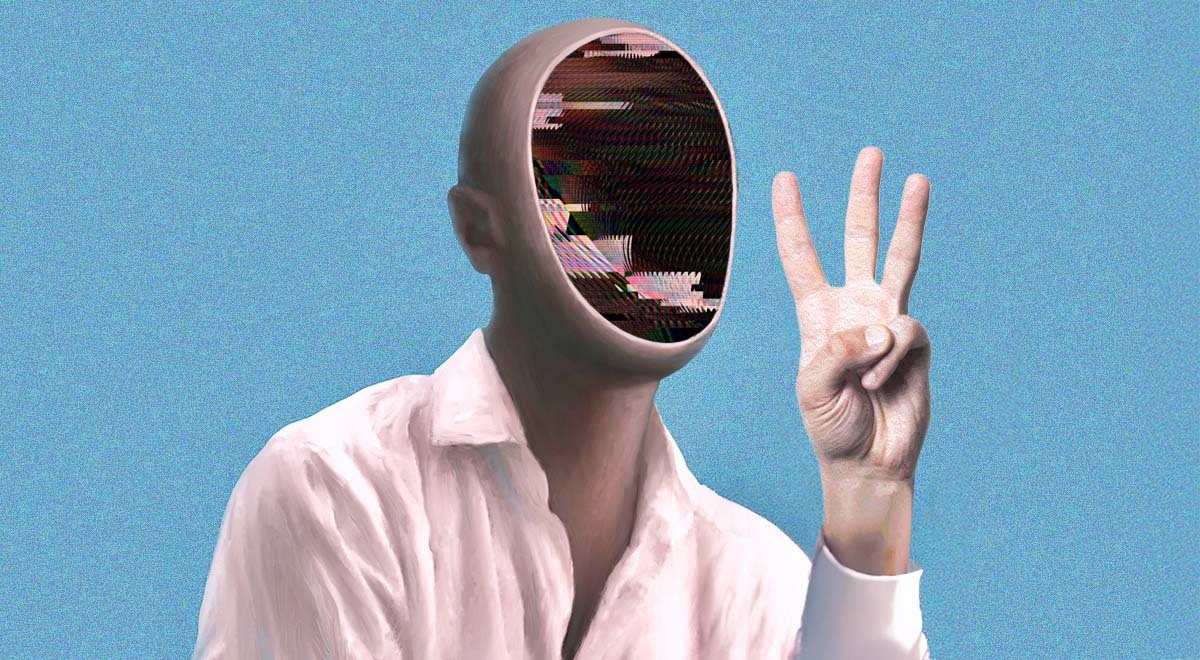
Image by Cybernews

A viral method for detecting deepfakes may no longer be effective as technology advances rapidly. Experts share their tips on what can actually help you to avoid getting tricked by scammers.
Do you suspect that you’re on an online call with a scammer pretending to be your loved one or a potential business partner using deepfake technology? Ask them to hold up three fingers in front of their face and see if it disrupts the image.
Or at least this is what videos on social media claim. Experts in deepfakes, however, say the method is no longer trustworthy. Even worse, it can create a false sense of trust in fraudsters.
“Essentially useless method”




Ben Colman, co-founder and CEO at Reality Defender, a company specializing in detecting deepfakes, says the method was “a rather foolproof” way to reveal a face swap or a deepfake model a year or two ago.
“Now, deepfake models – especially those in real time – are so good that they fix this ‘bug’ of sorts, and don’t glitch out or reveal the true user with the three-finger trick,” Colman tells Cybernews.






Current systems can replicate hand movements in real time with sufficient accuracy to pass that test, according to Manny Ahmed, CEO and founder of OpenOrigins, a software platform for digital media verification.
“Relying on it gives people false confidence, which is arguably worse than no check at all,” Ahmed adds.
Skyrocketing numbers of artificial intelligence (AI) powered scams reflect how advanced the technology of voice cloning, face swapping, and digital alteration has become.
A survey of more than 12,000 consumers in the US, Canada, UK, Spain, France, and Germany found that 31% reported having received a deepfake voice call in the past 12 months.
Now, deepfake models – especially those in real time – are so good that they fix this ‘bug’ of sorts, and don’t glitch out or reveal the true user with the three-finger trick.Ben Colman
In 2025, deepfake-related losses from fraud and scams reached $1.1 billion, up from $360 million in 2024, according to Surfshark analysis.
Social media is a major avenue for deepfake scams, where fraudsters use the technology to impersonate famous individuals to promote fraudulent investment opportunities.
Romantic scams involving fake relationships and requests for money under the guise of an “emergency” are also common.
Ask them to turn their head or wave quickly
As deepfakes are likely here to stay, experts say there are ways beyond the “three-finger method” to determine whether the person you’re talking to is real.
Shlomi Beer, a co-founder and CEO of ImpersonAlly, a cybersecurity company focusing on eliminating impersonation fraud, notes that deepfake models are trained on datasets of front-facing videos.
Therefore, asking someone to turn their head by 90 degrees may cause AI to lose its training data and start hallucinating.
“You’ll likely see the jawline ‘smear’ or other artifacts in the face for a tiny second as the model on the other side guesses what the side of their face looks like,” Beer tells Cybernews.
Beer says that because AI isn’t very good at real-time physics, you may ask a person to wave their hand quickly between their face and a light source, such as a desk lamp.
“Real-time deepfakes struggle to render a moving shadow naturally over a generated face; the shadow will usually look flat, flicker, or won’t align with the skin,” he adds.
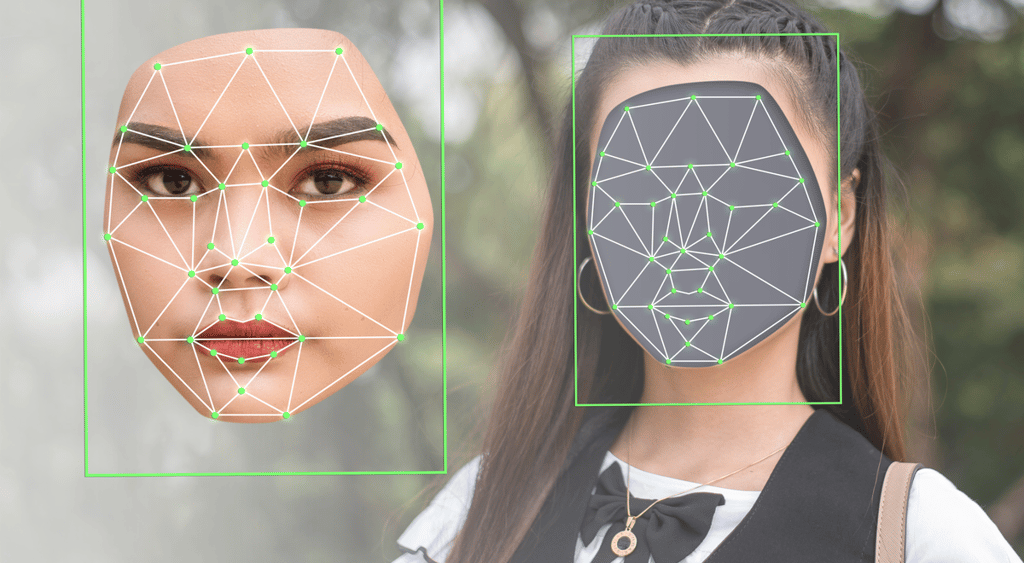
Finally, because deepfakes can’t easily handle complex backgrounds like bookshelves or plants, you may ask the person to look back at something behind them. For example, you may ask them about a book on a shelf.
Beer says that sudden movement against a busy background often causes edge artifacts, making the hair and neck appear to detach from the rest of the body.
Ahmed, however, says there’s no reliable visual method to recognize deepfakes anymore, as detection accuracy has dropped to the point where even trained experts can’t consistently identify high-quality deepfakes.
He tells Cybernews: “What you can do is look for indirect signals: unexpected latency in video response, unnatural eye movement patterns, lighting that doesn’t match the environment, and audio that feels slightly out of sync. But these are clues, not proof.”
For some, one question is enough
With an increasing number of scammers using deepfakes and imposter job candidates, some are finding creative ways to identify them.
A North Korean IT worker was recently caught during a remote job interview by refusing to insult the country’s Supreme Leader, Kim Jong Un.
When asked to repeat that the Korean leader is a “fat, ugly pig,” the candidate froze.
North Korea is a dictatorship where the government tightly controls all aspects of life, and even minor criticism of the government may land an “offender” in a prison camp, according to Amnesty International.
For the last few years, North Korean IT workers have been receiving remote jobs in Western companies, with their salaries being taken by the regime.
Unlock more exclusive Cybernews content on YouTube.