Anyone who doesn’t use the term “super intelligence” is the enemy – Trump
Excerpt: What about the First Amendment?
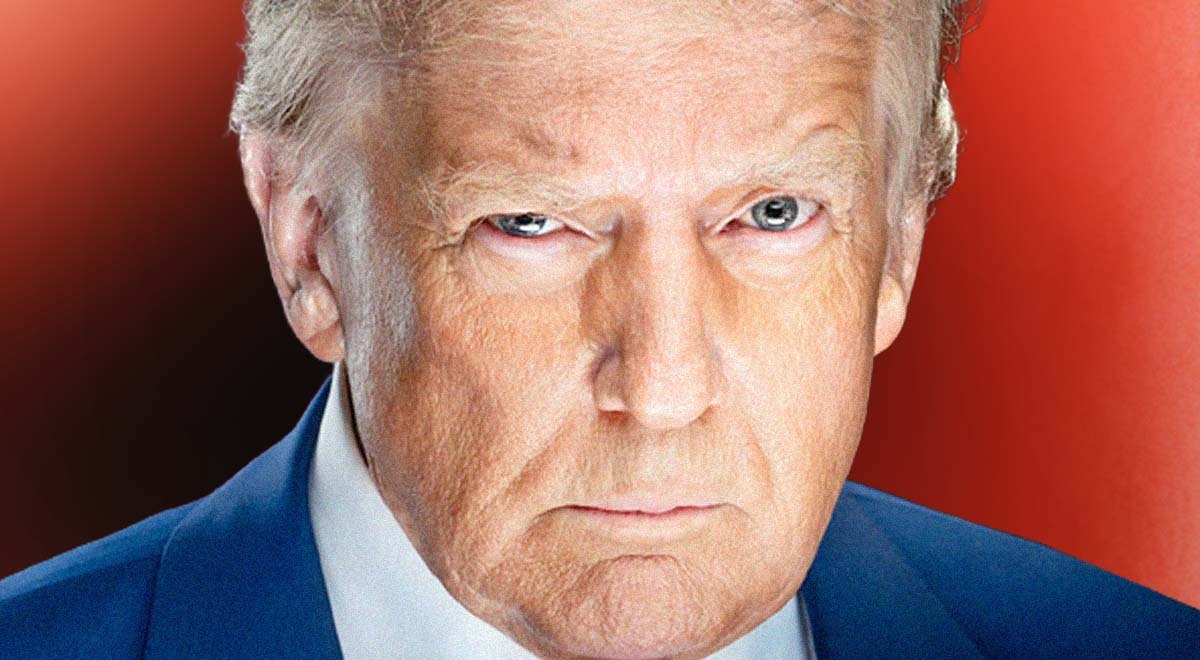
Donald Trump. Image from Wikipedia/Illustration by Cybernews

 Follow us
- Trump said the White House considers people who say Artificial Intelligence instead of Super Intelligence the enemy.
- His executive order tells federal agencies to use Super Intelligence in official documents.
- Tech companies may use the term with government but are unlikely to fully rebrand products soon.
- Critics said the remarks threaten free speech and distract from concerns about data centers and jobs.
Key Takeaways by nexos.ai, reviewed by Cybernews staff.
President Donald Trump has doubled down on renaming AI to super intelligence, while industry leaders privately doubt that the new term will stick.
As the rebranding of AI as SI fails to gain traction, POTUS has lashed out at people who don’t follow his recent order.
“The White House considers anyone who uses the term, ‘Artificial Intelligence,’ as opposed to the highly accepted new and more accurate term, ‘Super Intelligence,’ THE ENEMY,” Trump wrote on Truth Social.






He didn’t specify the consequences of being labeled “the enemy.”
Trump announced in September 2026 that the US would rename AI to SI in all official documents, saying that the word “artificial” makes the technology sound “fake.”
He signed an executive order days later, directing federal agencies to use the term and unveiled the Super Intelligence Force to oversee the administration’s AI policy.
While rebranding sparked interest in the .si domain, which belongs to Slovenia, the decision stirred controversy for being scientifically inaccurate.
The term “super intelligence” refers to a hypothetical system exceeding human-level intelligence. There’s no consensus on whether this type of technology is possible, and, if so, when it could arrive.
Tech companies so far have not shown much enthusiasm to rebrand their products. Only Trump’s long-standing frenemy, Elon Musk, said he would rename his company SpaceXAI to SpaceXSI, although he didn’t provide the exact timeline.
Privately, tech insiders and lobbyists think that changing the technology’s name won’t catch on, according to Politico. Companies may use the term when dealing with the government, but are unlikely to undergo a complete rebranding any time soon.
Tech executives had made some efforts to use the term “SI” while at the White House.
Nvidia’s CEO Jensen Huang, for example, said data centers were becoming “super intelligence factories” when speaking to reporters after tech leaders’ meeting with Trump.
OpenAI CEO Sam Altman recently told Politico that the company has been using both terms, AI and SI, although he described “super intelligence” as a “better word.”
“Deeply disturbing”
Trump’s latest remarks attracted criticism on social media. Michael McFaul, a former US diplomat and a political scientist, said it was “deeply disturbing” to call people “the enemy” for exercising their First Amendment rights.
“That’s what autocratic leaders do, not American leaders,” McFaul wrote in a Bluesky post.
What is going on with our president? Calling people undefinedTHE ENEMYundefined for exercising their First Amendment rights is deeply disturbing. That's what autocratic leaders do, not American leaders. Doing so for such a trivial, vain matter is just nutty.
undefined Michael McFaul (@mcfaulmike.bsky.social) 8 October 2026 at 21:40
[image or embed]
James E. Clyburn, a democratic congressman representing South Carolina, pointed out that Americans are worried about data centers driving up their electricity bills and threatening their job security, and that they don’t want to be called “enemies.”
Even Trump’s government isn’t exactly leading by example. The official AI website is still available at AI.gov, suggesting that the change is easier said than done.