Turtle Beach Stealth 600 vs 700: what’s different and which should you buy?

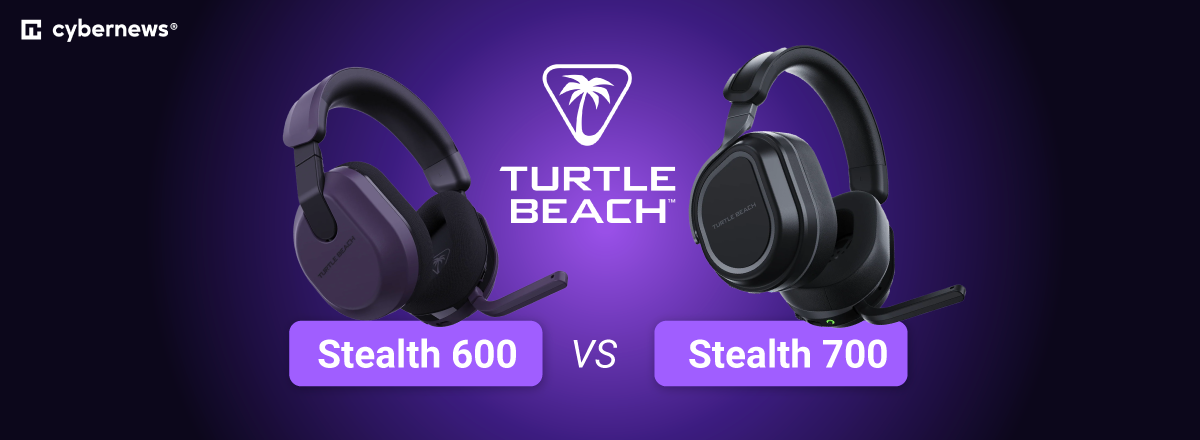
If you’re seeking a wireless gaming headset with crisp sound and utmost compatibility at a fair price, you’ve probably explored the Turtle Beach Stealth lineup. Between the entry-level models and the considerably more expensive Stealth Pro as their top-tier model, two options stand out: the 600 and the 700.
Both offer a good value for different types of players, but making the right purchase decision is easier said than done. That’s where I jump in with this all-around Turtle Beach Stealth 600 vs 700 comparison guide.
With my team of Cybernews researchers, I’ve assessed the value of both the more affordable 600 and the premium 700 version. I’ll share some of my findings in terms of design, gaming features, audio quality, connectivity, and more in this guide.
Turtle Beach Stealth 700 is the better option overall with its Bluetooth support, advanced noise cancellation, and longer battery life. Still, if you’re after affordability, Stealth 600 ticks a lot of boxes at a fraction of the cost.
Turtle beach stealth 600 vs 700 overview
Here’s a sneak peek at the main features and specs of both headsets before we go any further with the nuances behind this Turtle Beach Stealth 600 vs 700 comparison:
| Feature | Turtle Beach Stealth 700 | Turtle Beach Stealth 600 |
| Overall rank | 4.7 | 4.4 |
| Key features | Multiplatform wireless audio, glasses-friendly technology, AI-based noise reduction, customizable Wheel & Mode button | Low-latency 2.4Ghz wireless, up to 80 hours of battery life, drivers for vibrant spatial audio |
| Best for | Gamers looking for premium quality and features | Casual gamers looking for an affordable wireless headset |
| Price | From $199.99 | From $109.99 |

About Turtle Beach Stealth 600
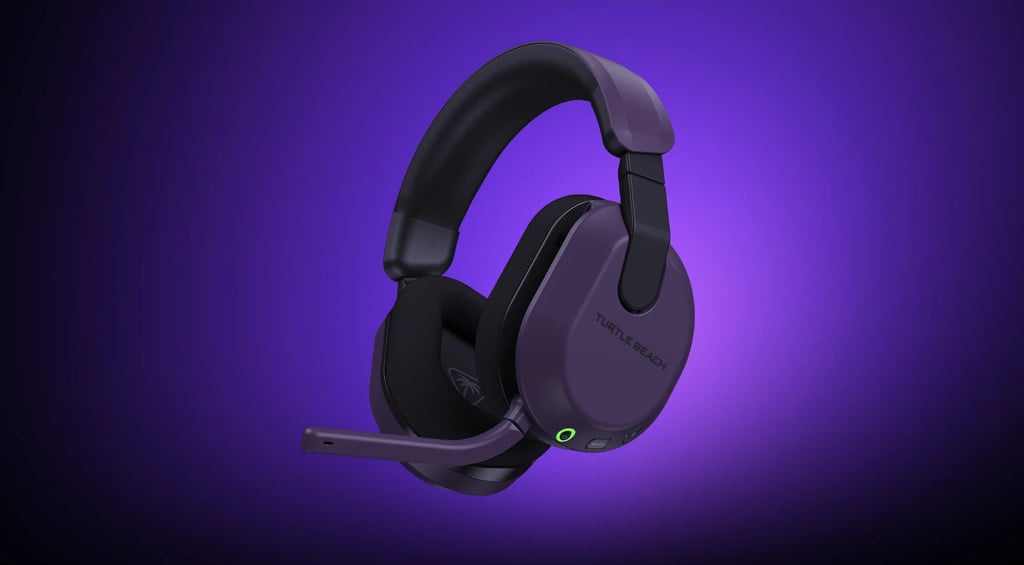
Though I have to admit I’m not a pro gamer myself, it seems to me that Turtle Beach Stealth 600 is a pretty well-rounded option, especially since it’s extremely versatile for a relatively affordable price tag.
It comes in several platform-specific iterations, such as fully optimized versions for PlayStation or Xbox. Still, it’s not the most customizable option, but it does pack quite a punch with a low-latency 2.4Ghz wireless connection. Plus, the 80-hour battery life is not something we should overlook.
Best for: I’d say that the Stealth 600 is a perfect option for casual players or those looking for a decent wireless headset at a fair price.
Not ideal for: Streamers or competitive gamers looking for a studio-quality mic and multi-device connectivity.
About Turtle Beach Stealth 700
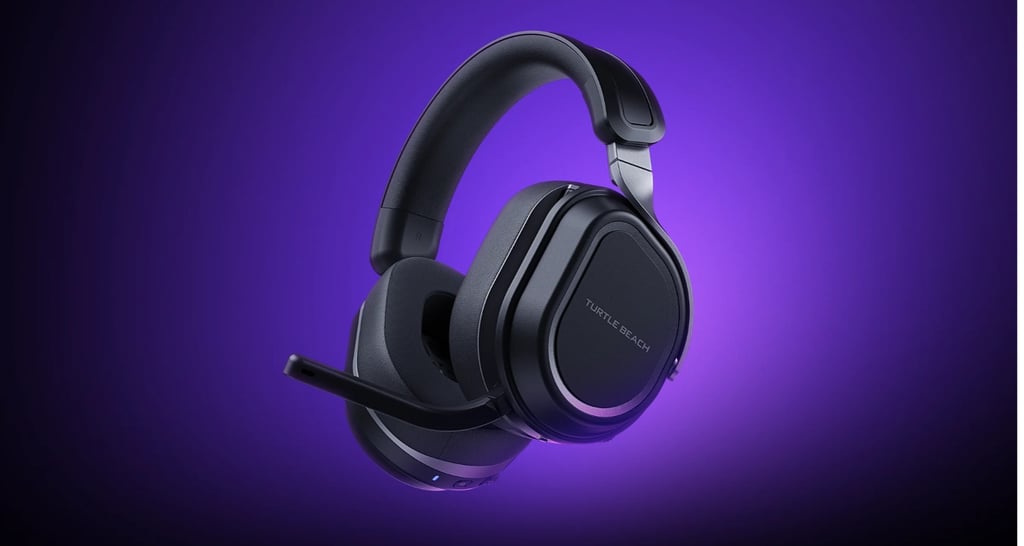
Turtle Beach Stealth 700 is among the best audiophile headphones for gaming, with the CrossPlay dual-system wireless audio and 60mm drivers for immersive spatial audio. While it’s nearly double the price of Stealth 600, it also comes with more advanced features, such as ambient noise cancellation and more extensive software control.
It pairs with the Turtle Beach Audio Hub app, which allows you to map buttons, adjust mic monitoring, and experiment with audio EQ. Plus, the reinforced steel frame makes it a better long-term option overall.
Best for: Regular or professional gamers seeking a long-term solution with Bluetooth mixing and in-app mapping.
Not ideal for: Budget-conscious players looking for a basic plug-and-play variant.
Turtle Beach Stealth 600 vs 700: features compared
Now that you know a bit more about each of these headsets, let’s see how their features compare. Here’s a head-to-head summary of my findings:
| Spec | Turtle Beach Stealth 700 | Turtle Beach Stealth 600 |
| Wireless type | 2.4GHz USB dongle + Bluetooth 5.2 | 2.4GHz USB dongle (PS)/Xbox wireless (Xbox) |
| Bluetooth support | ✅ Yes | Bluetooth 5.2 available in 3rd gen |
| Simultaneous audio | ✅ Game + phone/music | ❌ No |
| Battery life and charging type | Up to 80 hours, USB-C | Up to 80 hours (3rd gen), USB-C/Micro-USB |
| Spatial audio support | ✅ Yes (Windows Sonic/Dolby Atmos/DTS:X) | ✅ Yes (Windows Sonic/Tempest 3D) |
| App support | ✅ Yes (Turtle Beach Audio Hub) | ❌ No |
| Mic type | Flip-to-mute + monitoring/noise gate in the app | Flip-to-mute |
| Weight | Approx. 350g | Approx. 270g |
| Controls | Volume dial, Bluetooth pairing, mode selector, ANC toggle | Volume dial, mode button |
While the battery life gap was more apparent in the 2nd gen model comparison (40+ hours with the 600 and over 48 hours with the 700), 3rd gen models have evened out the playing field. The main difference, I would say, is in the Bluetooth compatibility.
The 700 comes with a dual-mode mic, allowing gamers to play and take calls simultaneously. In addition, you may appreciate the in-app EQ settings of Stealth 700, which the 600 lacks.
Turtle Beach Stealth 600 vs 700: design, comfort, and build
In terms of design, Stealth 700 seems superior. I’ve already mentioned the reinforced steel build, but its thick padding is also a significant factor in this Stealth 600 vs 700 comparison.
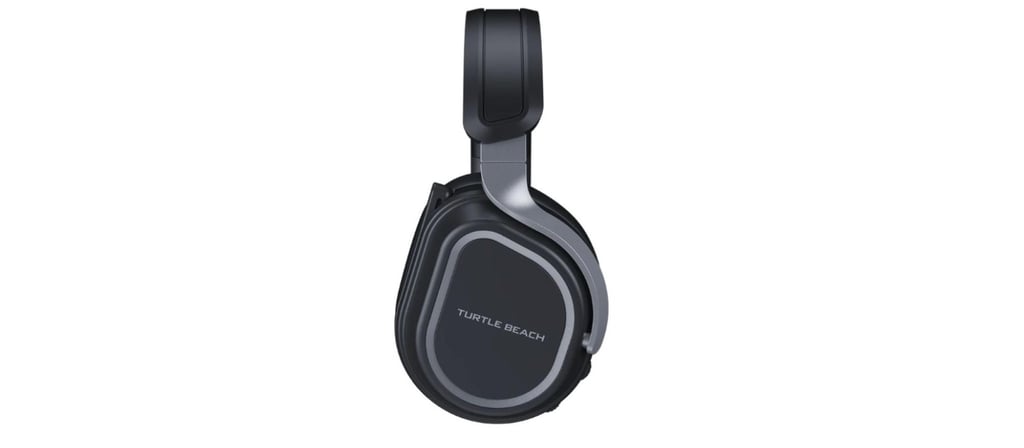
I’ve also come across numerous statements from existing users praising its higher-quality memory-foam earcups and better isolation, even in warmer conditions.
Still, Stealth 600 shouldn’t be easily dismissed. I was surprised to learn that it features a lighter clamp than the 700, most likely to provide more comfortable extended playtime for those who wear glasses. Plus, the lighter build of the 600 makes it a better option for gaming marathons.
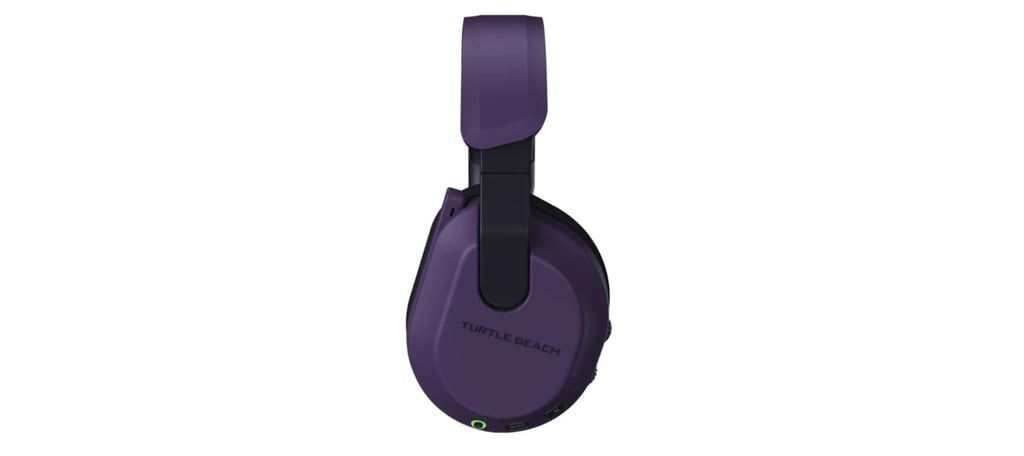
As for the earcup design, the 600 features a mesh material for better breathability, while the 700 doubles down with premium gel foam. The latter keeps more heat entrapped, so I’m not sure it’s the one you’d want to go with in warmer climates.

Turtle Beach Stealth 600 vs 700: software
One major difference between Turtle Beach 600 and 700 is app support. Software support is pretty much non-existent for the 600, especially in the first two generations. The third one finally brings some changes, but I’d say that the 700 is still the better choice in this regard.
With it, you get more EQ presets for signature sound, bass, treble, and vocal boosts. It’s also easy to switch between them using the Mode button. The 700 unlocks the full Turtle Beach Audio Hub experience, including custom EQ profiles, adjustable frequency bands, and sidetone mic monitoring options.
Still, that doesn’t necessarily make it a better choice, as it all comes down to preference. Sure, it’s a go-to pick if you’re craving in-app adjustability, but users have also reported app crashes during firmware updates and a generally steep learning curve.
Turtle Beach Stealth 600 vs 700: connectivity
I was somewhat surprised to learn about the differences in connectivity between the two models. To make this comparison clearer for you, I’ve broken them down by category:
- Console pairing. Those who go with Stealth 600 need to choose between Xbox and PS-specific options. On the other hand, the 700 is more versatile since Bluetooth mixing is available across all models, which allows for secondary device pairing.
- PC support. Both headsets connect to PC devices via USB dongles. The main difference is that the 700 features more setup and pairing options via the Audio Hub, while the 600 is a basic plug-and-play variant.
- Bluetooth presence. The 700 was the go-to model for gamers seeking Bluetooth connectivity across all generations, but the 600 added this option to the 3rd-gen model, thereby closing the gap.
- Range and dropouts. While both headsets provide 2.4GHz wireless range, the single-device connectivity of the 600 proved slightly more stable than the 700, but only when secondary device interference caused occasional dropouts.
While both boast fairly low latency for competitive play (usually within the 20ms range), the Bluetooth pairing of the 700 naturally introduces more latency than a direct dongle connection.
Turtle Beach Stealth 600 vs 700: headphone audio quality
Both devices received praise for their headphone audio quality, but there are notable differences. Starting with Stealth 600, I’ve found that it leans strongly toward a bass-heavy sound signature, which is a good thing for FPS games.
Rumble and similar effects are clearly pronounced, but the balance and sound crispness might be off when compared to premium headsets. The Treble Boost preset adds another dimension to the sound, as you can fine-tune EQ presets, but not individual frequencies.
That’s why I believe Stealth 700 is a slightly better option, as it allows you to move away from the stock sound profile and customize EQs to your preference within the Audio Hub. The bass is also less fatiguing, as many users report, while the treble is smooth enough for immersive gameplay.
Turtle Beach Stealth 600 vs 700: microphone quality
Based on what I’ve learned from user reviews, Stealth 600’s mic can only be described as average. It’s nowhere near the low-tier range of cheaper headsets, but it’s not exactly close to the premium range either.
Some users have reported their voices sounding thinner or more compressed, but it’s still a decent choice for casual gaming and Discord chat multiplayer action.
On the flip side, Stealth 700 features better voice clarity and less of that compressed feel. Plus, you can adjust the mic and customize it via the Audio Hub. This way, you can reduce background noise and set up sidetone mic monitoring.
Price comparison
With occasional discounts, I can see Stealth 600 making my list of the best gaming headsets under 100 dollars. The regular price is $109, though I’ve seen Amazon deals bring it down to the $90-$95 range.
On the other hand, Stealth 700 starts at $199.99 and occasionally gets reduced to around $150 with discounts. Either way, the difference is clear.
You can still get both of these models at lower price points if you opt for Gen1 or Gen2 instead of Gen3, which is the focus of this review.
What do users think about each model?
Going through Reddit threads and forums, I found that most users praise Stealth 600 for the value it offers for the price. They claim it’s comfortable enough for longer sessions of up to 4 to 6 hours. Most users also praise its durability, while there’s some backlash regarding cheap plastic hinges and earcup padding that’s said to thin out rather fast.
Stealth 700 has received stellar feedback on overall comfort, especially for those who wear glasses while gaming. However, some users report occasional Bluetooth syncing issues.
Final verdict: which one fits you better?
Ultimately, the choice between Turtle Beach Stealth 600 vs 700 purely depends on your preference. I’d recommend the 600 if you’re on a tight budget or just gaming casually, with no need for advanced customization or Bluetooth connectivity. In my mind, it’s the perfect middle ground between the entry-level Turtle Beach Recon 70 and the premium Pro model.
On the other hand, Stealth 700 makes a better choice for competitive gamers looking for more spatial audio qualities and adjustable profiles with better mic quality.
FAQ
Is Turtle Beach Stealth 700 worth the extra cost over Stealth 600 for casual gamers?
No, for most casual gamers, Stealth 700 isn’t worth the cost difference, unless you’re looking for multi-device connectivity and custom EQs.
Do Stealth 600 and Stealth 700 work on both Xbox and PlayStation, or do I need a specific version?
Only a specific version of these headsets will connect to your device, so make sure to confirm Xbox/PlayStation compatibility first before purchase.
Which headset has better microphone quality for Discord and party chat?
Stealth 700 has a better microphone quality for Discord and party chat, but Stealth 600 should also suffice.
Does Stealth 700 support Bluetooth and can it mix phone audio with game audio?
Yes, Stealth 700 supports Bluetooth and it can mix phone audio with game audio via secondary device connectivity.
Are there reliability or durability issues users report more often on Stealth 600 or Stealth 700?
Both models have had durability issues: while Stealth 600 users complain that plastic hinges are prone to cracking, Stealth 700 owners report Bluetooth connectivity and firmware update issues.