Best hearing aids in 2026: top picks for different needs and budgets
Being behind major reports like The Mother of All Breaches and RockYou2024, our in-house cybersecurity experts and journalists provide unbiased, real-world testing and in-depth analysis.
We maintain complete transparency by openly sharing our testing methodologies with our audience.
Learn more
Demand is growing for both prescription and over-the-counter (OTC) hearing aids, especially after the FDA’s OTC hearing aid rule improved availability. Using my expert knowledge on hearing aids, I’ve carefully researched the 5 best hearing aids in this roundup.
I, together with the Cybernews research team, reviewed official product specifications, pricing details, regulatory disclosures, and consistent user feedback to identify the best hearing aids available today.
In this hearing aid roundup, I’ve explored the top models’ speech clarity, comfort, battery life, plus crucial trial and warranty nuances. The list is structured as follows: best overall, best budget, best runtime, best premium pick (with audiology services), and a no-app solution. By the end, you’ll know which model works for you.
5 best hearing aids – shortlist
- Oxiline Hear XS Pro – best overall hearing aid
- Audien Atom 2 – best budget OTC hearing aid with 24-hour battery life
- NVBOTY M2219 – best hearing aid with up to 100 hours of runtime with the case
- Jabra Enhance Select 700 – top hearing aid with licensed audiology services
- EarCentric EasyCharge PRO – no-app hearing aid for seniors


Our team of in-house researchers, writers and editors reviews and analyzes health tech products using a research-driven approach. We gather data from multiple sources, fact-check all information, and conduct our research based on peer-reviewed studies, expert opinions, consumer ratings, and regulatory approvals.
You can learn more about how we test health tech products here.
5 best hearing aids compared
Before we get to the individual reviews, it’s helpful to compare these hearing aids side by side. The comparison table below is an easy way to see important differences in features, price, and suitability.
| Model | Material | Hearing aid type | Rx or OTC? | Trial period (days) | Battery type | Bluetooth? | Best for |
| Oxiline Hear XS Pro | Not specified | Mini BTE | Not specified | 120 days (plus full refund if not satisfied) | Rechargeable lithium-ion | Yes (5.2) | Those looking for best overall value, with UV-C charge case, and detailed specs list |
| Audien Atom 2 | Not specified | In-ear | OTC | 45 days (risk-free) | Rechargeable (type not specified) | Not specified | Those who want an affordable OTC, simple setup, and 24-hour battery |
| NVBOTY M2219 | Plastic | In-ear | OTC (amplifier) | Not specified | Rechargeable (type not specified) | Not specified | Those who want long runtime with case, and 5-level button control |
| Jabra Enhance Select 700 | Plastic | RIE | OTC | 30 | Rechargeable (type not specified) | Yes (LE Audio, streaming) | Those who want app support and licensed audiology services |
| EarCentric EasyCharge PRO | “Medical-grade” material | BTE | OTC | Not specified | Lithium polymer | No | Those who want no app, no pairing simplicity |
5 best hearing aids – our detailed list
Below are detailed product descriptions for each hearing aid model. I’ve included aspects like price, use case, plus my pros and cons based on Cybernews research criteria.
1. Oxiline Hear XS Pro – best if you need clear audio in noisy settings
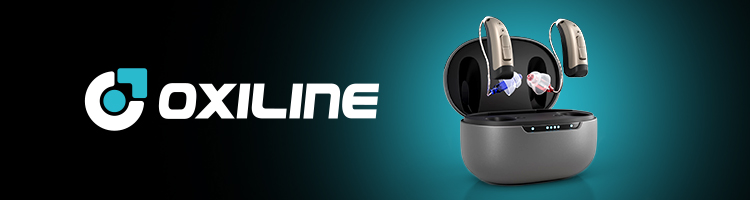
| Material: | Not specified |
| Hearing aid type: | Mini behind-the-ear (BTE) |
| Price: | $599 |
| Best for: | Those with mild to moderate hearing loss wanting to hear clearly in noisy settings |
The Hear XS Pro is a compact BTE with a UV-C sanitizing charging case. Its advanced Digital Signal Processing provides natural sound, while it’s “engineered to medical grade standards,” according to Oxiline.
Its generous 120-day trial period includes a full money-back guarantee. Key specs include adaptive noise reduction up to 30dB and an IP65 water and dust resistance. There’s up to 22 hours of use per charge. App controls offer different modes and sound personalization.
2. Audien Atom 2 – best if you want an ultra-discreet OTC hearing aid
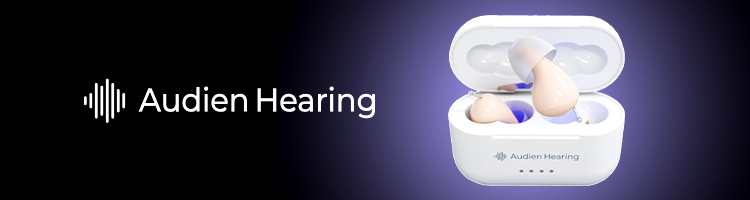
| Material: | Not specified |
| Hearing aid type: | In-ear |
| Price: | $189 |
| Best for: | Those with mild to moderate hearing loss wanting a straightforward, affordable OTC hearing aid |
Audien says its in-ear OTC model is “small and nearly invisible,” with a simple setup that doesn’t require doctor visits. I chose it because people are looking for simple, affordable hearing aids.
Key features include the A2 chip delivering “crystal clear sound” with noise cancellation and reduced “ringing.” It has four listening modes, up to 24 hours of battery life, and a 45-day money-back guarantee.
3. NVBOTY M2219 – best if you want long runtime and easy button controls
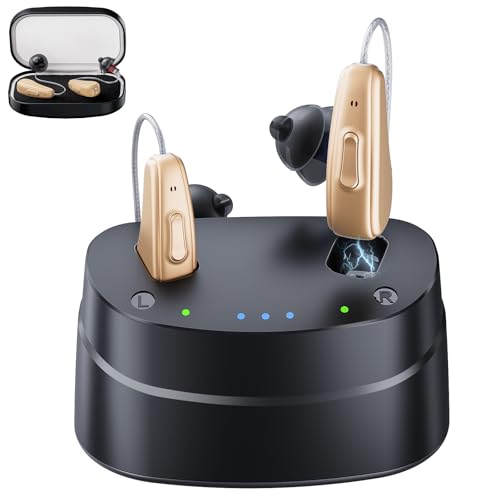
The NVBOTY M2219 is a simple, in-ear OTC hearing amplifier with two buttons, and a microphone. I picked it for seniors who prefer physical buttons. It includes five volume levels and a memory function that restores the last used setting.
Its strong side is up to 25 hours of battery life on a full charge and up to 100 hours total with the charging case. Other key features include active noise cancellation, and a volume gain of 43dB±5dB.
4. Jabra Enhance Select 700 – best if you prefer remote audiology appointments
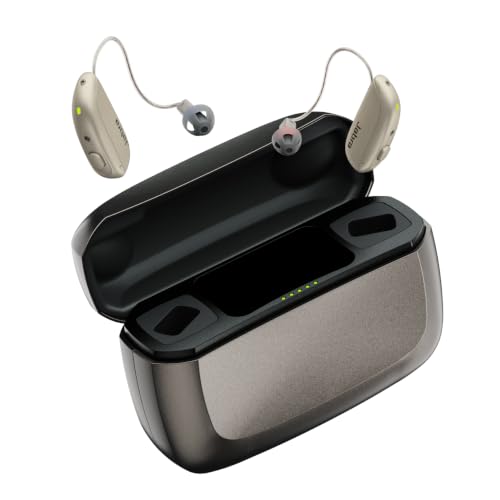
The most expensive model in this list, the Jabra Enhance Select 700 provides “licensed audiology services.” I included it for people who need professional adjustments and ongoing support (unlimited adjustments and appointments within three years).
Key features include: personalized programming based on an audiogram or an online hearing test, Bluetooth streaming for iOS and Android, and SoundScape with Auto Focus. Battery life is listed as over 24 hours per charge. There’s a three-year warranty with loss and damage protection.
5. EarCentric EasyCharge PRO – best if you don’t like apps
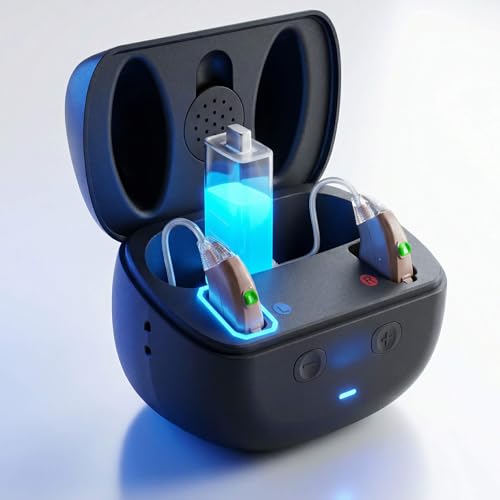
EarCentric’s selling point for its EasyCharge PRO is that it’s a “zero-tech” OTC option: no apps, no Bluetooth. I picked it because many people prefer not to use apps or Bluetooth, and don’t like complex adjustments. Its charging case acts like a remote control for modes and volume.
Key features include: UV cleaning and auto-drying when the hearing aids are docked, 19 hours of use per charge, and two full backup charges with the case. It filters background noises while boosting the human voice.
Our methodology
I use the Cybernews weighted scoring system for devices like hearing aids. Here’s how that applies to this roundup:
- Sound processing and amplification clarity (25%). I preferred models that clearly list specifications relating to speech enhancement, noise reduction, and feedback control.
- Transparency (specs, return policy, warranty) (20%). I looked for clear trial, warranty, and technical information. Products with detailed spec sheets scored highest.
- Comfort and usability (15%). I focused on fit, control simplicity, and daily handling ease based on listed design details and what online users said.
- App and customization features (15%). I looked for key controls like environment modes, personalization capabilities, and whether additional support was offered.
- Price and value (15%). I weighed product pricing vs feature richness/depth and included support.
- User sentiment consistency (10%). I took note of recurring user sentiment from forums and review sites. I avoided considering positive or negative isolated comments.
How do hearing aids work?
Hearing aids are small electronic devices that make sounds easier to hear in typical everyday environments. Not all are designed the same way, but it normally works like this: the microphone captures sound, the amplifier/DSP processes and boosts the signal, and then the speaker delivers the adjusted sound into your ears. During processing, certain sounds can be made louder and even reshaped.
Many modern hearing aids have advanced digital processing that reduces typical background noises and feedback (or “whistling”), while other models just turn the volume of everything up. Some models have directional microphones to isolate sounds coming from in front of you.
It’s important to distinguish OTC hearing aids vs prescription devices. OTC aids are available without a prescription for people with mild to moderate hearing loss (or self-perceived hearing loss). Prescription devices are fitted by a professional, and they provide more personalized hearing configurations.
Different styles of hearing aids
Hearing aids don’t come in only one style. They come in several variants, such as: BTE that hooks behind the ear, Receiver-in-canal (RIC) that’s similar to BTE, In-the-ear (ITE) that fits in the outer ear, In-the-canal (ITC) that sits partly inside your ear canal, and Completely-in-canal (CIC) that sits deepest in your ear canal.
Among my reviewed brands, you’ve mostly seen BTE and RIC options, plus some in-ear variants. For instance, the Oxiline and EarCentric are BTE, while Jabra is a receiver-in-ear (RIE), and Audien and NVBOTY are in-ear styles.
Generally speaking, in-canal and in-ear types dominate the market because they balance size and power. The smaller ITC or CIC types can be very discreet but more finicky to handle and control. BTE and RIC options, while more visible than the former, are usually easier to fit and remove, and can also contain larger batteries and extra features.
Features of hearing aids
It’s important to choose a device with features that work with your lifestyle and hearing needs. Here are some common features buyers tend to compare:
- Digital noise reduction. Cuts down background noise. Works best for street or restaurant noise, and busy homes.
- Feedback cancellation. Feedback is that whistling noise caused by sound leakage and re-amplification. This feature helps if you wear glasses or struggle with fitting the aids.
- Rechargeable batteries. Built-in batteries often last the warranty period of the device. This way, you won’t be exchanging batteries often.
- Bluetooth connectivity. Some models connect to your phone for streaming or control. This is best if you want additional call audio, or listen to media.
- App-based customization. On app-enabled devices, you can often adjust modes, volume, and tweak sound profiles. This is best if you’re tech-savvy.
- Directional microphones. Microphones that focus on sound coming from a specific direction. It's best for clarifying conversations in noisy environments.
- Multiple listening modes. Preset profiles tuned for environments like: outdoor, music, or TV. It's ideal if you often move between quiet and noisy spaces.
Before you buy: what to look for in the best hearing aids
Before you buy, a practical checklist helps a lot, since there are many options out there. You want to get a close match between the device’s capabilities and your hearing, comfort, and support preferences:
- Hearing loss severity compatibility. OTC aids are usually purchased by people who believe they have mild to moderate hearing loss. If you’re outside that range, speaking to your doctor may be more beneficial.
- Return policy length. Longer return policies mean you get more time to test the device. During that time, judge comfort and everyday performance.
- Warranty coverage. Read about what’s covered and for how long. Make sure the policy includes any replacements or repairs.
- Subscription requirements (if any). Advanced features tend to be paywalled. Also check the subscription contract for ongoing fees.
- Customer support accessibility. Support is crucial. Look for clearly listed support channels and service hours (especially for remote-only brands).
- FDA OTC compliance. For OTC models, make sure the product is described as an FDA OTC hearing aid for adult use (18+). Make sure you see clearly labeled standards.
Getting used to hearing aids
Starting to use hearing aids for the first time often means an adjustment period, until they feel unnoticeable. After all, your brain needs to adapt to new sensory experiences:
- Adjustment period expectations. Sounds often feel quite sharp at first. Your own voice can sound different. As you get used to the sound, this usually improves.
- Gradual wear time increases. Go easy at first, start at home with a short session. Extend wear time gradually. Then, try using aids in noisier environments.
- Brain adaptation. Your brain needs time to re-prioritize sounds you don’t usually focus on. With consistent use, speech becomes clearer and use becomes more natural.
- Maintenance and cleaning basics. Wipe your hearing aids daily, keep charging contacts clean, and replace tips if sounds seem muffled. Store your aids in a dry case.
If you still experience persistent issues after a few weeks of use, go to a healthcare professional. Following up with an audiologist may resolve fit and adjustment issues.
Bottom line: choosing the best hearing aids
Choosing the best hearing aids depend heavily on your level of hearing loss and lifestyle. Given Cybernews criteria, Oxiline Hear XS Pro wins overall as the best value pick with a trial and charging case.
If you’re on a budget, Audien Atom 2 or NVBOTY M2219 are good starting points. For more tech-savvy app control, adjustments, and streaming, the premium Jabra Enhance Select 700 performs well. If you’re a senior who wants no phone setup, EarCentric EasyCharge PRO is easy to use, with controls on the case.
The best option depends on your hearing level and day-to-day activities. Book a hearing test if you’re still unsure.
Find out more about hearing aids:
Oricle Hearing Aids review: features, pricing, and whether they're worth it
Audien Atom Pro 2 review: is this hearing device worth it?
FAQ
Are OTC hearing aids as effective as prescription hearing aids?
It depends. OTC hearing aids are generally intended for adults with self-perceived mild to moderate hearing loss. For example, Oxiline Hear XS Pro has multiple listening programs and noise reduction. However, prescription devices are fitted and adjusted by a healthcare professional, and may be personalized directly for you.
Which hearing aid is best for seniors?
Simpler controls are preferred by seniors, so if someone wants no app and minimal tech, EarCentric EasyCharge PRO is a solid choice. If you’re a senior and are comfortable with a modern smartphone and want professional support, Jabra Enhance Select 700 offers licensed audiology services.
How long do rechargeable hearing aids last on a single charge?
Usually about one day, but it varies. Many models list roughly 19-24+ hours per charge, depending on volume and features like streaming that draw battery power.
Do hearing aids require a subscription?
No. Some brands have optional paid services, but many hearing aids work without a subscription. Always check if the brand provides the support/features you need.
How long does it take to adjust to hearing aids?
Typically, days to weeks. It’s recommended to start with shorter sessions, then slowly increase the hours of use. If you still experience persistent problems after a few weeks, follow up with a hearing professional.