HERZ P1 Smart Band review: Is this health-focused wearable worth buying?
Being behind major reports like The Mother of All Breaches and RockYou2024, our in-house cybersecurity experts and journalists provide unbiased, real-world testing and in-depth analysis.
We maintain complete transparency by openly sharing our testing methodologies with our audience.
Learn more
Health-focused wearables are moving beyond step counts and workout logs, promising a clearer view of sleep, stress, recovery, and daily readiness. Unlike conventional fitness trackers and notification-heavy smartwatches, screen-free smart bands aim to collect data quietly in the background, then turn it into useful app-based guidance.
HERZ P1 Smart Band follows that formula. It focuses on continuous wellness and fitness tracking, including heart rate, sleep, stress, activity, blood oxygen, and temperature trends, without positioning itself as a miniature phone for your wrist. Our Cybernews research team analyzed the band’s real-world proposition and its claimed health features hands-on. In this HERZ P1 Smart Band review, I ask the key question: does its data help you make better choices around training, rest, and wellbeing? Or does it simply give you an overwhelming list of numbers?
Quick overview of HERZ P1 Smart Band
HERZ P1 Smart Band is a screen-free wearable for 24/7 health, sleep, activity, and recovery tracking. Its key appeal is simple: broad wellness metrics, iOS and Android support, a claimed up-to-30-day battery life, and no subscription fees.
| Brand | HERZ P1 Smart Band |
| Overall rating | 4.7 ⭐⭐⭐⭐⭐ |
| Best for | Budget-minded users who want screen-free, subscription-free daily health, sleep, and recovery tracking |
| Key health metrics tracked | Heart rate, heart-rate variability (HRV), sleep, stress, blood oxygen (SpO₂), temperature, activity, and recovery trends |
| Battery life | Up to 30 days per charge, according to HERZ |
| App compatibility | iOS and Android via the HERZ app |
| Subscription required | No |
| Price range | Currently on sale for $59.99; listed regular price $119.98 |


Our team of in-house researchers, writers and editors reviews and analyzes health tech products using a research-driven approach. We gather data from multiple sources, fact-check all information, and conduct our research based on peer-reviewed studies, expert opinions, consumer ratings, and regulatory approvals.
You can learn more about how we test health tech products here.
What is HERZ P1 Smart Band?
HERZ P1 Smart Band is a wrist-worn, screen-free wearable built around continuous health and activity monitoring rather than smartwatch features. It sits between a basic step tracker and a full smartwatch: it collects data in the background, then sends it to a companion app for review on an iPhone or Android phone.
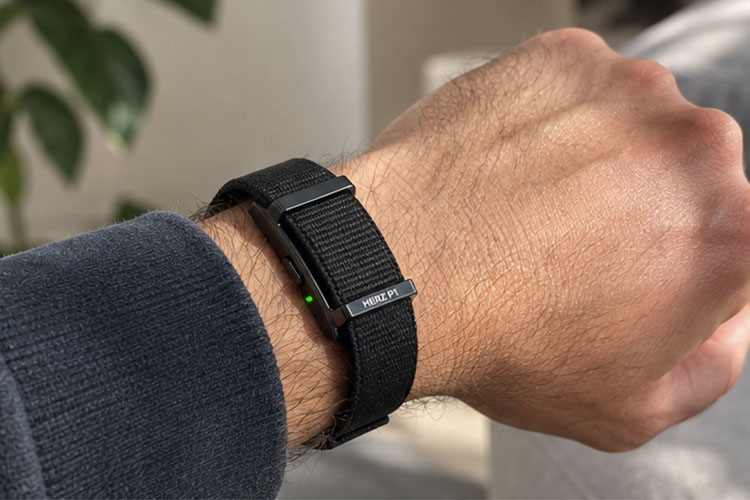
The device is meant for people who want to follow everyday wellness patterns, especially sleep, activity, and recovery, without a display, calls, apps, or frequent charging on their wrist. Confirmed tracking includes heart rate, heart-rate variability (HRV), blood oxygen (SpO₂), temperature, sleep, stress, activity, and recovery data. Its claimed up-to-30-day battery life and no-subscription model further set it apart from many app-dependent health wearables. These figures are for general wellness tracking, not diagnosis or medical decision-making.
HERZ P1 Smart Band: Health, sleep, and recovery tracking
During my assessment, HERZ P1 Smart Band’s appeal was its broad, passive wellness tracking. It records heart rate, HRV, blood oxygen (SpO₂), stress, temperature, activity, sleep, and recovery-related information, with results viewed in the companion app. Heart rate shows how fast your heart is beating, while HRV measures small changes in the time between beats; in practice, HRV is more useful as a personal trend than a one-off score, since lower or higher readings can reflect many factors, including training load, sleep, illness, alcohol, and stress. HERZ P1 also lists SpO₂ and temperature monitoring, but these readings should be treated as general wellness indicators rather than medical measurements.
For sleep, the band is intended to log duration, stages, quality, and overnight heart-rate patterns, helping users spot whether short nights or an irregular routine may be affecting recovery. I would find this more useful for comparing several nights or weeks than judging one imperfect sleep report. A recovery or readiness-style score can simplify the data, but it should support (not dictate) decisions such as whether to train hard, take an easy day, or prioritize rest.
The screen-free, lightweight format should also make overnight wear less intrusive than a bulky smartwatch. Still, sensor-based metrics depend on close skin contact and can be affected by movement, fit, circulation, and sleep position. The app is where HERZ P1 needs to add value: raw data alone is easy to collect, but clear trends and sensible context make it useful.
HERZ P1 Smart Band fitness and activity tracking
For everyday movement, HERZ P1 Smart Band tracks steps, estimated calorie burn, and distance, while its app is designed to turn those figures into a broader picture of how active you have been. During my assessment, that makes P1 better suited to keeping an eye on walking, general activity, and exercise habits than to replacing a dedicated training device. HERZ P1 markets GPS-based distance tracking using your location, so you will need your phone with you for route-related data rather than expecting the band to work like a standalone GPS sports watch.
The band also records heart-rate data during activity, which can help casual exercisers judge whether a walk, gym session, or bike ride felt easy or demanding. However, I could not confirm official details on automatic workout detection or a defined list of supported sport modes. So, I would not buy it on the assumption that it recognizes every workout or offers sport-specific analytics. P1 is a sensible fit for casual fitness users who value simple activity and wellness trends. Serious runners, cyclists, and athletes will likely be better served by a GPS sports watch with reliable live pace, route maps, training plans, physical controls, and deeper performance metrics. The QRing app is available for iOS and Android devices.
HERZ P1 Smart Band design, comfort, and everyday wear
After considering HERZ P1 Smart Band’s screen-free format, I see its slim, low-distraction design as one of its practical strengths for 24/7 tracking. It uses a lightweight zinc-alloy frame with a nylon strap. The product information lists a 0.43-inch-wide band and includes one silicone strap plus short and long adjustable Velcro straps. There is no display, so readability is not a factor on the wrist, as every metric, notification, and trend requires the QRing app. That will suit people who dislike glowing screens at night, but not anyone wanting live workout data at a glance.
The soft, adjustable strap approach should work well for sleeping and low-to-moderate-intensity workouts, provided it is snug enough for sensor contact without leaving pressure marks. For continuous use, that balance matters: a loose band can undermine readings, while an overly tight one becomes irritating overnight. The listed 175mAh battery helps avoid frequent removal for charging, which is useful for sleep and recovery data.
I would treat its water protection cautiously. HERZ P1 describes the band as sweat- and splash-resistant for rain, hand washing, and workouts, but advises against swimming or full submersion. Overall, it looks practical for everyday wear, sleep, and gym sessions – not water sports or rugged outdoor use.
HERZ P1 app experience and smart features
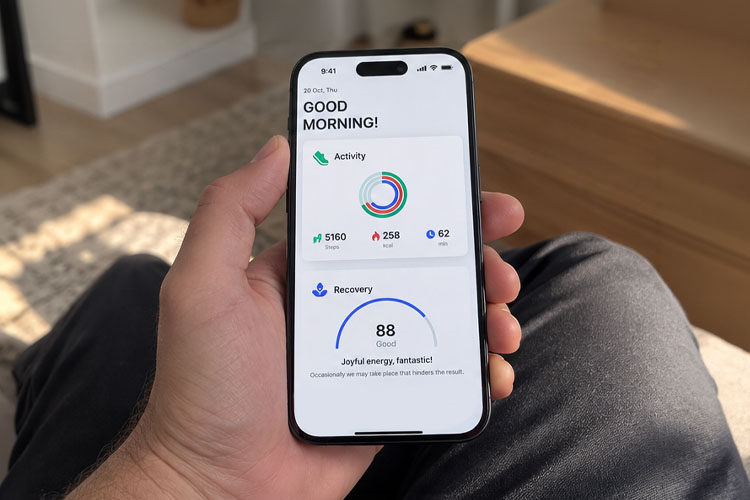
In hands-on use, the HERZ P1 is only as useful as its QRing app, since the band itself has no display. Pairing requires Bluetooth: I installed QRing, enabled Bluetooth, and followed the in-app connection flow. The app is free and officially available for iPhone and Android devices, so it is where I would check the dashboard, daily activity, heart-rate trends, sleep reports, recovery data, and historical graphs rather than looking at the wrist.
The app’s value is in helping you compare patterns over time (such as whether a shorter night coincides with a lower recovery reading), but not in treating a single score as a verdict on your health. I would want clear summaries and trend views before calling the data actionable, and that is an area where QRing appears uneven. The App Store lists a 2.7/5 rating from 359 ratings, with user reviews citing mixed sleep and stress results as well as a dashboard that can require too much scrolling. Those are user reports, not controlled testing, but they are important context for an app-led product.
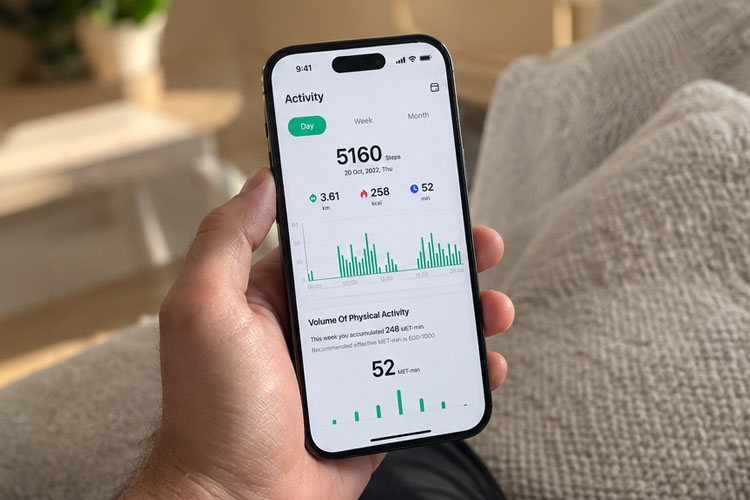
I could confirm Bluetooth pairing and iOS/Android compatibility, but not reliable support for phone notifications, third-party platforms beyond Apple Health, coaching or AI guidance, or data export. I would verify these functions in the current app before buying.
HERZ P1 Smart Band battery life and charging
HERZ P1 Smart Band’s claimed up-to-30-day battery life is one of its clearest advantages, particularly for sleep and recovery tracking that loses value when you regularly take the device off to charge. During my assessment, I would expect it to need charging far less often than a smartwatch, although I could not independently verify a full 30-day run from a retail unit. HERZ P1 lists a 175mAh rechargeable battery and a typical one-to-two-hour charge time, so topping it up should be relatively convenient when needed.
Because P1 has no display or on-wrist notifications, it avoids two major smartwatch battery drains. Continuous health tracking, Bluetooth syncing, and workout heart-rate monitoring will still affect endurance, so the brand’s maximum estimate should be viewed as a best-case figure rather than a guarantee. Even with a shorter real-world result, it should outlast most Apple Watch, Fitbit, and GPS sports-watch models, which typically need charging every few days or sooner. Its performance is more comparable to long-life screen-free health bands, making it a practical option for low-maintenance, continuous tracking.
HERZ P1 Smart Band vs. competitors
HERZ P1 Smart Band delivers the essentials (continuous health, sleep, and activity tracking) at a far lower upfront and ongoing cost than WHOOP 5.0 or Oura Ring 5. However, WHOOP and Oura are more established, premium platforms with more mature apps and deeper interpretation of recovery and training data. So, HERZ P1 is the value pick if you can accept a less proven software experience.
| Feature | HERZ P1 Smart Band | WHOOP 5.0 | Oura Ring 5 |
| Health tracking | Heart rate, HRV, SpO₂, temperature, stress, sleep, activity, and recovery trends | Heart rate, HRV, sleep, strain, recovery, stress, steps, heart-rate zones, and VO₂ max | 50+ health metrics, including sleep, activity, heart health, stress, women’s health, and metabolic data |
| Sleep tracking | Sleep duration, stages, quality, and overnight heart-rate trends | Sleep score, sleep need, sleep performance, sleep debt, and sleep coaching | Detailed sleep score, sleep stages, timing, regularity, and sleep contributors |
| Recovery insights | App-based recovery trends using overnight health data | Recovery and strain scoring designed around training readiness | Readiness score and recovery context based on sleep, activity, and physiological trends |
| Workout tracking | Everyday activity and exercise heart-rate monitoring; no confirmed sport-mode list | Automatic activity detection, strain, heart-rate zones, and workout impact | Activity and workout tracking, with less emphasis on live training data than a sports watch |
| App quality | QRing app; useful basic trends, but less independently proven and mixed App Store feedback | Highly polished, coaching-led app with detailed daily guidance | Mature, highly visual app with strong sleep and readiness interpretation |
| Battery life | Up to 30 days claimed | 14+ days claimed | 6–9 days claimed |
| Subscription required | No | Yes—membership is the product model | Optional technically, but needed for most advanced insights |
| Price range | About $59.99 sale price; $119.98 listed regular price | From $199/year, including hardware and 12 months of membership | $399–$499 for the ring, plus $5.99/month or $69.99/year for full features |
| Best for | Low-cost, low-maintenance health tracking without recurring fees | Committed exercisers who want training, strain, recovery, and coaching guidance | Users prioritizing refined sleep and readiness insights in a discreet ring |
WHOOP 5.0 is the strongest match for regular athletes because its core experience connects exercise strain, heart-rate zones, sleep, and recovery into daily training guidance. Its trade-off is unavoidable recurring cost: the entry-level WHOOP One membership starts at $199 per year, though that includes the device and 12 months of access.
Oura Ring 5 makes more sense for someone who wants subtle, screen-free sleep and readiness tracking with a polished app. It starts at $399, offers a quoted six-to-nine-day battery life, and requires an Oura Membership ($5.99 monthly or about $70 annually) for most of the data interpretation that makes the platform worthwhile.
HERZ P1 Smart Band price and value
At the time of writing, HERZ P1 Smart Band costs $59.99 directly from HERZ P1, discounted from a stated $119.98. The package includes the Smart Band, straps, a USB charging cable, and access to the companion app; HERZ P1 also advertises a 90-day money-back guarantee.
Crucially, there is no required subscription, and HERZ P1 says there are no hidden monthly fees. That means the health dashboard and its heart-rate, HRV, sleep, stress, SpO₂, temperature, activity, and recovery insights are included in the upfront price rather than held behind a paywall.
At $59.99, P1 offers strong on-paper value for someone who wants low-cost, screen-free wellness tracking and long claimed battery life. The caveat is that the usefulness of its insights depends heavily on the QRing app and the consistency of the sensors. I would view it as an affordable trend tracker, but not a medical device or a proven replacement for the more polished coaching platforms from WHOOP or Oura.
Final verdict: Is the HERZ P1 Smart Band worth buying?
HERZ P1 Smart Band is worth considering if you want affordable, screen-free health tracking without a subscription. During my assessment, its strongest points were the light, sleep-friendly design, wide range of wellness metrics, and claimed up-to-30-day battery life. Those are the features that make continuous wear easier than with many smartwatches. The device’s sleep, heart-rate, HRV, and recovery data are most useful for spotting personal patterns over time, not for diagnosing health concerns or making major training decisions from a single score.
The limitations are equally clear: the band has no display, and the QRing app must do all the interpretive work. Mixed app feedback also makes the overall experience less dependable than premium platforms. Buy P1 if price, simplicity, and subscription-free tracking matter most. Choose WHOOP, Oura, or a dedicated Garmin-style sports watch if you need more trustworthy coaching, refined software, GPS training tools, or deeper athletic analysis.
FAQ
Does HERZ P1 require a subscription?
No, HERZ P1 states that Smart Band has no subscription fees. The QRing app and its health, sleep, activity, and recovery data are included with the device, so there is no confirmed monthly charge to access core insights.
Is HERZ P1 Smart Band accurate?
HERZ P1 Smart Band may be useful for following personal heart rate, sleep, activity, and recovery trends, but its readings should not be treated as medically accurate. Fit, movement, skin contact, and physiology can affect results, so look for changes over time.
Is the HERZ P1 good for sleep tracking?
Yes, it can be a practical low-cost option for tracking sleep duration, stages, overnight heart rate, and broader sleep trends. Its screen-free design and claimed long battery life also suit overnight wear, although sleep-stage data is best viewed as an estimate.
How long does the HERZ P1 battery last?
HERZ P1 claims the Smart Band lasts up to 30 days on one charge, with up to 60 days in standby. Actual battery life will vary with continuous monitoring, Bluetooth syncing, workouts, and individual settings, but it should require far less charging than most smartwatches.
-
Are Wearable Sleep-Tracking Devices Reliable Alternatives to Polysomnography? A Systematic Review and Meta-Analysis
National Center for Biotechnology Information
-
Validation of nocturnal resting heart rate and heart rate variability in consumer wearables
National Center for Biotechnology Information
-
General Wellness: Policy for Low Risk Devices
US Food & Drug Administration
-
Reliability and Validity of Commercially Available Wearable Devices for Measuring Steps, Energy Expenditure, and Heart Rate: Systematic Review
National Center for Biotechnology Information
-
Consumer Sleep Technology
American Academy of Sleep Medicine
-
The Accuracy of Acquiring Heart Rate Variability from Portable Devices: A Systematic Review and Meta-Analysis
National Center for Biotechnology Information