Acer FreeSense Ring vs Oura Ring: which smart ring tracks better in 2026?
Being behind major reports like The Mother of All Breaches and RockYou2024, our in-house cybersecurity experts and journalists provide unbiased, real-world testing and in-depth analysis.
We maintain complete transparency by openly sharing our testing methodologies with our audience.
Learn more

The wearable health market has exploded massively in recent years. While smartwatches still dominate the game, smart rings are steadily making a name for themselves, with Oura being the top choice for many users.
But there’s a new kid on the block. Acer's FreeSense Ring is looking to shake things up, and if you are like me, you’re probably wondering, is this actually a worthy contender or just another Oura imitation?
Well, I’ve teamed up with the Cybernews research team to compare Acer FreeSense Ring vs Oura Ring. In this detailed guide, you’ll learn about their costs, apps, battery life, and everything you need to make the best decision for your needs.
For a premium, full-featured smart ring experience, Oura is the top choice. But if you’re looking for a solid entry-level option with no subscription fees, Acer’s FreeSense is a compelling alternative.
Oura Ring vs Acer FreeSense Ring overview
Before we dive into the details of the Oura and Acer FreeSense rings, here’s a quick table highlighting their key differences.
| Feature | Oura Ring | Acer FreeSense Ring |
| Ratings | 4.8 | 4.6 |
| Dimensions | 3mm thick, 12 sizes (4-15) | 2.6mm thick, 7 sizes (7-13) |
| Weight | 3-5g | 2-3g |
| Color | Black, silver, brushed silver, stealth, gold, rose gold | Black, rose gold |
| Health tracking features | Heart rate, HRV, SpO2, sleep stages, temperature, activity, stress, menstrual cycle tracking | HRV, sleep stages, heart rate, activity, SpO2 |
| Compatibility | iOS and Android | iOS and Android |
| Battery life | Up to 8 days (charges in 20 minutes) | Up to 4 days |
| Price | $349-$499 (depending on the color) | $199-$250 |
| Subscription cost | $5.99/month or $69.99/year | None |


Our team of in-house researchers, writers and editors reviews and analyzes health tech products using a research-driven approach. We gather data from multiple sources, fact-check all information, and conduct our research based on peer-reviewed studies, expert opinions, consumer ratings, and regulatory approvals.
You can learn more about how we test health tech products here.
What is a smart ring?
Smart rings are simple wearable devices that pack advanced health sensors into a lightweight, finger-worn design. They look like your average, everyday ring from afar, but are designed to make health tracking seamless.
These devices monitor metrics like heart rate, daily activity, and sleep quality, with some, such as the Oura Ring, going as far as tracking temperature changes, measuring blood oxygen levels, and analyzing stress levels by using heart rate variability (HRV).
The best part about smart rings is that you can wear them all day without that techy look (yes, I’m talking about smartwatches). You also don’t have to worry about charging every night, and if you’re like me, who loves to take a break from screens, the rings will provide you with continuous health insights and no distractions.
If you need any information, you just load up the app on your phone and close it once you’re done.
How we test smart rings (methodology)
At Cybernews, we aim for reliable, unbiased reviews by analyzing user feedback, manufacturer specs, and more. Alongside our standard health methodology, these were our key evaluation criteria:
- Health tracking accuracy (35%). We wanted to be sure that these devices actually performed as well as they claimed, so we looked into feedback from real users and reviewers and examined a few studies.
- App quality and insights (25%). We evaluated the companion’s app usability and how well data was visualized across both iOS and Android. The team also considered available insights and actionable feedback during the review.
- Comfort and design (15%). Rings are designed to be worn all day long, so we checked what actual users had to say to see how comfortable the devices are and if they are really as discreet and stylish as advertised.
- Battery performance (10%). We didn’t just take the manufacturer’s word for it; we dug in to see how long the battery actually lasts in real life and also what the speed of charging is.
- Ease of use + setup (10%). We looked into the setup time, how stable the Bluetooth is, and how easy the device is to control, especially for first-time users.
- Price-to-value ratio (5%). We weighed features against cost, including subscription models, to determine the true value.
Oura Ring vs Acer Freesense Ring: cost and value
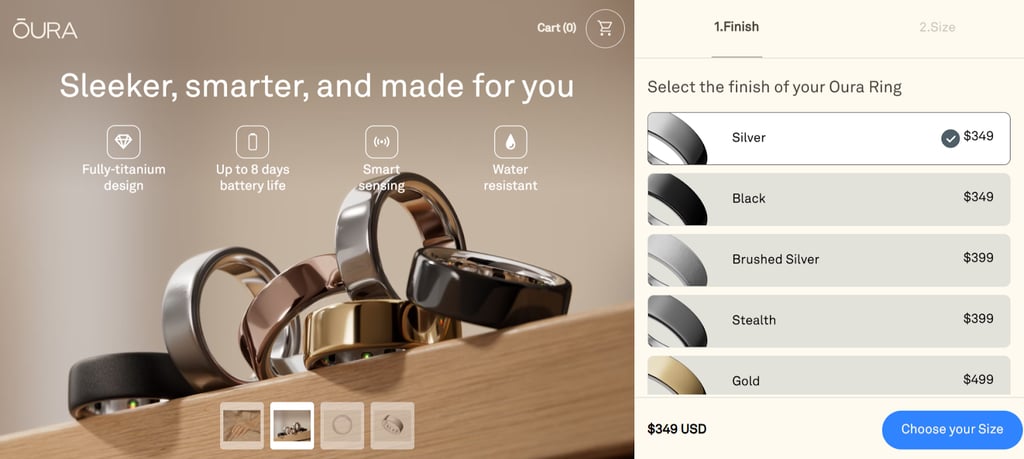
Oura Ring commands a premium price that ranges from $349 for basic colors like black and silver to $499 for gold and rose gold.
However, its true cost comes from its $5.99/month subscription that unlocks advanced features like sleep staging and long-term health trends. Without it, you’re left with basic metrics and a frustrating paywall for a device already priced like luxury jewelry.
By contrast, Acer FreeSense Ring is much cheaper at $199-$250 and, most importantly, you don’t have to worry about yet another monthly subscription fee. All health insights, including blood oxygen levels, HRV, and sleep analysis, are included upfront.
While Acer might not offer a tracking system as robust as Oura does (although, keep in mind that the latter is in its fourth generation, whereas the former is just entering the market), its AI-powered recommendations and cross-platform compatibility deliver surprising value for the price.
Acer Freesense Ring vs Oura Ring: design and comfort
Both rings go for a premium, unobtrusive design but approach things a bit differently. Oura Ring is made of aerospace-grade titanium and is slightly heavier, weighing between 3g and 5g. However, it distributes weight evenly and its 12 size options (4-15) ensure you can find the best fit for your fingers.
Oura Ring also comes with 6 finishes, while Acer FreeSense has only 2 so far. Although Oura avoids official IP ratings, it has stated that the ring is water-resistant up to 100m, which is twice the 50m rating of FreeSense.
Acer FreeSense Ring is more minimal in its design. At just 2-3g, it’s among the lightest smart rings around today, and its titanium alloy and IP68/5ATM rating mean it can hold its own against most competitors.
The ring falls short is in terms of size range (7-13), which excludes leaner fingers, but I believe that’s something that can be added to stop the ring from slipping. It also wouldn’t hurt if Acer introduced a few more finishes, just to give users more options.
Oura Ring vs Acer Freesense Ring: health tracking
Oura Ring remains one of the best wearable devices for comprehensive health insights. In fact, you might struggle to find a gadget out there that offers better sleep tracking than Oura Ring. It provides detailed breakdowns of REM, deep, and light sleep stages, giving you a daily sleep score to monitor progress.
There’s also the Readiness Score that analyzes HRV trends and temperature against your personal baseline, recommending whether you might need to rest or work out more. The ring also tracks your blood oxygen trends and stress levels, collecting nighttime readings that help you notice gradual health changes over time.
The Acer FreeSense Ring covers the fundamentals well, such as 24/7 heart rate, continuous SpO₂, and sleep staging, but the device has not hit the market yet, so not many user reviews or tests are available.
Oura Ring vs Acer Freesense Ring: sensors and features
At the hardware level, both rings pack similar core sensors: optical PPG for heart rate/HRV, accelerometers for activity tracking, and SpO2 monitors. Oura Ring makes use of light beams (infrared, red, and green LED) and sensors to provide insights into your heart rate, blood oxygen levels, respiratory rate, body temperature, and HRV.
It then transforms this data into three scores: Readiness, which tells you how well your body can handle the day, Sleep, which tells how well you’ve slept, and Activity, which can also display your stress level and heart rate.
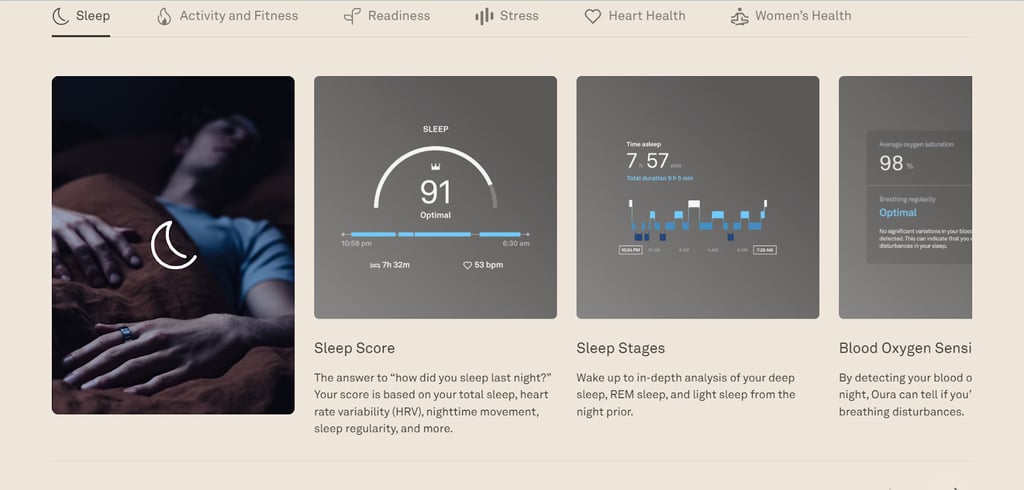
The latest gen, Oura Ring 4, boasts 18 sensor pathways, 10 more than the previous generation. These new sensors have greatly improved the insights available on the app, with users now being able to view metrics like Symptom Radar, Stress Resilience, nighttime movement, and many more. The app will even tell you if you’re a morning person or a night owl based on your metrics, though it takes 90 days.
Once again, Acer FreeSense Ring matches Oura on paper with continuous PPG and SpO2 monitoring, but it hasn't been out long enough to get a full grasp of its features, and the developers aren’t sharing much information now.
Oura Ring vs Acer Freesense Ring: app
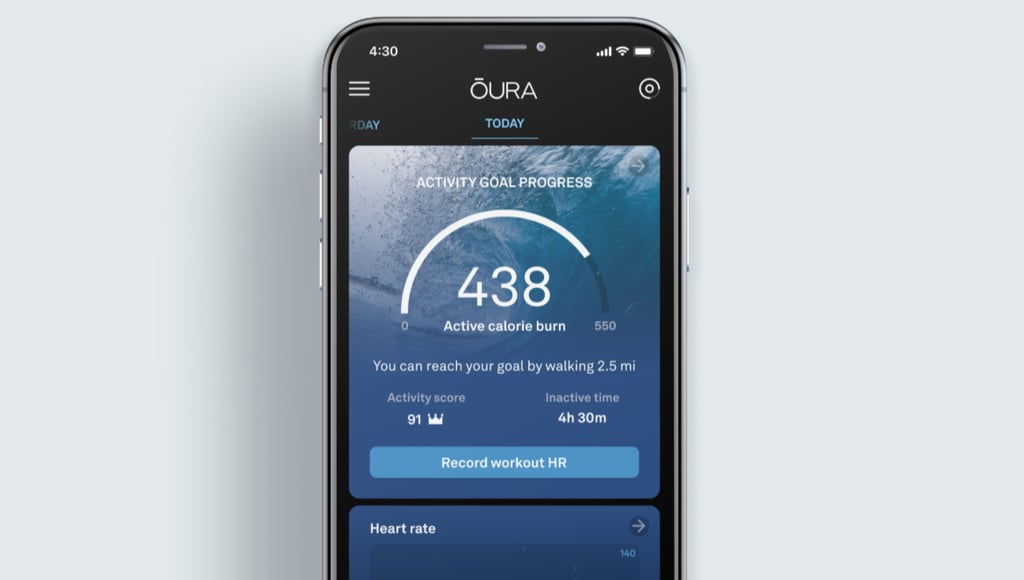
You’ll find three primary tabs in the Oura app: Today, Vitals, and My Health. Today is where you go to view your daily activity metrics, Vitals helps you monitor your sleep stages, heart rate, and the like, while My Health shows you long-term trends and insights into cardiovascular age and stress resilience.
The app’s clean, color-coded interface makes your data instantly understandable, and I’ve mentioned already that I really like how the scores just simplify everything. You even have an Oura Advisor for personalized recommendations based on your data, and the app plays nicely with Apple Health, Google Fit, and over 600 other apps.
Acer’s app also tries to keep things simple and features Apple-like Activity Rings for easy tracking. Like most modern devices, the app is powered by AI, so you can expect personalized recommendations based on your data, like when to rest or how much sleep you need.
There’s even a cool gesture feature, where you can wave your hand to take a picture with the tablet. This feature will likely be on the smartphone app, which will be available on both iOS and Android devices.
Oura Ring vs Acer Freesense Ring: battery life
Oura Ring sets the bar high with its 7-8 day battery life, though many users report only getting between 4 and 6 days before having to juice up again. The good news is that it charges really fast, sometimes in just 20 minutes. So you can drop it on the charging puck before a shower, and when you’re done getting ready, the device will be filled up.
The Acer FreeSense Ring promises 4 days of use, half of Oura’s, and can take up to an hour for a full charge. There are no official battery specs yet, and users haven’t used it enough to get actual insights into real-life strength, but 4 days is pretty solid.
Oura Ring vs Acer Freesense Ring: final verdict
Whether you're a health enthusiast or simply want a reliable wellness tracker, the Oura Ring remains the gold standard. It offers unmatched sleep tracking, readiness scores, and long-term insights. Its app is intuitive, syncs well with Apple Health and Google Fit, and supports menstrual cycle tracking through Natural Cycles.
Acer FreeSense Ring is simple and affordable, with solid delivery on the basics like heart rate and sleep staging. It’s lightweight, so prolonged use may not bring discomfort. But overall, I believe Oura to be worth the initial steep price and monthly subscription, as you get to enjoy the full benefits of a smart ring.
Other reviews you might be interested in:
Oura Ring 4 vs Ultrahuman: which smart ring is a better pick for you?
Oura Ring 4 vs. Samsung Galaxy Ring: which one is more worth it?
RingConn vs. Oura Ring: which one is more worth it?
Oura Ring 4 vs Oura Ring 3: is an upgrade worth it?
FAQ
Is Acer FreeSense Ring more affordable than Oura Ring?
Yes, Acer FreeSense costs between $199 and $250, which is way lower than Oura Rings’ $349-$499 price range.
Do both Acer Freesense Ring and Oura Ring require a subscription?
No, only Oura Ring requires a subscription for full access to features, which costs 5.99/month or $69.99/year. The Acer FreeSense Ring is free to use after the initial purchase.
Which smart ring – Acer Freesense or Oura Ring – is more accurate for sleep tracking?
While the data from both rings haven’t been officially paired against each other, Oura Ring offers some of the best sleep tracking in the wearable health tech market. There are even studies that show it outclassing top brands like the Apple Watch and Fitbit in key sleep metrics.
Can I wear these rings while swimming or showering?
Yes, you can comfortably wear your Oura or FreeSense ring to shower or swim, as they can withstand water depths of up to 50m – the Oura Ring has an even higher limit of 100m.
Which smart ring works better with iOS and Android?
Both Oura and FreeSense rings are compatible with Android and iOS devices, but Oura has the edge here due to its ability to integrate with more third-party apps.