Herz P1 smart ring vs Oura: which smart ring is better?
Being behind major reports like The Mother of All Breaches and RockYou2024, our in-house cybersecurity experts and journalists provide unbiased, real-world testing and in-depth analysis.
We maintain complete transparency by openly sharing our testing methodologies with our audience.
Learn more
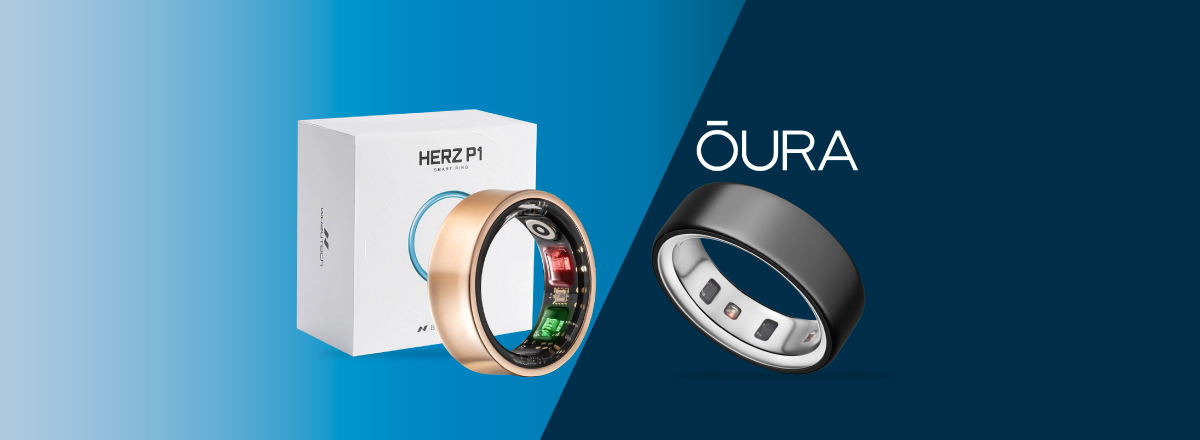
Smart rings have become one of the most popular wellness gadgets in 2026 – small, everyday wearables that track sleep, recovery, heart rate, and stress without the bulkiness of a smartwatch. But with new players entering the market, choosing the right one isn't as simple as it used to be. That's why this Herz P1 vs Oura comparison matters: one promises a simple, subscription-free experience, while the other offers a mature ecosystem with deeper insights.
I, together with the Cybernews research team, reviewed both rings, analyzing their official specifications, app capabilities, sensor differences, and recurring user feedback from real-world owners.
In this guide, I break down their tracking accuracy, sensors, features, design, compatibility, pricing, and overall user experience to help you decide which ring actually fits your lifestyle. Keep in mind that smart rings are wellness tools, not medical devices. They are great for monitoring trends in sleep, HRV, and daily readiness, but they shouldn't replace professional diagnostics.
As of October 2026, Oura is my top choice because it offers a more mature ecosystem, deeper health insights, and a more refined app experience than Herz P1.
Herz P1 smart ring vs Oura overview
Before diving into our Herz P1 smart ring vs Oura review in detail, here is an overview table comparing the two devices side by side.
| Oura Ring | Herz P1 Smart Ring | |
| Key features | Sleep and recovery-style insights with a mature app; membership model for full insights; Ring 4 charging guidance from Oura support | 24/7 tracking for sleep, heart rate, activity, and SpO₂; offline storage up to 7 days; no subscription messaging |
| Best for | Deeper analytics, polished app experience, long-term ecosystem value | Subscription-free, basic trend tracking, simple daily use |
| Price | Premium tier plus a membership model | Varies by seller |
Overall, I’d say Herz P1 is a simpler smart ring designed to aid continuous wellness trend tracking (sleep, heart rate, activity, SpO₂) with no subscription. That is, Oura is the more established ecosystem, with multiple generations and models. It offers in-depth insights and polished software; however, to enjoy the full experience, you may need a membership.


Our team of in-house researchers, writers and editors reviews and analyzes health tech products using a research-driven approach. We gather data from multiple sources, fact-check all information, and conduct our research based on peer-reviewed studies, expert opinions, consumer ratings, and regulatory approvals.
You can learn more about how we test health tech products here.
About the Herz P1 smart ring
The Herz P1 Smart Ring is a budget-friendly alternative that provides continuous biometric tracking without the complexity of a full smartwatch. It monitors core wellness metrics such as heart rate, sleep patterns, blood oxygen (SpO₂), and daily activity in a compact, finger-worn form.
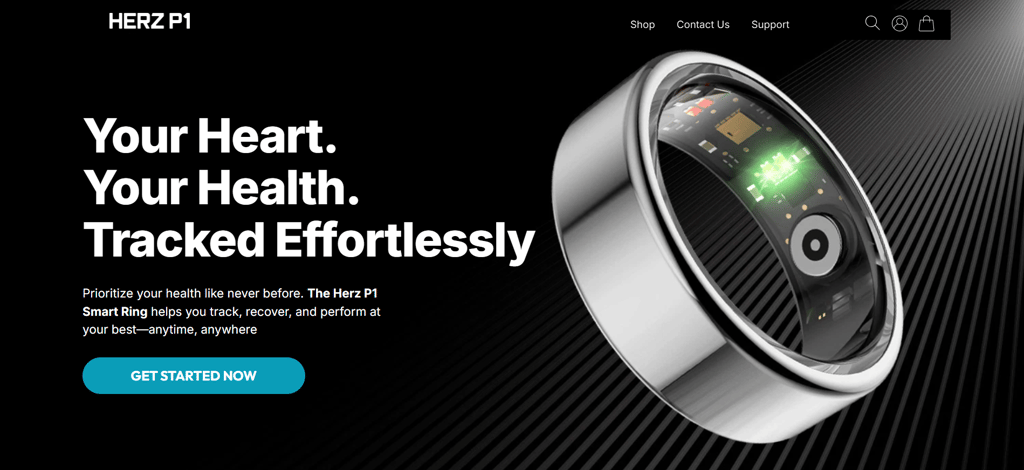
While the Herz P1 smart ring delivers foundational health tracking, its brand maturity and ecosystem scale are currently smaller than those of larger players like Oura. This positioning makes the Herz P1 appealing to first-time smart ring users or those seeking basic insights rather than deep analytics.
About Oura smart ring
Oura is a well-known smart ring brand best known for sleep and recovery-style tracking delivered via a mature companion app. Most users describe it as a wearable ring that collects a wide range of wellness metrics and turns them into insights in the Oura app.
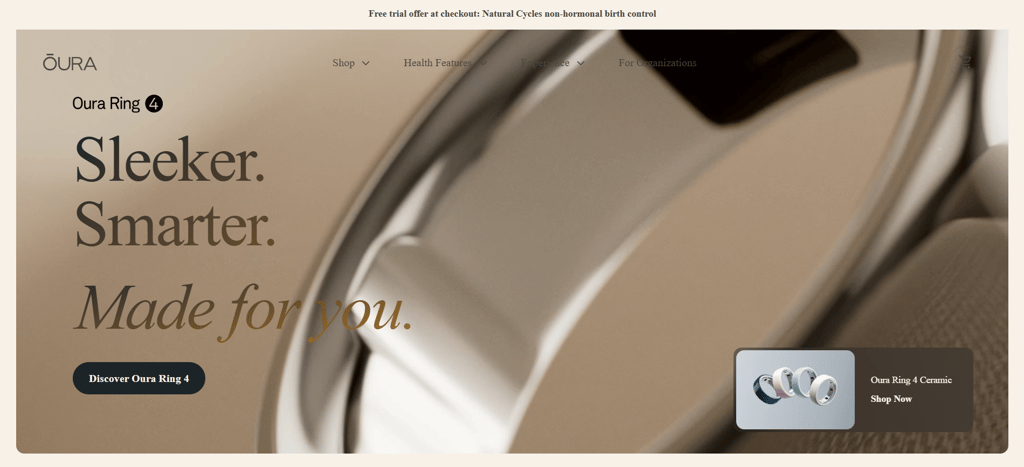
Oura also has multiple generations and model tiers (for example, Gen3 and newer models like Ring 4), and the day-to-day experience can change with firmware and app updates. One of the key reasons why it leads this category is its design, sensor platform updates, and app experience.
Herz P1 smart ring vs Oura: features compared
To understand which product offers more value, I compared their key features side by side with the Cybernews research team.
| Herz P1 smart ring | Oura smart rings | |
| Core focus | Simple, everyday wellness trend tracking (sleep, HR, activity) | Deeper sleep and recovery-style insights in a mature ecosystem |
| Key metrics | Heart rate, sleep, activity, and “more” via the companion app | Sleep/rest, activity/movement, stress, heart-health insights (app-led) |
| Sensor approach | Optical sensors and accelerometers | Recessed sensors; model-specific hardware details vary (Ring 4 noted for recessed sensors) |
| App and insights | Simpler reporting; performance depends heavily on app stability and updates | More advanced, continuously updated insights through the Oura app |
| Subscription model | Marketed as no subscription for core tracking | Membership available/required for full in-app insights (plan options vary) |
| Materials/finishes | Varies by listing (less consistent public details across sellers) | Ring 4: fully titanium design; multiple finishes; ceramic variant exists |
| Battery expectation | Brand messaging: up to 6 days per charge | Varies by generation/model; generally positioned as multi-day wear with a mature charging workflow |
Herz P1 smart ring vs Oura: health and fitness tracking
On paper, the overlap is strong: both support heart rate, sleep tracking, and activity tracking. Oura also places a heavier emphasis on HRV as part of its recovery-style picture, and it’s widely known for temperature trend tracking, which it uses to build broader insights over time.
The bigger difference between the Herz P1 smart ring vs the Oura ring 4 isn’t just which sensors they offer; it’s the gap between raw metrics and interpreted insights. Oura is built around turning sensor signals into higher-level outputs, which relies heavily on firmware improvements and app algorithms, not just hardware.
Since all smart rings produce wellness indicators influenced by finger placement, physiology, and motion, the ring with the stronger interpretation layer usually feels more consistent.
Herz P1 smart ring vs Oura: sensor technology
When comparing the Herz P1 smart ring vs Oura ring 4, a key differentiator is the type and transparency of the sensors each device uses. The Herz P1 Smart Ring uses a suite of advanced sensors built into its ring body, including optical heart rate sensors (using PPG), accelerometers for movement and activity detection, and temperature sensors to capture body variations throughout the day. These sensors work together to monitor heart rate, sleep quality, activity, SpO₂, and stress indices via the companion app.
Oura smart rings feature a well-documented sensor array that includes optical PPG sensors for heart rate and SpO₂, digital temperature sensors, and accelerometers, all embedded in a recessed housing for better contact and comfort. Oura’s hardware and Smart Sensing algorithms dynamically choose among multiple signal paths to enhance measurement reliability.
It’s important to note that ring-based measurements have inherent limitations compared to clinical tools. Factors such as finger motion, placement, and physiology can affect signal quality.
Herz P1 smart ring vs Oura: design and battery life
The Herz P1 Smart Ring uses a stainless-steel construction with a smooth, lightweight profile intended for comfortable wear during sleep and activity. It’s often described as slim and easy to wear continuously, and its IP-rated water resistance supports daily use in a range of conditions. Oura smart rings feature a titanium build with recessed sensors and multiple finish options like ceramic variants, giving them a premium feel and a robust physical presence.
Regarding weight, thickness, and comfort, Herz P1’s thinner profile and lighter metal choice make it feel less noticeable on the finger, especially during sleep. Oura’s titanium design is slightly thicker but engineered for ergonomic comfort, with flat or recessed sensors inside the band to minimize pressure points and friction over long wear.
For battery life and charging, the product specifications claim the Herz P1 Smart Ring has about 5 to 7 days of battery life per charge under standard use. The Oura Ring 4 is often cited with multi-day battery life, typically around five to seven days on a full charge, with some variation depending on tracking intensity and firmware behavior.
Herz P1 smart ring vs Oura: compatibility
Herz P1’s setup is centered on the QRing companion app, which you can download from the Apple App Store or Google Play to use the ring. Oura also relies on its companion app and encourages users to install firmware updates to maintain performance and feature access.
Where the Herz P1 smart ring vs ura ring 4 gap becomes more obvious is in health-platform integrations and ecosystem reach. Oura supports Apple Health integration, and Oura explicitly notes that Apple Health syncing is available for Gen2/Gen3/Ring 4 with an active membership (iOS only).
For Herz P1, users have reported that data from the ring can sync with third-party platforms. However, it’s advisable to verify before purchase.
What do users think about each model?
Herz P1 feedback revolves around it being simple and wearable, with recurring praise for comfort, basic sleep-tracking visibility, and the appeal of a lower-commitment experience. At the same time, repeated complaints mention concerns about accuracy (especially when users compare readings with other devices), occasional sync/app reliability hiccups, and frustration with support/returns.
Oura’s feedback is more specific. Users repeatedly praise Oura’s sleep insights, recovery-style summaries, and the app's overall polish, and many treat it as a long-term wellness companion. Common complaints focus on subscription frustration, occasional syncing bugs, and durability/reliability concerns, such as battery performance issues over time and, in a small number of widely discussed cases, ring overheating reports Oura publicly responded to.
Pricing and availability
When comparing Herz P1 smart ring vs Oura 4, cost structure and how you buy the ring play a significant role in long-term ownership.
Herz P1 typical cost
The Herz P1 Smart Ring is marketed by the brand and direct-to-consumer sellers as offering premium tracking features at a low cost with no recurring fees. On marketplaces like Amazon, similar models are often listed at lower price points than high-end rings, though prices vary by seller and may not reflect official pricing.
Oura pricing range
Oura smart rings (including Gen3 variants and the Oura Ring 4) generally retail at higher price points. Depending on the finish and model, it may be expensive, with occasional seasonal discounts available on official channels and retail partners.
What’s included and why retailer matters
Every ring comes in a package. Here’s a more comprehensive breakdown of what’s included in each:
- Herz P1. Most official kits include the ring itself, a charging cable/dock, and support documentation. Because it’s often sold direct-to-consumer, warranty and return terms are tied to the official store’s policies. Confirm details at checkout for your region.
- Oura. Oura purchases include the ring, sizing kit (in many regions), and access to the companion app. Retailer choice influences warranty length and return windows; buying from authorized channels (official site or major stores) usually provides the strongest support.
Meanwhile, regarding subscription costs, there’s a difference between the two smart rings:
- Herz P1. No monthly subscription is required for the core tracking features; all basic insights are available in the companion app at no recurring cost.
- Oura. Oura offers a membership model that unlocks advanced insights and reporting. This subscription cost is separate from the device cost and contributes to ongoing access to deeper analytics.
Simple cost-over-time example
In Year 1, Herz P1 is a one-time device purchase with no subscription, while Oura includes the device cost plus roughly 12 months of membership fees, resulting in a higher total. By Year 2, Herz P1 still carries no recurring cost, whereas Oura adds another year of membership, increasing the long-term ownership expense.
Herz P1 wins on device cost and predictable ownership because it doesn’t require a subscription and generally starts at a lower purchase price.
Our methodology
For the Herz P1 smart ring vs Oura comparison, I worked with the Cybernews research team using a research-only methodology. We compared official specifications, app documentation, and recurring user feedback. Here’s what we considered.
- Health tracking depth and clarity (25%). We evaluated which metrics each ring tracks (heart rate, HRV, sleep stages, activity, SpO₂, temperature trends) and, more importantly, how clearly those metrics are presented.
- Sensor transparency and validation (20%). We examined how openly each brand discloses its sensor technology (e.g., PPG, accelerometers, temperature sensors) and whether it publishes validation studies, white papers, or technical documentation. Greater transparency increases confidence in how data is captured and interpreted.
- App insights and ecosystem (20%). We assessed the depth of insights provided by the companion app, the integration with Apple Health or other platforms, the firmware update cadence, and the long-term ecosystem maturity.
- Design and comfort (15%). We evaluated materials, weight, finish options, sleepwear ergonomics, and long-term comfort during 24/7 tracking.
- Pricing and subscription model (10%). We separated device cost from ongoing subscription costs. We considered long-term ownership value and whether advanced insights are locked behind recurring fees.
- User sentiment consistency (10%). We reviewed repeated themes across Trustpilot, Reddit, and review platforms. Rather than focusing on isolated complaints, we prioritized patterns that appear across multiple threads.
Herz P1 smart ring vs Oura: which one to choose?
If you want a lower-cost, basic smart ring with minimal reliance on the ecosystem, choose the Herz P1. It covers the core wellness metrics (sleep, heart rate, activity, etc.) with no subscription required for the main features.
If you want deeper analytics, more mature insights, stronger integrations, and you’re comfortable with ongoing membership access for advanced features, choose Oura.
Before you make a decision to buy, here’s what you should evaluate from my experience:
- Confirm the subscription terms (Oura’s advanced insights require membership)
- Confirm your supported devices and OS compatibility
- Check the return policy for the retailer you’re purchasing from
- Haverealistic battery expectations
- Verify the sizing kit process
Other articles you might like
Herz P1 smart ring review: a simple, subscription-free wellness tracker
Oura Ring review: the most advanced recovery-focused smart ring
Acer FreeSense ring vs Oura ring: which wellness wearable wins?
Best smart rings: top health, sleep, and recovery trackers for 2026
FAQ
Does Herz P1 require a monthly subscription like Oura?
No. The Herz P1 Smart Ring does not require a monthly subscription for its core health tracking features, while Oura offers advanced insights through an optional membership that can unlock deeper analytics.
Which ring is more accurate for sleep tracking?
Oura is more accurate. Oura’s sleep tracking is more mature and detailed due to its refined sensor algorithms and app interpretation. Both rings track sleep stages, but Oura’s ecosystem places greater emphasis on depth of insights.
Can I use Herz P1 or Oura without syncing to a smartphone?
Both rings collect data independently, but to view trends, insights, and a full history over time, you need to sync with a smartphone app.
How long do smart ring batteries last in real-world use?
Battery life varies by usage and settings, but both rings typically offer multi-day battery life (often 5 to 7 days). Real-world use may shorten that range.
Is Oura worth the higher price compared to budget smart rings?
Yes, especially if you value richer analytics and ecosystem integrations. For basic wellness trend tracking without premiums or subscriptions, the Herz P1 smart ring is a solid budget-oriented choice.