Oxiline Pressure X Pro vs Omron: which blood pressure monitor is more reliable?
Being behind major reports like The Mother of All Breaches and RockYou2024, our in-house cybersecurity experts and journalists provide unbiased, real-world testing and in-depth analysis.
We maintain complete transparency by openly sharing our testing methodologies with our audience.
Learn more
Deciding between the tech-packed newcomer Oxiline Pressure X Pro and the long-established line of Omron blood pressure monitors isn’t a simple decision. You’re looking at two approaches to home blood pressure tracking.
Omron sells a wide range of monitors: from simple upper-arm devices to Bluetooth-enabled ones and premium models with atrial fibrillation (AFib) screening and advanced averaging. So, when I’m comparing Oxiline Pressure X Pro vs Omron, I’m taking Omron monitors as a category, referencing specific features where relevant.
I, together with the Cybernews research team, reviewed official specifications, clinical validation claims, and consistent user feedback to compare Oxiline Pressure X Pro and Omron blood pressure monitors.
In this article, I compare their specifications, accuracy information, data syncing, comfort and cuff fit. I also cover user sentiment, pricing, and warranty/returns, ending with my final recommendation.
Omron wins for its long-established model lineup with model-by-model clinical validation. The Oxiline Pressure X Pro is still a close second-place pick if you value Apple Health/Android Health Connect syncing and a lifetime warranty at $169.
Oxiline Pressure X Pro vs Omron overview
Below, you’ll find a table displaying Omron vs Oxiline Pressure X Pro. For both, I’ve included my overall rating, listed key features, use cases, and pricing:
| Criteria | Omron | Oxiline Pressure X Pro |
| Rating | 4.6/5 | 4.3/5 |
| Overall rank | #1 | #2 |
| Monitor options | Upper-arm and wrist models available | Upper-arm monitor only |
| Clinical validation | Many models clinically validated; some listed in the U.S. VDL | ISO 81060-2:2018 validated, FDA 510(k) cleared |
| Smart features | Bluetooth and Omron Connect on select models; advanced features vary by model | Bluetooth 5.0, app connectivity, Apple Health/Health Connect integration, PDF/CSV exports |
| Warranty | Varies by model | Lifetime warranty |
| Best for | People who want an established brand with many monitor types to choose from | People who want a sleek, app-connected monitor with health platform syncing and unlimited profiles/readings on the cloud |
| Pricing | Ranges from roughly $30-$160+ depending on the model | $169 |


Our team of in-house researchers, writers and editors reviews and analyzes health tech products using a research-driven approach. We gather data from multiple sources, fact-check all information, and conduct our research based on peer-reviewed studies, expert opinions, consumer ratings, and regulatory approvals.
You can learn more about how we test health tech products here.
About Oxiline Pressure X Pro
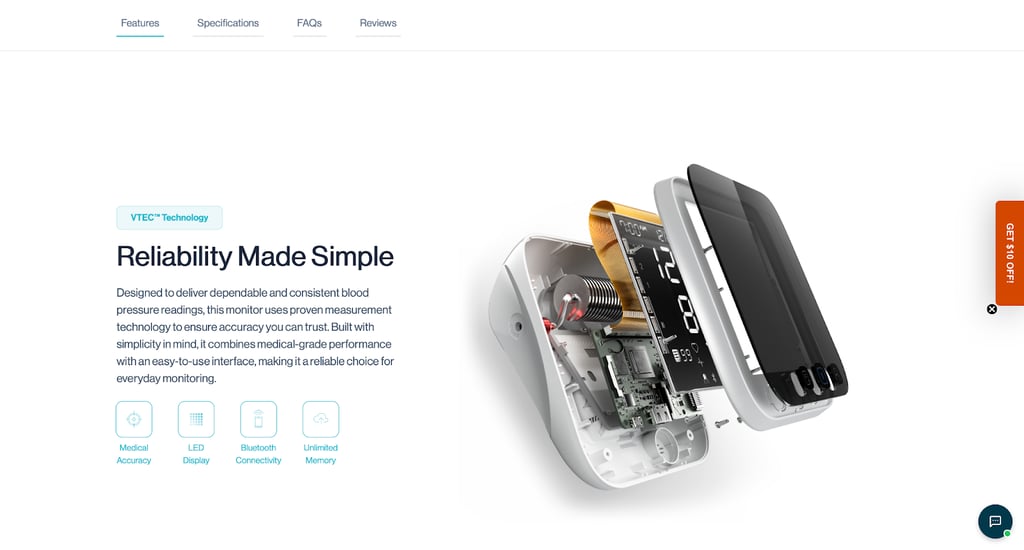
The Oxiline Pressure X Pro is a multi-user smart digital home blood pressure monitor with a 3.0” screen. It supports iOS/Android via Bluetooth 5.0 (BLE) through the Oxiline Health App.
It features cuff detection and misoperation alerts, plus an arrhythmia (irregular heartbeat) alert. It’s powered by Micro USB or four AAA batteries. It has automatic inflation and deflation “for precise systolic and diastolic readings.”
On-device storage is listed as 200 readings on two profiles. With the app, you can track and share results. It syncs all readings to the cloud while providing unlimited profiles.
About Omron blood pressure monitors
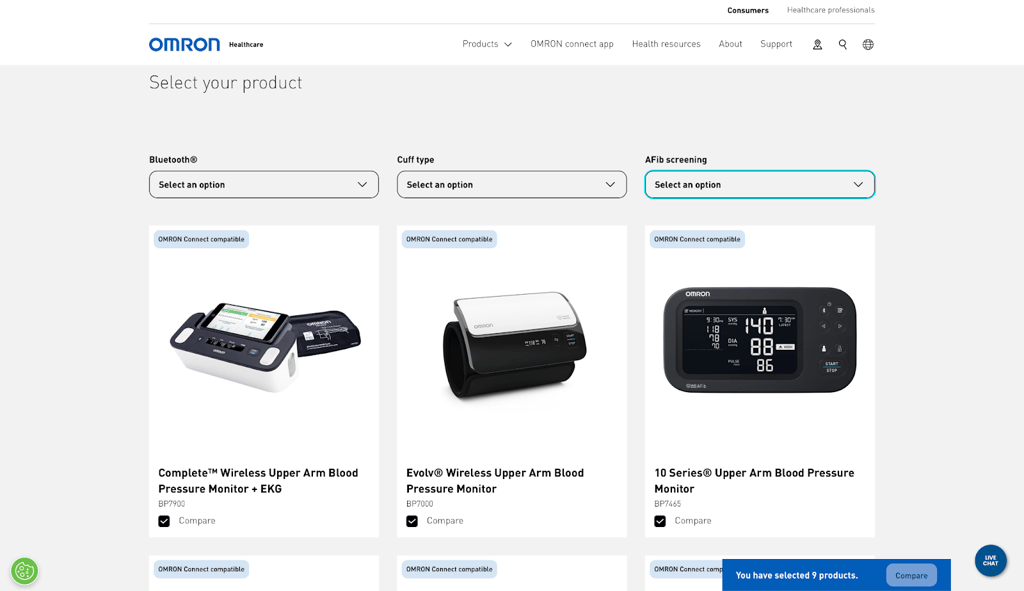
Omron is a decades-old brand with a rich blood pressure monitor model lineup including upper-arm and wrist monitors. It positions itself as the “#1 doctor and pharmacist recommended brand.”
Omron sells entry-level upper-arm monitors, Bluetooth models that link to the Omron Connect app, and premium models with advanced averaging and AFib screening.
According to Omron, several models are clinically proven accurate and validated to specific accuracy targets. Omron adds that models meet or exceed Association for the Advancement of Medical Instrumentation (AAMI) blood pressure accuracy criteria. All units are FDA-registered as medical devices, according to Omron.
Oxiline Pressure X Pro vs Omron: specs and features compared
To understand which product offers more value, I compared their key features side by side with the Cybernews research team. Here’s a quick breakdown:
| Criteria | Omron blood pressure monitors (category) | Oxiline Pressure X Pro |
| Monitor type | Upper-arm or wrist | Upper-arm |
| Measurement method | Oscillometric | Oscillometric |
| Clinical/accuracy positioning | Omron states its monitors are clinically proven accurate and references AAMI accuracy criteria. It states many models appear in the U.S. BP VDL, all units are FDA-registered medical devices | ISO 81060-2:2018 validated, FDA 510(k) cleared |
| Bluetooth + app | Bluetooth LE on some models, Omron Connect app | Bluetooth 5.0 (BLE), Oxiline Health App |
| Irregular heartbeat / AFib | Irregular heartbeat detection is common, AFib on some models | Arrhythmia alert via VIBRA sensor |
| On-device memory | Varies by model (60–200 readings split across users) | 200 readings/two profiles |
| Display | Some models with high-contrast and backlit displays | 3.0" back-lit LCD |
| Warranty | Varies (2-6 years, often shorter for cuffs) | Lifetime |
Unlike the Oxiline, Omron offers multiple models by type, memory, display, and advanced features. Another major difference is that Omron publishes accuracy targets.
Omron wins due to sheer model breadth and detailed clinical validation information. Oxiline is a fixed-spec solution.
Oxiline Pressure X Pro vs Omron: precision and accuracy
Accuracy in blood pressure monitors usually means clinical validation and measurement consistency. Clinical validation is testing a blood pressure monitor against accepted standards. For example, Omron lists accuracy against specific AAMI criteria.
Consistency is whether the monitor delivers stable readings under the same conditions. If something’s wrong with the cuff/fit, or the device is misoperated, reading consistency will be off.
Oxiline claims FDA 510(k) clearance and ISO 81060-2:2018 validation. Oxiline’s claims should be verified against official documentation.
On the other hand, Omron models are included in peer-reviewed studies. It also posted a “Healthcare Response to the 2025 AHA/HCC Hypertension Guidelines,” and publishes accuracy information and validation on a model-by-model basis.
In reality, home monitors are best used for trend tracking, not isolated readings. Proper cuff size and arm positioning matter more than brand in many cases.
Omron clearly wins here, because it publishes clear, model-level clinical validation and accuracy data. Oxiline doesn’t publish the same level of detailed accuracy targets or validation explanations.
Oxiline Pressure X Pro vs Omron: memory and data syncing
Oxiline says the Pressure X Pro stores 200 readings on two profiles and syncs them to the app, however its user manual instead states 99 measurements per user. On some connected Omron models, you get up to 200 total readings for two users (10 Series BP7465, Platinum BP5465), while others store fewer readings. The Platinum offers unlimited storage in the free Omron Connect app.
For multi-user support, Oxiline supports two on-device users, while the app supports unlimited profiles. Many of Omron’s models support dual-user mode, while some are single-user.
Oxiline specifies Bluetooth 5.0 BLE with automatic sync when connected. Omron’s connected models sync to the Omron Connect app via Bluetooth.
As for export and ecosystems, Oxiline provides PDF/CSV file exports and integrates with Apple Health and Android Health Connect. Omron Connect also supports PDF/CSV plus Excel, and is integrated with Apple Health and Google Fit (on compatible devices).
Omron’s export and syncing options are clearer while generally matching Oxiline’s. Oxiline’s documentation inconsistencies cost it a point.
Omron vs Oxiline: ease of use and comfort
Oxiline offers standard and XL cuffs (up to 18.9”), reducing the “too tight” feeling for people with large arms. Omron’s upper-arm cuffs go up to 17”. Users say the Omron Platinum cuff feels more smooth and structured, and that it’s easier to pull on.
Both of these devices are easy to use, just wrap the cuff and press start. Oxiline adds cuff detection and misoperation alerts. Some Omron models include body-movement detection with error alerts, and a cuff wrap guide (model-dependent).
As for displays, Oxiline has a clear, large, backlit display. For Omron, users say it’s large and bright once you get used to the layout.
For the elderly, Omron is more dedicated and easier to learn thanks to clear, dedicated buttons and easy navigation. Oxiline leans more into modern prompts and app tracking.
In this category, Omron wins as it's the more usable choice for most people. Oxiline’s XL cuff is ideal for very large arms.
What users think about each model?
The positive user feedback I’ve read on Oxiline is mostly centered on accuracy and the feature bundle. On Trustpilot, many people also praise the responsive support when setting up, syncing, or when replacements are needed.
Complaints about Oxiline are spread out, including app and Bluetooth connectivity issues, noisy operation and “cheap” feel, plus issues with shipping and returns. On Reddit, several people say it feels like a rebrand. Return costs are also criticized (since you have to pay them yourself).
For Omron, I found more positive feedback compared to Oxiline. That includes good reliability and durability with “trustworthy” readings. Users also like the cuff comfort on the Platinum models.
Omron-focused complaints were mainly pairing and sync issues and some setup quirks for Apple Health and Google Fit linking. These are issues that can be found on Omron’s support pages and user troubleshooting discussions.
Costs and purchasing options
The Oxiline Pressure X Pro sells for $169, bundling free shipping, a lifetime warranty, and a 30-day money-back period. You get the monitor, standard cuff (XL is add-on), batteries, and carrying bag. However, you must pay for return shipping, which can change the total cost if you send the item back.
Omron is much broader because it’s sold through places like Amazon, Walmart, and medical supply retailers (plus there are several different models to choose from). For example, Omron’s connected upper-arm models range from $119.99 (Evolv BP7000) to $163.99 (Complete BP7900), with 5-year limited warranties. Warranty coverage depends on whether you buy from an authorized seller. Returns and refunds are usually dictated by the seller.
Payment-wise, both Oxiline and Omron are generally FSA/HSA eligible. Here, Omron wins because of wider retailer availability, and you have differently-priced models to choose from.
How we test health devices
I use a research-based approach when evaluating blood pressure monitors. I research manufacturing specs, clinical validation claims, user feedback, warranty, and transparency:
- Clinical validation transparency (25%): I look for clinical validation details in official documentation. More detail gets extra points.
- Accuracy consistency (20%): I assess calibration, error-detection, cuff alerts, and irregular heartbeat flags. Models with all of these get extra points.
- Ease of use (20%): I consider cuff design, display quality, and intuitive setup. Multi-user support earns extra points.
- Smart features and app reliability (15%): I check app stability, data export option possibilities, and health kit integrations. Models that support long-term data management score higher.
- Value for money (10%): I weigh retail prices against features, warranty period, and hardware replacement costs. Brands that support sustainable ownership score higher.
- User sentiment consistency (10%): I read dozens of pages of real online reviews, focusing on recurring themes. I avoid isolated positive or negative comments.
Oxiline Pressure X Pro vs Omron: which one to choose?
Ultimately, pick Oxiline Pressure X Pro if you want a sleek, modern, app-focused blood pressure monitor with cloud history and health kit integrations, plus direct-to-consumer pricing. Choose Omron for more choices, if you value clinical validation, and if you want to buy from a well-established brand.
Buyer checklist for Oxiline X Pro vs Omron
- Confirm cuff size (get XL if you have very large arms)
- Verify clinical validations and standards claims for that specific model
- Decide if you need app syncing
- Compare warranty terms and the return window
For more from the Oxiline model range, check out our Oxiline Pulse Oximeter review.
FAQ
Is Oxiline Pressure X Pro clinically validated like Omron monitors?
Not quite, because Omron models were included in peer-reviewed studies over the years. Oxiline Pressure X Pro doesn’t have such a public clinical record.
Are Omron blood pressure monitors more accurate than newer brands?
Not necessarily, but Omron’s accuracy claims are easier to verify. Some Omron models have been independently tested against reference standards in peer-reviewed journals, unlike many newer brands.
Do Oxiline and Omron monitors sync with Apple Health or Google Fit?
Yes, on certain models. Oxiline syncs with Apple Health and Android Health Connect. Omron syncs with Apple Health and Google Fit. Availability can vary by region and model.
How often should a home blood pressure monitor be calibrated?
Manufacturers usually recommend calibrating every 1-2 years. Calibrating sooner is recommended if readings seem off or inconsistent. Bring your monitor to a doctor’s visit to compare readings against a professional device.
Which is better for seniors: Oxiline Pressure X Pro or Omron?
Generally, Omron is the better pick for seniors. Omron has dedicated buttons, senior-friendly navigation, and the brand has been around for decades. Oxiline is a better fit for younger, tech-savvy users.
-
Parameters Research Laboratory
ISO 81060-2 Blood Pressure Validation: Ensuring Accuracy in Non-Invasive BP Devices
-
Journal of Human Hypertension
Validation testing of five home blood pressure monitoring devices for the upper arm according to the ISO 81060-2:2018/AMD 1:2020 protocol