Smart rings step into the spotlight at CES 2026
Being behind major reports like The Mother of All Breaches and RockYou2024, our in-house cybersecurity experts and journalists provide unbiased, real-world testing and in-depth analysis.
We maintain complete transparency by openly sharing our testing methodologies with our audience.
Learn more

Smart rings were no longer a side attraction at CES 2026. What was once a niche corner of the wearables market turned into a clear trend on the show floor, with new devices, fresh use cases, and growing attention from both established brands and startups. CES did not crown a single breakout winner, but it did confirm one thing – smart rings are entering their next phase.
Instead of chasing one definition of what a smart ring should be, companies at CES showed how broad the category is becoming, from health-focused devices to productivity tools and early AI-driven experiments.
-
Smart rings emerged as a recognized wearables category at CES 202
-
Health tracking remains dominant, with deeper biometric insights
-
Pebble Index 01 highlighted interest in non-health-focused rings
-
AI is beginning to influence smart ring design and positioning
-
Comfort, fit, and aesthetics are now top priorities
-
Competition and legal pressures continue to shape the market
From niche wearables to a recognized CES category
CES organizers and exhibitors treated smart rings as part of the core wearables conversation this year, rather than experimental accessories. Alongside smartwatches, earbuds, and smart glasses, rings were positioned as discreet, always-on devices designed to blend into daily life rather than demand attention.
That shift reflects growing interest in wearables that feel more like jewelry than gadgets. Smart rings promise continuous data collection without screens, notifications, or bulky designs, which resonated strongly with attendees looking for subtler tech.



Smart rings at CES 2026: live updates
Health tracking still dominates – but it is evolving
Health and wellness remained the most common use case for smart rings at CES 2026, but the focus moved beyond basic step counts and sleep tracking.
Several companies highlighted more advanced biometric monitoring, including:
- Continuous heart-rate and sleep analysis
- Stress and recovery insights
- Early-stage ECG and blood pressure trend tracking
Rather than positioning rings as fitness devices, brands framed them as long-term health companions that quietly collect data in the background. This aligns with growing interest in preventative health technology and passive monitoring, especially among users who do not want to wear a smartwatch around the clock.
At the same time, exhibitors emphasized improved comfort, better sizing options, and longer battery life – areas where earlier smart rings struggled.
Pebble Index 01 points to a different direction
One of the most talked-about smart rings at CES 2026 did not track health at all.
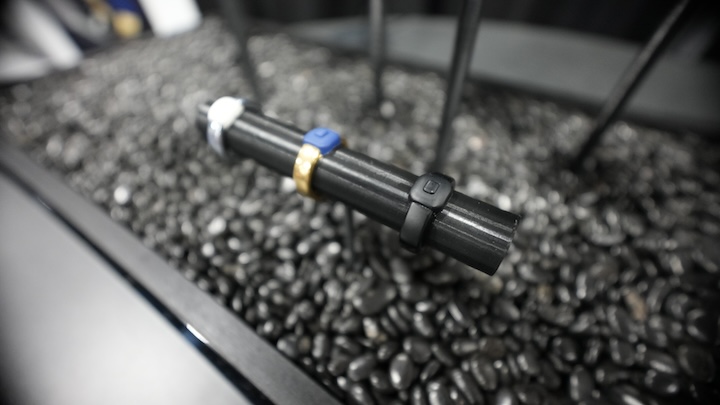
The Pebble Index 01 stood out by rejecting biometrics entirely. Instead, it focused on a single function – capturing voice notes and reminders through a physical button built into the ring. With a tap, users could record thoughts or tasks without pulling out a phone.
The reaction to Pebble’s ring highlighted a growing theme at CES – smart rings do not need to do everything. Simplicity, clear purpose, and fast interaction can be just as compelling as sensor-heavy designs.
AI quietly enters the smart ring conversation
Artificial intelligence was everywhere at CES 2026, and smart rings were no exception, even if the integrations remain early.
Some companies framed their rings as AI-enhanced devices that interpret health data more intelligently, focusing on patterns rather than raw numbers. Others explored AI as a productivity layer, using rings for idea capture, contextual reminders, or workflow shortcuts.
While few AI-focused rings felt fully mature, CES made it clear that brands see AI as a key way to differentiate in an increasingly crowded wearables market.
Design and comfort take center stage
If there was one consistent message across smart ring demos, it was that design matters more than ever.
Brands spent less time on raw specifications and more time highlighting:
- Thinner profiles and lighter materials
- Expanded size ranges for better fit
- Finishes designed to look like real jewelry
This reflects lessons learned from earlier generations of smart rings, which often felt bulky or uncomfortable for long-term wear. At CES 2026, companies showed a clearer understanding that a ring must succeed as a ring before the technology can shine.
Market pressure lingers in the background
Behind the scenes, the smart ring market remains shaped by patent disputes and competitive pressure. While not a central theme of CES keynotes, these realities influence which features companies pursue and how products are positioned.
Newer brands appear to be experimenting with alternative approaches and niche use cases, resulting in a more diverse but also more fragmented smart ring ecosystem.
What CES 2026 revealed about the future of smart rings
CES 2026 did not deliver a single defining smart ring moment. Instead, it revealed a category in transition.
Smart rings are no longer trying to prove they belong. They are now experimenting with identity. Some aim to become serious health tools, others focus on productivity or minimalism, and a growing number are testing how AI fits into a ring-sized device.
As wearables continue to shrink and blend into everyday accessories, CES 2026 may be remembered as the year smart rings stopped being a novelty and started becoming a real product category.