IDnotify vs LifeLock: which identity theft protection service offers better coverage?
Our in-house experts test identity theft protection services themselves, using real-world scenarios and established testing methods. We look at how well each service monitors personal information, how quickly and clearly it sends alerts, what recovery support it offers, and how it handles customer data.
We assess every provider using the same criteria and explain our testing process clearly, so readers can compare services and make a more informed choice.
Learn more

I can’t stress the importance of keeping your details safe online enough these days, and hopefully I don’t have to. Cybersecurity is now more important than ever, especially amid new threats such as AI-powered phishing campaigns.
Introducing IDnotify and LifeLock, two similar types of tools that have a significantly different range of features. LifeLock is one of the best consumer ID protection providers, while IDnotify primarily reaches end users through partnerships with financial institutions, such as Experian.
This guide, which I have crafted with a bit of help from my fellow Cybernews researchers, will point you in the right direction on which one to choose. I’ll go over the main details, features, monitoring coverage, credit protection, and pricing plans to help guide your decision.
LifeLock is the top-tier ID protection tool with dark web monitoring, SSN monitoring, and credit checks and lock, but IDnotify holds its own as a partnership-offered service.
IDnotify vs LifeLock overview
There’s no better way to start this IDnotify vs LifeLock comparison guide than by going through the key features at a glance:
| Norton Identity Theft Protection | IDnotify | |
| ⭐ Rating: | ||
| 🥇 Overall rank: | #3 out of #20 | #16 out of #20 |
| 💵 Price: | From $10.42/month | From $9.99/month |
| ✂️ Free version: | Yes, 30-day free trial | No |
| 🖥️ Platforms: | Web, iOS, Android | Web |
| 💰 Credit monitoring: | Yes (up to 3 bureaus) | Yes (1 or 3 bureaus depending on plan) |
| 🔒 Insurance: | Yes, up to $3M (Total plan) | Yes, up to $1M |
| 🔥 Coupons: | Norton LifeLock coupon 16% OFF! | IDNotify now starting at $9.99/month |

About IDnotify
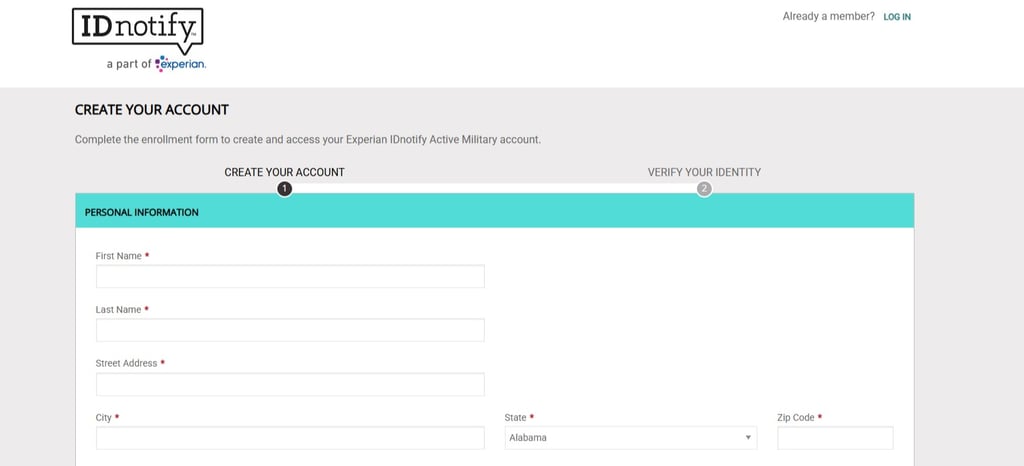
IDnotify is a credit bureau-backed service developed by Experian, one of the three leading bureaus in the US. It’s mainly bundled with financial services like TurboTax plans, but you can also opt for a monthly subscription.
The main features are limited to internet surveillance, social network monitoring, ID restoration, and lost wallet services.
However, if you opt for a higher subscription tier, you might also get detailed credit reports, SSN trace, financial account takeover reports, and ID theft insurance. My IDnotify review also shows that the service includes rather specific features, such as change-of-address monitoring, court records, and bookings surveillance.
About LifeLock
Given its consumer focus, LifeLock offers a slightly broader range of protection features. It would take an in-depth LifeLock review to get you on the same page with all of them, but the headline is that it’s a premium ID protection platform with layered monitoring and real-time financial alerts.
It offers a variety of plans suitable for all types of users, including a family option with a $1M protection package, a restoration guarantee, and dedicated ID restoration specialists for each family member. That’s not to say it lacks something as an individual option, especially due to detailed credit, checking, and savings activity alerts, along with credit lock options and bank account takeover warnings.
LifeLock vs IDnotify: features compared
To help you decide which platform offers more value for your everyday protection, I’ve compared their key features side by side. Take a look at my findings before we continue with the comparison:
| Feature | LifeLock | IDnotify |
| Credit monitoring | ✅ Yes | ✅ Yes |
| Dark web monitoring | ✅ Yes | ✅ Yes (via Experian’s cybersecurity suite) |
| SSN monitoring | ✅ Yes | ✅ Yes (higher plans only) |
| Financial account monitoring | ✅ Yes | ✅ Yes (Premium plan only) |
| Identity restoration | ✅ Yes (US-based) | ✅ Yes (US-based) |
| Insurance coverage | ✅ Yes (Up to $3M total) | ✅ Yes (Up to $1M) |
| Mobile app | ✅ Yes | ✅ Yes |
| Family plans | ✅ Yes | ✅ Yes |
As you can see from my quick comparison, both services double down on identity theft and credit monitoring. LifeLock does include a few more monitoring features, such as checking and savings account alerts, 401(k) alerts, and bank buy-now-pay-later notifications.
Still, IDnotify integrates seamlessly with credit bureau monitoring, especially if you’re already using Experian services. While IDnotify mainly focuses on ID theft and credit monitoring notifications, LifeLock does a better job on the proactive side, giving you tools to reduce fraud exposure before it happens.
Similarities between the two services
IDnotify and LifeLock have a fair share of differences, but the main premise behind each is identical; they’re both built to help users detect suspicious activity and report fraud. That said, there’s a fine line between the two when it comes to ID and credit monitoring alerts.
They both detect suspicious activity in real time and notify you of potential unauthorized use of your data. LifeLock leans more towards full dark web monitoring, while IDnotify features alerts through bundled services and Experian’s cybersecurity tools. I’ve also stumbled upon quite a few Reddit reviews stating that users received notifications about their SSNs appearing on the dark web via IDnotify bundled services like TurboTax.
Identity restoration services are yet another common ground between the two. Though these are not to be mistaken for ID theft prevention tools. While LifeLock does come with a handy set of proactive features, they are still primarily detection and alerting tools.
IDnotify vs LifeLock: identity monitoring
Regarding personal data exposure, both services scan the web for your personal details. LifeLock triumphs over IDnotify in this category, offering advanced features like automatic data broker removal across all plans.
Both IDnotify and LifeLock monitor for unauthorized use of your SSN and track address changes. LifeLock also comes out on top in dark web exposure tracking, as it’s one of its main areas of focus, unlike IDnotify, which is not as capable in this regard.
When it comes to alerts, both services use real-time notifications via email, text, or other channels. I was also relieved to see that both platforms also offer recommendations on next steps based on severity and risk level.
Financial and credit monitoring
LifeLock makes credit monitoring universally available across all plans, with the Core being the only option that offers 2-bureau monitoring. The Advanced and Total plans both deliver 3-bureau monitoring, which is true only of IDnotify's Premium plan.
For credit score access, you’d have to opt for higher-tier plans of both services. The IDnotify Premium plan includes an annual tri-bureau report and monthly Vantage Score updates. On the flip side, LifeLock ensures multi-bureau coverage at a lower price point.
Both services alert you to credit file changes, including newly opened accounts, hard checks, and delinquencies. As for bank account alerts, LifeLock goes into more detail, monitoring 401(k) and investment accounts, while IDnotify only covers account takeover.
It’s also important to note that credit monitoring and a credit freeze are not the same. Monitoring keeps you alert to potential changes, while a freeze function prevents new accounts from being opened in your name. In this context, LifeLock wins with native credit freeze (or lock) features, versus IDnotify’s Experian freeze.
Identity restoration and insurance coverage
One peculiar thing I noticed while crafting this review is that both LifeLock and IDnotify offer assistance from dedicated restoration specialists. This is a big deal in the ID protection space, especially if you happen to fall victim to online scammers.
In such a scenario, dedicated specialists can provide fraud dispute assistance, document recovery, and talk with financial institutions in your name. On top of that, they both offer ID theft insurance, which typically covers legal fees, lost wages, and reimbursement for stolen funds.
On that note, IDnotify excels with a total maximum coverage of up to $1 million, but LifeLock’s total coverage of up to $3 million is simply more inclusive. Still, you’d have to opt for a higher-tier plan to get the maximum insurance coverage.
Pricing and subscription options
Both platforms offer tiered pricing, but they don't exactly match. Here’s a quick overview of the differences before I get into the details:
| Plan | LifeLock | IDnotify | Key differences |
| Starter plan | $10.42/month | $5.99/month | IDnotify’s plan is more affordable, but it lacks credit monitoring and insurance specific to LifeLock |
| Mid-level plan | $16.67/month | $8.99/month | LifeLock adds 3-bureau monitoring |
| Premium plan | $29.17/month | $14.99/month | Up to $3M reimbursement with LifeLock’s premium plan, up to $10K scam reimbursement available as well |
LifeLock offers a two-way subscription structure, with optional monthly and annual payments. You can save by getting the annual subscription, which reduces the starter (Core) plan from $12.49/month to $10.42/month. The same goes for mid-level (Advanced) and premium (Total) plans.
On the other hand, IDnotify doesn’t have any subscription discounts. It only offers monthly plans, but it does include bundled offers through TurboTax plans and financial institutions that offer it as part of their complete service package.

Our methodology
I based my research on LifeLock and IDnotify on a thorough analysis of documentation. Naturally, these tools can’t eliminate the risk of ID exposure on the internet, but they can minimize the risk for you. With that in mind, I used the following evaluation criteria:
- Monitoring coverage depth (25%). I evaluated the amount of ID monitoring signals, including personal data, SSN, financial accounts, account takeover, and dark web exposure.
- Credit monitoring capability (20%). I also checked how many bureaus each service monitors at different price points and plans.
- Identity restoration support (20%). In this category, I looked for dedicated ID restoration specialists and responsive support.
- Insurance coverage (15%). I compared insurance coverage limits across different plans and coverage categories.
- Pricing transparency (10%). I assessed how transparent each service is regarding the pricing plans.
- User sentiment consistency (10%). Finally, I looked at third-party user reviews and feedback on platforms like Reddit, Trustpilot, and others, to see how the two stack up.
IDnotify vs LifeLock: which one wins?
Overall, it all depends on your use case and needs when choosing between ID protection tools like LifeLock and IDnotify.
Go for LifeLock if you’re looking for integration with Norton security tools and comprehensive ID protection. If you require an affordable, bundled solution focused on credit monitoring, IDnotify won’t let you down.
Here’s a quick checklist you can use to decide:
- Do you want 3-bureau monitoring?
- Do you want cybersecurity ecosystem integration?
- Is insurance coverage a priority?
Having also done other comparisons like these, such as LifeLock vs Discover identity theft protection, I can confirm that LifeLock is a more comprehensive option. If you’re still having second thoughts, check out our Coveron vs LifeLock or Aura vs LifeLock guides for inspiration.
FAQ
Is IDnotify better than LifeLock for credit monitoring?
No, while IDnotify mainly focuses on credit monitoring, it’s not better than LifeLock in that context. LifeLock covers all three bureaus across multiple plans and adds a built-in credit lock feature.
Does LifeLock include three-bureau credit monitoring?
Yes, but not on all plans. You only get 2-bureau monitoring with the Core plan, while advanced tiers include 3-bureau monitoring.
What does identity theft insurance actually cover?
ID theft insurance mainly covers the costs of recovering your identity, including legal fees, lost wages, and reimbursements for stolen funds.
Can identity theft protection services prevent fraud?
No, while both LifeLock and IDnotify are great ID protection tools, they still can’t prevent fraud in advance.
Which service is better for families?
LifeLock offers a more comprehensive family plan for two adults and up to 10 children, while IDnotify features similar coverage at the cost of limited family features.