Coveron vs LifeLock: which ID theft protection wins in 2026?
Our in-house experts test identity theft protection services themselves, using real-world scenarios and established testing methods. We look at how well each service monitors personal information, how quickly and clearly it sends alerts, what recovery support it offers, and how it handles customer data.
We assess every provider using the same criteria and explain our testing process clearly, so readers can compare services and make a more informed choice.
Learn more
From mobile banking and online shopping to simply checking your email, more of our personal information ends up online every day. And with data breaches and identity theft becoming common concerns, services like Coveron (formerly NordProtect) and LifeLock can help you monitor your personal information and detect suspicious activity before it causes serious damage.
Both Coveron and LifeLock offer identity theft protection, but they differ in pricing, monitoring features, insurance coverage, and additional security tools. To find out which offers better value, I compared Coveron vs LifeLock across these areas, looking at what each service includes and where one has an advantage over the other.
In this comparison, I’ll walk you through what each of the services offers, how they really compare, and which one, if any, wins in 2026.
Coveron vs LifeLock: quick overview
Here is a brief, glance-over comparison of Coveron vs LifeLock in terms of the identity protection features that are most important for every user in 2026:
| Coveron | Norton Identity Theft Protection | |
| ⭐ Rating: | ||
| 🥇 Overall rank: | #1 out of #20 | #3 out of #20 |
| 💵 Price: | From $4.74/month | From $10.42/month |
| ✂️ Free version: | No, 30-day money-back guarantee | Yes, 30-day free trial |
| 🖥️ Platforms: | Web app | Web, iOS, Android |
| 💰 Credit monitoring: | Yes (up to 3 bureaus) | Yes (up to 3 bureaus) |
| 🔒 Insurance: | Yes, up to $2M (Identity Theft Protection plan or higher) | Yes, up to $3M (Total plan) |
| 🔥 Coupons: | Coveron coupon 66% OFF | Norton LifeLock coupon 16% OFF! |
After comparing Coveron and LifeLock, I think both are great options, but I give Coveron the edge. It combines identity theft with device and privacy protection tools at a more affordable price. LifeLock is still worth considering if you have investments, retirement accounts, or other financial assets that need closer monitoring.

What is Coveron?
The Coveron service was developed by Nord Security, the company behind NordVPN. It provides a complete identity theft protection suite with credit monitoring, dark web monitoring, and financial fraud alerts. It also goes beyond traditional identity monitoring with additional cybersecurity tools that help protect your devices, online activity, and personal information.
Fundamentally, Coveron allows you to monitor your credit (credit score alerts), alerts you if you have exposed information on your identity 24/7, and offers protection alerts for any activity related to your identity. It also has protection for identity theft recovery, with up to $2 million insurance. For broader online protection, Coveron includes tools like Incogni for personal data removal, next-gen antivirus for malware protection, and NordVPN for online privacy with its Full Protection plan.
What is LifeLock?
LifeLock is a household name in identity theft protection and is part of the Norton brand. Having tried out a few identity protection services, I can say that LifeLock stands out for its extensive financial monitoring and identity restoration support.
Essentially, LifeLock monitors your credit activity across up to three major bureaus and alerts you to suspicious changes. It also includes monitoring the dark web and SSNs, checking for signs that your personal information has been exposed or misused. Additionally, the automatic data broker removal helps reduce exposure of personal information.
In the event of identity theft, you can expect assistance from identity restoration specialists based in the US, and up to $3 million in identity theft insurance with LifeLock Total. This includes separate limits for stolen funds, personal expenses, and legal assistance.
One thing that sets LifeLock apart is the way it integrates with Norton 360, with bundles that include antivirus, a VPN, and a password manager alongside identity theft protection.
Coveron vs LifeLock: main feature comparison
Coveron and LifeLock both offer comprehensive identity theft protection bundles, but Coveron takes the lead with its broader range of features at a more affordable price. Both services monitor personal information, track suspicious credit activity, and provide financial assistance if your identity is stolen.
Coveron stands out by offering identity theft protection, antivirus, a VPN, and personal data removal in one affordable plan. LifeLock offers similar features through its Norton 360 bundles, but plans with the same level of credit monitoring and device security cost significantly more. However, standalone LifeLock plans do have an advantage in financial monitoring, especially for users with investments and retirement accounts.
Here's how their main features compare.
| Feature category | Coveron | LifeLock |
| Identity monitoring |
|
|
| Scam protection and fraud coverage |
|
|
| Credit and financial monitoring |
|
|
| Online privacy and device security |
|
|
| Identity theft insurance and recovery |
|
|
| Family protection |
|
|
Overall, Coveron offers a better balance of protection and price, with strong identity, credit, and financial monitoring features, so it’s the stronger choice for most users. LifeLock is still worth considering if you need more detailed financial monitoring, particularly for investments and retirement accounts.
Coveron vs LifeLock: pros and cons
Both Coveron and LifeLock offer reliable identity theft protection, but they differ in pricing, monitoring features, and additional security tools. Here are their main advantages and drawbacks to consider before choosing.
Coveron vs LifeLock: plans and pricing
Coveron is easily the more affordable option overall when it comes to the number of features for the price. Both providers offer several subscription tiers for different needs, but Coveron includes more security features for less. Let's start with Coveron's individual plans.
Coveron offers three individual plans: Scam Protection, Identity Theft Protection, and Full Protection. Here are the main offerings:
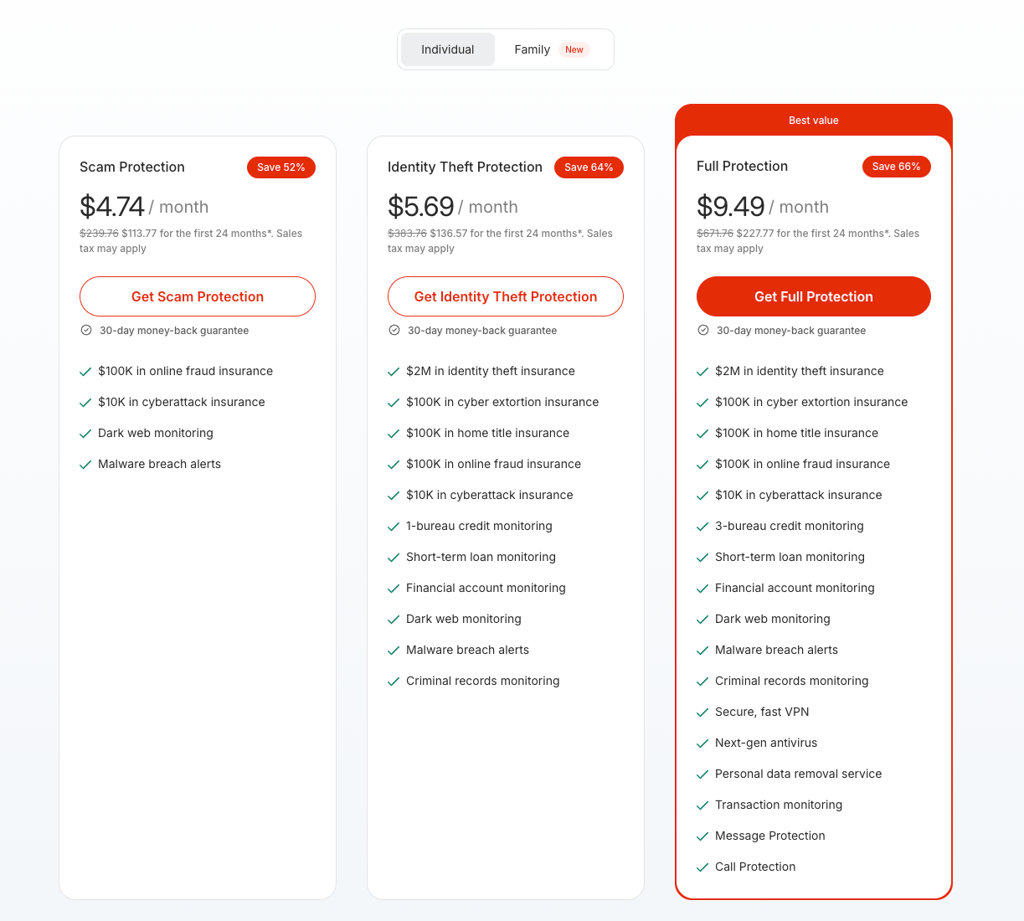
I have to agree with Coveron’s “Best value” label here, as Full Protection offers a truly impressive range of features for the price. For $9.49/month, you get an identity theft protection suite alongside antivirus, a VPN, and personal data removal. Coveron also offers plans for couples and families, with coverage for up to 5 adults and all children.
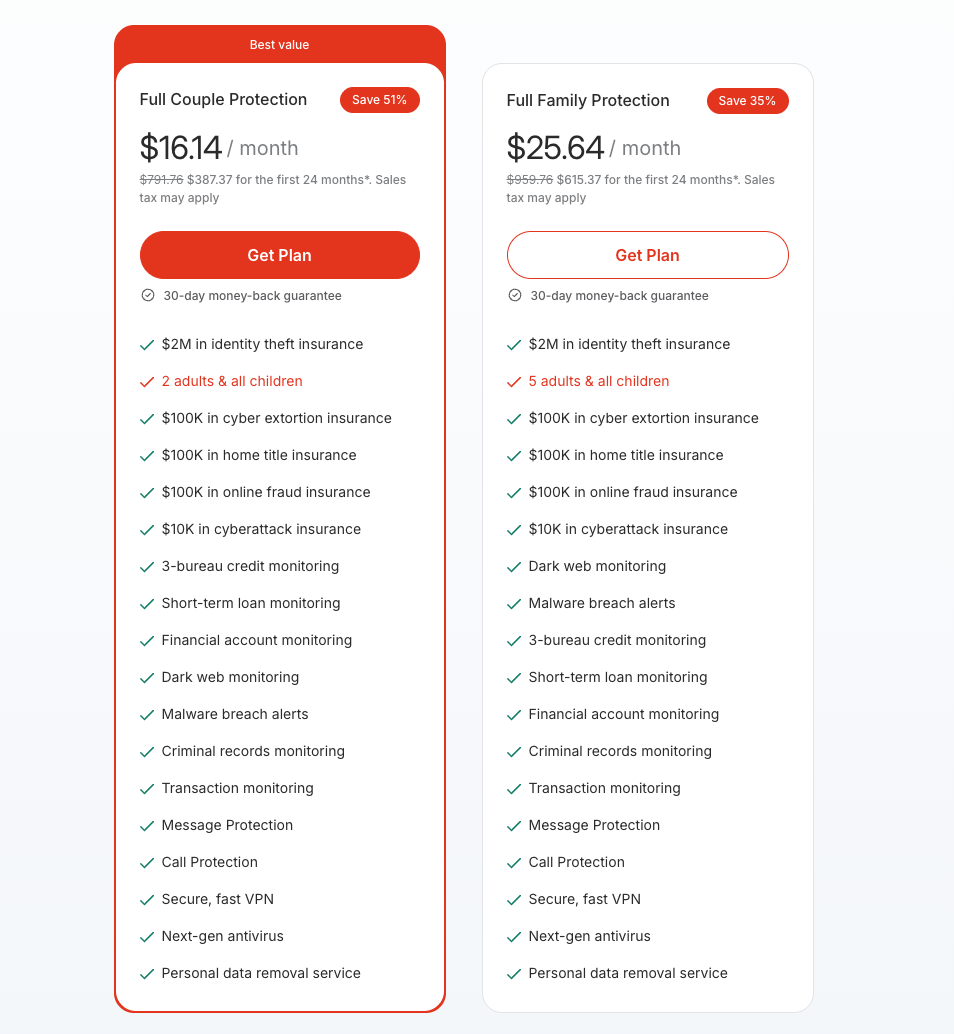
One thing to keep in mind is that Coveron's lowest prices require a 2-year subscription paid upfront, with no free trial. However, all plans include a generous 30-day money-back guarantee, so you can request a refund if you're unhappy with the service.
Moving on to LifeLock, it has a similar three-tier structure, with Core, Advanced, and Total plans. However, even its cheapest plan at $10.42/month starts at a higher monthly equivalent price than Coveron’s Full Protection, at $9.49/month. You'll also need to pay more to access LifeLock's advanced financial monitoring features.
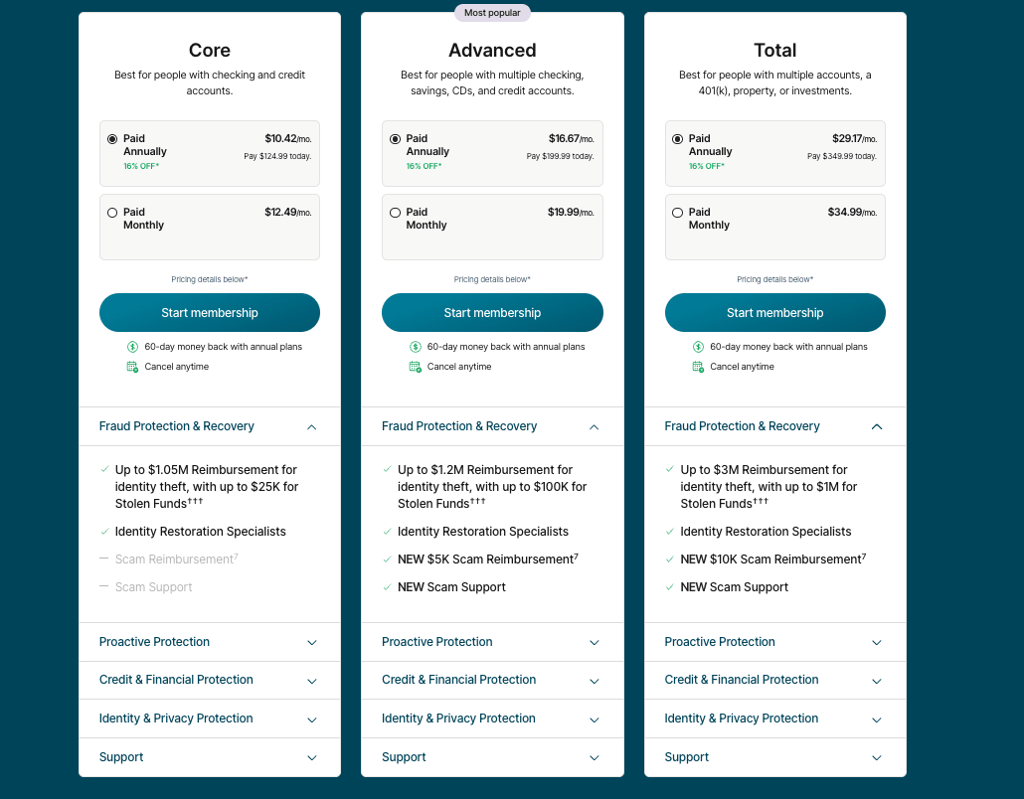
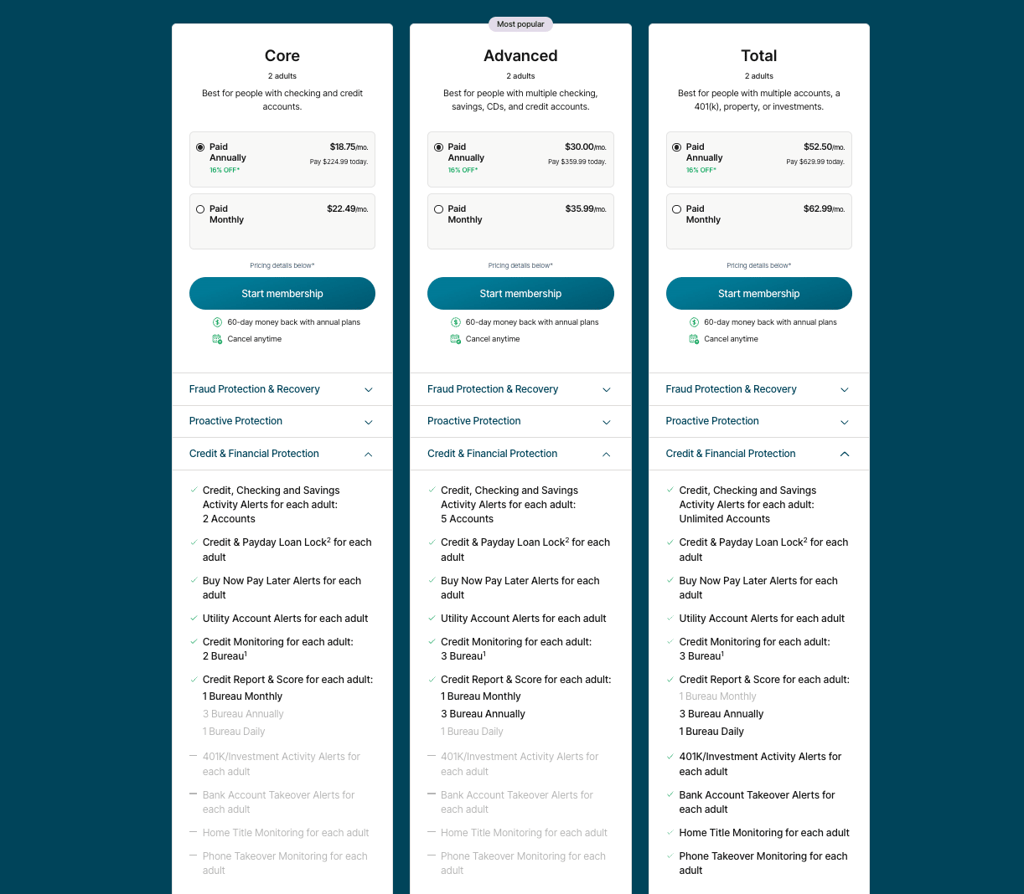
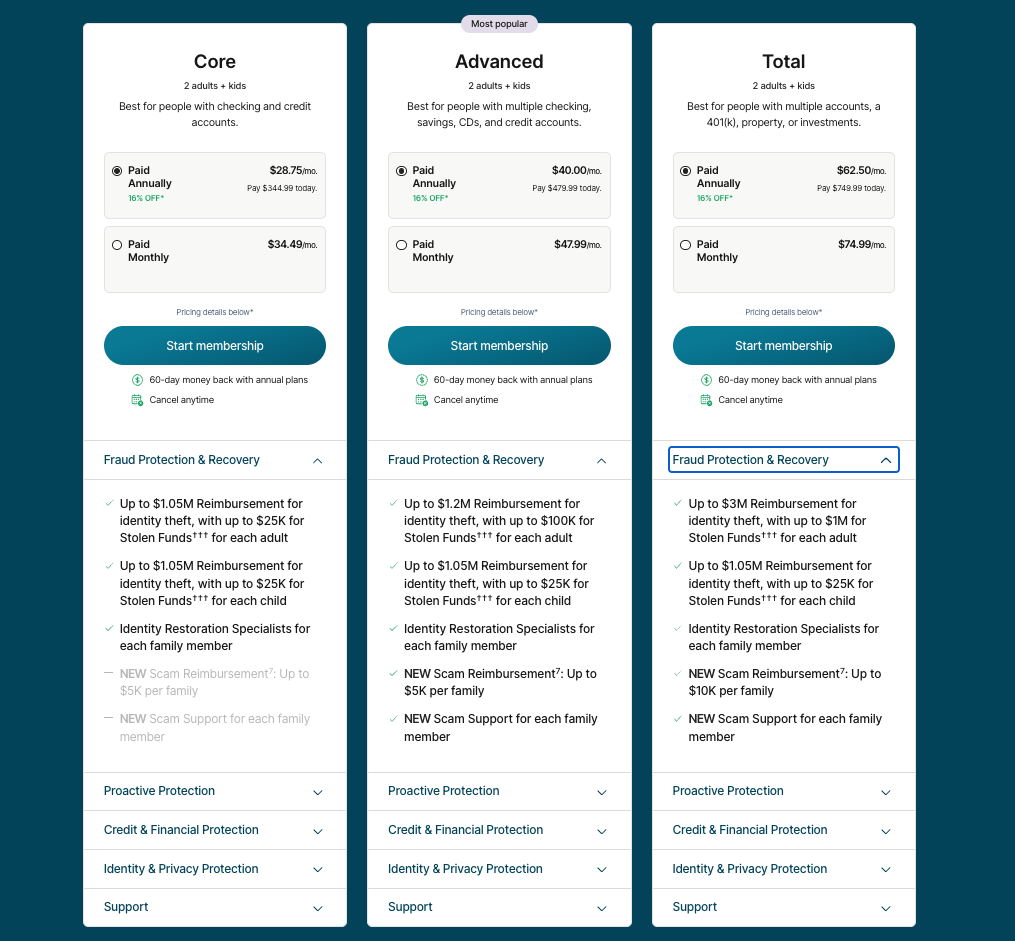
Similar to Coveron, prices are based on annual billing. LifeLock also offers family plans, starting at $18.75/month for two adults or $28.75/month for two adults and up to 10 children, with annual billing.
If you want antivirus and VPN protection alongside LifeLock, you'll need a Norton 360 bundle. These start at $8.33/month, although the cheapest option only includes 1-bureau credit monitoring. The more comparable Ultimate Plus bundle costs $25.00/month for the first year and includes 3-bureau monitoring and additional device security features.
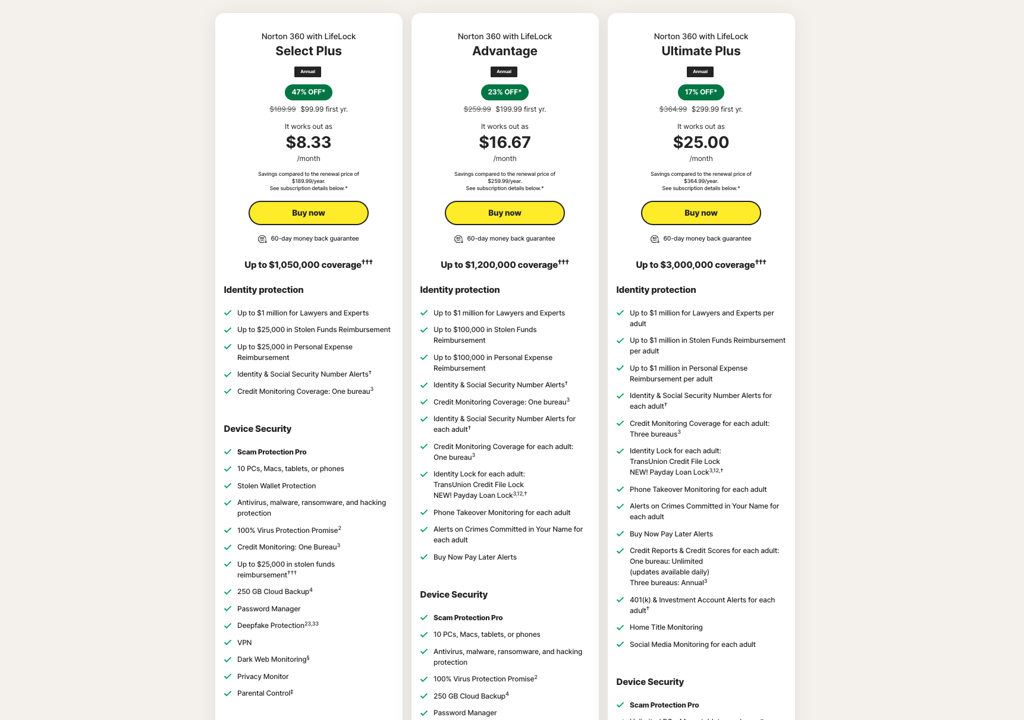
With all that said, LifeLock has a big advantage when it comes to testing out the service before committing. It offers a 30-day free trial for its standalone plans and a 60-day money-back guarantee on annual subscriptions, with even monthly subscriptions covered by a 14-day refund period for the initial purchase.
Overall, LifeLock offers more options for advanced financial monitoring, but these come at a higher price. Its free trial and longer refund period are also useful advantages. However, Coveron's lower introductory rates give it the edge in this comparison.
Coveron vs LifeLock: which one should you choose?
Overall, Coveron is the better choice for most users in 2026, especially those who want affordable identity theft protection without paying extra for advanced features like investment, 401(k), or home title monitoring.
It covers the essentials, including personal information, credit, and financial monitoring, while its Full Protection plan adds NordVPN, antivirus, and personal data removal. At $9.49/month on a 2-year subscription, Coveron offers really good value for people who want broad protection at a reasonable price.
LifeLock is still a good option, especially if you have investments, retirement accounts, or property you want to monitor. Its higher-tier plans offer more specialized financial monitoring, alongside dedicated identity restoration assistance. However, you'll generally pay more for comparable identity and device protection. LifeLock also offers a 30-day free trial and a 60-day money-back guarantee on annual plans, which gives you more time to test the service.
The right choice between Coveron and LifeLock depends on the level of protection you need. Coveron is the better fit for budget-conscious users, while LifeLock makes more sense for people with investments, retirement accounts, or more complex financial needs who are willing to pay extra for specialized monitoring.
Our methodology
At Cybernews, we evaluate identity theft protection services using a methodical, weighted framework that represents how these tools work in real life, rather than just on paper. The scoring is broken down as follows:
- Tools and features (35%). We weigh the essential features that each service provides: credit tracking, identity monitoring, alerts, and extra security tools. Higher scores are assigned to services with larger and more useful feature sets.
- Plans and prices (25%). We also consider the overall value, renewal prices, and subscription tiers. Strong protection at lower tiers and transparent pricing are the ones that we shortlist.
- Identity theft protection measures (25%). Real protection is the main focus of this category, which includes fraud resolution procedures, recovery assistance, and preventative monitoring, like dark web and breach alerts.
- Insurance coverage (15%). Our team also looks through the coverage limits and how insurance helps people recover from identity theft incidents.
Coveron vs LifeLock: key takeaways
After comparing Coveron and LifeLock, I’d say Coveron is the better choice for most users in 2026. Both providers offer reliable identity theft protection, credit monitoring, and financial recovery assistance. However, Coveron stands out for its more affordable pricing and the additional cybersecurity tools.
LifeLock is stronger in some areas, particularly in its investment and retirement account monitoring. These features can easily justify the extra cost for users with more complex financial needs. However, Coveron wins this comparison in terms of value for money.
FAQ
Is Coveron better than LifeLock?
Yes, Coveron is better than LifeLock for most users, thanks to its lower pricing and comprehensive identity theft protection features. It also includes antivirus, a VPN, and personal data removal with its Full Protection plan. However, LifeLock may be a better choice if you need specialized monitoring for investments and retirement accounts.
Does LifeLock offer multi-bureau credit monitoring?
Yes, multi-bureau credit monitoring is available on all LifeLock plans. 2-bureau is monitored with the Core plan, while the Advanced and Total plans both include 3-bureau credit monitoring.
Is identity theft protection really worth paying for in 2026?
Yes, identity theft protection is definitely worth it in 2026, and I’d recommend it especially if your data has previously been compromised. However, while such services can speed up discovery and reduce recovery stress, note that these services don't completely prevent fraud.