LifeLock vs Discover identity theft protection: which service offers better protection?
Our in-house experts test identity theft protection services themselves, using real-world scenarios and established testing methods. We look at how well each service monitors personal information, how quickly and clearly it sends alerts, what recovery support it offers, and how it handles customer data.
We assess every provider using the same criteria and explain our testing process clearly, so readers can compare services and make a more informed choice.
Learn more
Today’s fraudsters have it easy, as AI makes it a breeze to clone voices and even faces. So, it doesn’t really come as a surprise that the Identity Theft Resource Center’s 2025 Consumer Impact Report shows a 148% increase in impersonation scams from the previous year.
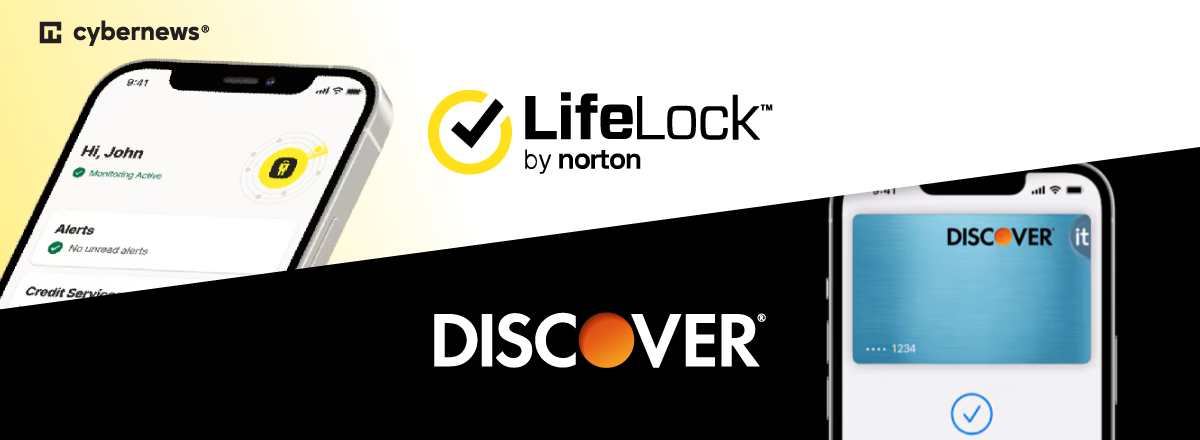
Luckily, you’re not powerless against these sophisticated threats. Identity theft protection services, such as Norton’s well-known LifeLock and Discover’s Identity Theft Protection, actively monitor your personal data, detect fraud, and offer ID restoration and reimbursement for victims.
But how do these tools stack up in terms of monitoring and detection capabilities, and in fraud response? More importantly, which service offers better overall protection and value?
To answer these questions, the Cybernews research team and I conducted a LifeLock vs Discover identity theft protection comparison based on monitoring features, insurance coverage, and overall user sentiment. Below is a deep dive into their capabilities, similarities, security, recovery support, customer service, pricing, and our final recommendation.

LifeLock vs Discover identity theft protection overview
The table below highlights each provider’s key specs. So, feel free to peek at it to compare LifeLock vs Discover identity theft protection services before we dive in:
| Norton Identity Theft Protection | Discover ITP | |
| ⭐ Rating: | ||
| 🥇 Overall rank: | #3 out of #20 | #19 out of #20 |
| 💵 Price: | From $10.42/month | From $15.00/month |
| ✂️ Free version: | Yes, 30-day free trial | No |
| 🖥️ Platforms: | Web, iOS, Android | Web |
| 💰 Credit monitoring: | Yes (up to 3 bureaus) | Yes (3-bureau) |
| 🔒 Insurance: | Yes, up to $3M (Total plan) | Yes, up to $1M |
| 🔥 Coupons: | Norton LifeLock coupon 16% OFF! | Discover now starting at $15.00/month |




Our in-house experts test identity theft protection services using real-world scenarios and consistent criteria. We assess monitoring, alerts, recovery support, and data handling to help readers compare providers confidently. Learn more about our testing process.
About LifeLock
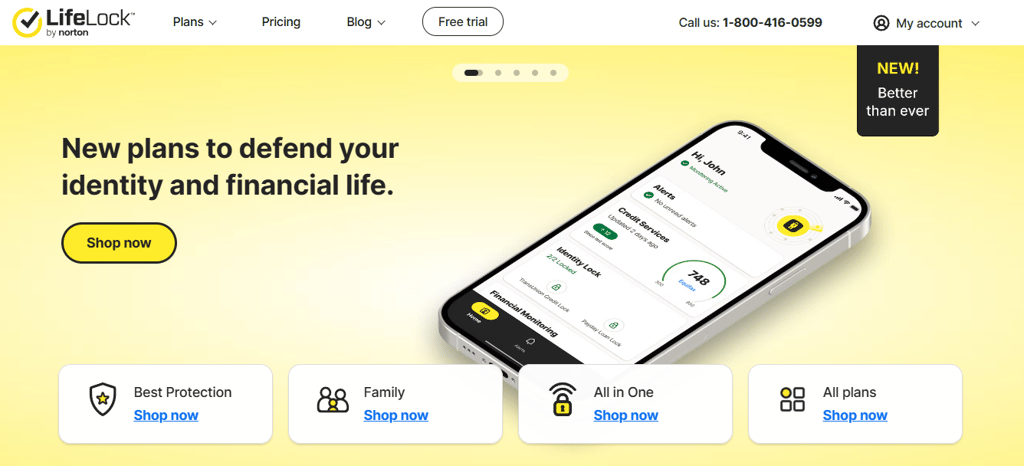
LifeLock has been in the identity theft protection game for over two decades. Founded in 2005 and acquired by Gen Digital (formerly Symantec) in 2017, which then combined its services with Norton’s cybersecurity suite, LifeLock now exists as a comprehensive all-in-one tool.
As noted in our LifeLock review, the identity theft solution comes with:
- Identity monitoring, with continuous surveillance of your PII
- Dark web monitoring, with real-time alerts for all encountered threats
- Credit monitoring, with plan-dependent bureau coverage
- Identity theft reimbursement, with up to $3 million in insurance
- Identity restoration assistance, in case you fall victim to identity fraud
About Discover
Discover’s 2021-launched Identity Theft Protection service is much newer than LifeLock’s. But it’s also offered by one of the largest credit and debit card issuers in the world, Discover, which has been around since 1986. The relatively young ID theft protection suite bundles credit, bank account, Social Security number (SSN), and dark web monitoring under one roof.
It also offers:
- Three-bureau credit monitoring, with monthly activity summaries
- Fraud alerts for new accounts, inquiries, and alternative loans in your name
- Identity theft insurance of up to $1 million
- Identity restoration support, with US-based service agents
- Child identity protection, with no additional costs for up to 10 children
LifeLock vs Discover identity theft protection: features compared
To make it easier to gauge each provider’s value, I’ve added a side-by-side comparison of their offerings:
| Feature | LifeLock | Discover |
| Identity monitoring | ✅ Yes (SSN, name, address, and date of birth tracking) | ✅ Yes (SSN and address changes) |
| Credit monitoring | ✅ Yes (three bureaus) | ✅ Yes (three bureaus) |
| Dark web monitoring | ✅ Yes | ✅ Yes |
| Social media monitoring | ✅ Yes | ❌ No |
| Financial account monitoring | ✅ Yes (bank accounts, 401k, and investment accounts) | ✅ Yes (bank account openings and payday loan alerts) |
| Home title monitoring | ✅ Yes | ❌ No |
| Criminal record monitoring | ✅ Yes | ✅ Yes |
| Child identity protection | ✅ Yes (family plans-only) | ✅ Yes |
| Fraud alerts | ✅ Yes | ✅ Yes |
| Identity theft insurance | Up to $3 million | Up to $1 million |
| Identity restoration service | ✅ Yes | ✅ Yes |
| Cybersecurity add-ons | ✅ Yes (antivirus and VPN) | ❌ No |
| 24/7 support | ✅ Yes | ❌ No |
| Mobile app availability | ✅ Yes | ✅ Yes |
On the surface, these providers look almost identical in their core services. But in reality, LifeLock also has broader monitoring layers, along with a few extras.
Similarities between LifeLock and Discover identity theft protection
As I just mentioned, LifeLock and Discover’s services are similar in many ways. For starters, both providers offer three-bureau credit monitoring and continuous dark web scanning with real-time alerts for any PII leaks.
They both provide detailed credit reports, although LifeLock’s are less frequent with yearly statements compared to Discover’s monthly ones.
Conversely, LifeLock offers 24/7 customer service for identity theft recovery assistance. Meanwhile, Discover separates 24/7 customer support from limited-hours identity theft restoration specialists.
That said, there’s an important caveat here. All identity theft protection services, including LifeLock and Discover, focus on detection rather than prevention. They can’t fully eliminate the risk of ID theft, but they can alert you to it as soon as it happens so that you can take action.
LifeLock vs Discover identity theft protection: which service is more secure?
When it comes to infrastructure security, LifeLock and Discover both offer continuous identity and dark web monitoring, actively tracking your PII and scanning for breaches. Both also have near-real-time alerts that notify you if they find anything suspicious.
That type of proactive monitoring can significantly reduce the time between threat occurrence and detection, thereby minimizing the damage identity fraud can cause.
That said, security also depends on the depth of monitoring, and there are differences between the two. LifeLock exists within Norton’s broader cybersecurity ecosystem, which only strengthens its overall security posture.
The ID theft protection service also comes bundled with antivirus, a VPN, and a password manager, creating a more robust, all-in-one defense system that Discover lacks.
LifeLock vs Discover: resolution and restitution
Even with the best identity theft protection service at your disposal, fraudsters can still slip through the cracks. In that sense, how a provider manages the situation, helps you restore your identity, and covers your stolen funds, lost wages, and legal expenses matters a lot.
Luckily, both services excel at guiding users from incident to recovery. But there are still some differences here:
| Feature | LifeLock | Discover |
| Dedicated case specialists | 24/7 case managers | Limited hours restoration specialists |
| Identity theft recovery assistance | Full-service support | Guided recovery support |
| Insurance coverage limits | Up to $3 million | Up to $1 million |
As you can see, LifeLock and Discover both go beyond mere monitoring. They provide experts who help you handle fraud reports, communicate with credit bureaus and banks, and oversee ID restoration. But when it comes to financial restitution, LifeLock’s Total plan extends coverage to $3 million, while Discover caps it at $1 million.
LifeLock vs Discover: customer support and compatibility
Being able to contact support quickly in the event of fraud is critical, and the two providers handle it differently.
LifeLock is well known for its fast customer service, and both its support agents and resolution specialists are available 24/7 via phone, email, and the member portal.
You can also get 24/7 customer support with Discover. However, the provider’s case specialists are available only by phone, from 7:00 a.m. to 9:00 p.m. CT Monday through Saturday, and 8:00 a.m. to 8:00 p.m. CT on Sundays.
As for platform compatibility, both LifeLock and Discover offer web-based dashboards, mobile apps for Android and iOS, and desktop versions for Windows and macOS. Using either tool should be a breeze for any type of user, as the interfaces are clean, intuitive, and easy to navigate across the board.
Pricing, packages, and tiers of service
Comprehensive ID theft protection features are sure nice to have. But at the end of the day, price will be the deciding factor for most users.
LifeLock has three basic tiers of service, where monitoring depth and coverage increase as you go up:
| Plan tier | LifeLock price | Key features |
| Core | $12.49/month or $124.99/year | Two-credit bureau monitoring, dark web and social media monitoring, and coverage of up to $1.05 million |
| Advanced | $19.99/month or $199.99/year | Everything in Core + three-credit bureau monitoring and coverage of up to $1.2 million |
| Total | $34.99/month or $349.99/year | Everything in Advanced + bank, 401k, and investment account monitoring and alerts, home title and phone takeover monitoring, and coverage of up to $3 million |
Besides these three main plans, LifeLock also offers two Family and two All-in-One plans:
- Advanced (2 adults), at $30/month or $359.99/year
- Advanced (2 adults + 10 kids), at $40/month or $479.99/year
- Norton 360 with LifeLock Select, at $8.33/month or $99.99/year
- Norton 360 with LifeLock Ultimate Plus, at $25.00/month or $299.99/year
I hear you; all of this can be confusing. That said, LifeLock is pretty upfront about prices, renewals, features, and the differences between first-year costs and after.
Discover, on the other hand, keeps things super simple with a single plan:
| Plan tier | Price | Key features |
| Discover Identity Theft Protection | $15.00/month | Three-bureau credit monitoring, bank account, alternative loan, and credit balance, limit, and utilization alerts, and coverage of up to $1 million |

Our methodology
Before I wrap up this Discover identity theft protection vs LifeLock showdown, I wanted to clarify our research-only approach, where we used a weighted evaluation model for the following:
- Monitoring coverage depth (25%). First, we examined each provider’s identity, credit, and dark web monitoring features and their depth.
- Identity restoration support (20%). We then paid close attention to how these two providers could help in the event of stolen identities.
- Security ecosystem integration (15%). From there, we evaluated each service’s fit within broader cybersecurity stacks and add-ons, such as a VPN and antivirus software.
- Pricing and transparency (15%). Up next, we reviewed all available service tiers and the clarity of costs, renewals, and feature differences between the plans.
- Usability and accessibility (10%). We looked into each provider’s web dashboards and apps, and assessed their design, ease of use, navigation, and overall experience.
- User sentiment patterns (15%). Finally, we analyzed recurring themes in verified user feedback to gauge how users really felt about each tool.
It’s important to note once again that, while identity protection services significantly reduce the risk of fraud, they can’t guarantee its prevention.
LifeLock vs Discover identity theft protection: which one is better?
While Discover and LifeLock are both worth it, ultimately, they cater to different needs. So, it might be worth asking yourself whether you want an all-in-one tool with cybersecurity add-ons, whether you need advanced monitoring, and whether you’re already a Discover cardholder.
If the answer to that last one is yes, then the financial service provider’s Identity Theft Protection suite won’t be a bad choice at all. It offers solid financial and ID theft protection, and it covers up to 10 kids at the base price.
That said, LifeLock undoubtedly takes the cake. It delivers broader monitoring and stronger overall value, while operating within a broader Norton cybersecurity ecosystem that further strengthens its security posture.
And if neither of the two fits your needs, perhaps their competitors and alternatives will:
- IDnotify vs LifeLock
- LifeLock vs IdentityForce
- Coveron vs LifeLock
- Aura vs LifeLock
- Home Title Lock vs LifeLock
FAQ
Is LifeLock better than Discover identity theft protection?
Yes, it is. Discover primarily focuses on credit monitoring and identity alerts. Meanwhile, LifeLock exists as an all-in-one tool with broader monitoring capabilities, expanded insurance coverage, and integrations with Norton’s cybersecurity ecosystem.
Does Discover offer identity theft insurance?
Yes. Discover has your back in the event of ID theft, and its $1 million insurance will cover all your ID theft-related stolen funds, lost wages, and legal expenses.
How does LifeLock detect identity theft?
It does it through continuous monitoring. The service scans financial applications, credit files, and the dark web for your PII and immediately sends you an alert if it finds anything suspicious.
Do identity theft protection services prevent fraud?
No, they don’t. Services like LifeLock and Discover focus on early detection and alerts, rather than prevention. As such, they can’t stop fraud entirely, but they can warn you about it as soon as it happens so that you can take action yourself.
Which service is better for credit monitoring?
If you’re specifically looking for an ID theft protection service for credit monitoring, Discover just might be it. The provider emphasizes continuous three-bureau credit monitoring and has specialized credit balance, limit, and utilization alerts.