Home Title Lock vs LifeLock: which one protects you better?
Our in-house experts test identity theft protection services themselves, using real-world scenarios and established testing methods. We look at how well each service monitors personal information, how quickly and clearly it sends alerts, what recovery support it offers, and how it handles customer data.
We assess every provider using the same criteria and explain our testing process clearly, so readers can compare services and make a more informed choice.
Learn more

Choosing between Home Title Lock and LifeLock comes down to whether you need specialized monitoring or broader identity theft coverage. These two services aim to reduce fraud by monitoring sensitive records and alerting users to suspicious activity. They both also focus on instant alerts, recovery assistance, and access to dedicated support specialists.
However, their primary difference lies in scope. Home Title Lock centers on property and title fraud, while LifeLock covers broader identity theft risks.
Together with the Cybernews research team, I compared the two based on their features, monitoring depth, setup, ease of use, and pricing. Keep reading to get a breakdown of our findings and understand how each service performs in real world scenarios.
LifeLock vs Home Title Lock overview
Get a quick look at the differences between LifeLock vs. Home Title Lock in this comparison table below:
| Norton Identity Theft Protection | Home Title Lock | |
| ⭐ Rating: | ||
| 🥇 Overall rank: | #3 out of #20 | #20 out of #20 |
| 💵 Price: | From $10.42/month | From $17.95/month |
| ✂️ Free version: | Yes, 30-day free trial | No |
| 🖥️ Platforms: | Web, iOS, Android | Web |
| 💰 Credit monitoring: | Yes (up to 3 bureaus) | No |
| 🔒 Insurance: | Yes, up to $3M (Total plan) | Yes |
| 🔥 Coupons: | Norton LifeLock coupon 16% OFF! | Home Title Lock coupon 20% OFF |

About LifeLock
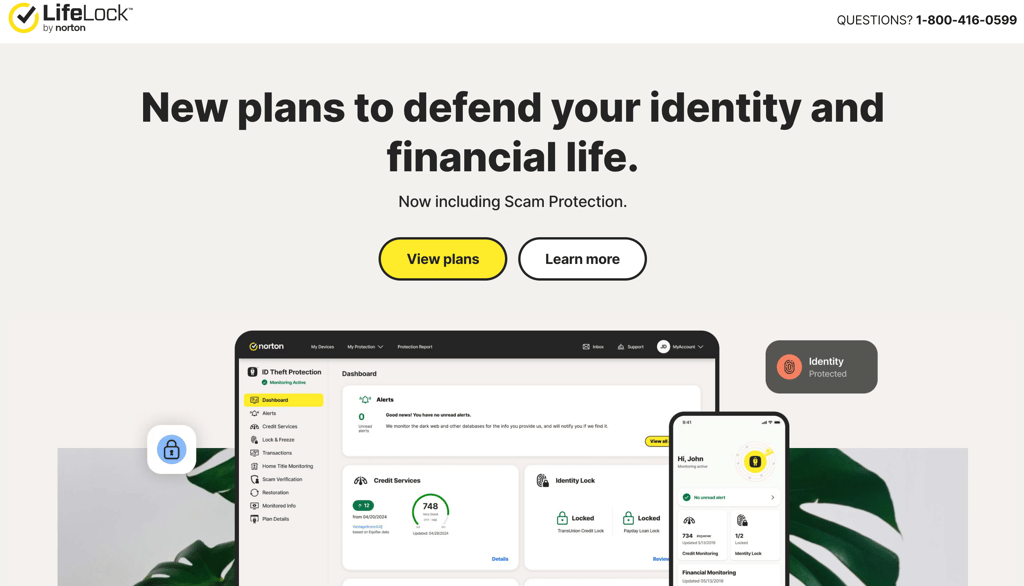
LifeLock is an identity theft protection service operated by Norton that focuses on 24/7 monitoring for personal and financial data. It continuously monitors your personal information across credit bureaus, financial institutions, and the Dark Web. If it flags any possible data misuse or detects suspicious changes, you’ll receive instant alerts.
If you do suffer from identity theft, you can receive support from LifeLock’s dedicated recovery specialists. All plans also come with insurance, which you can use to reimburse stolen funds or for personal or legal expenses. If you also require credit monitoring, LifeLock Core includes 2-bureau credit monitoring, while LifeLock Advanced and Total include 3-bureau credit monitoring. You can learn more in the Cybernews LifeLock review.
About Home Title Lock
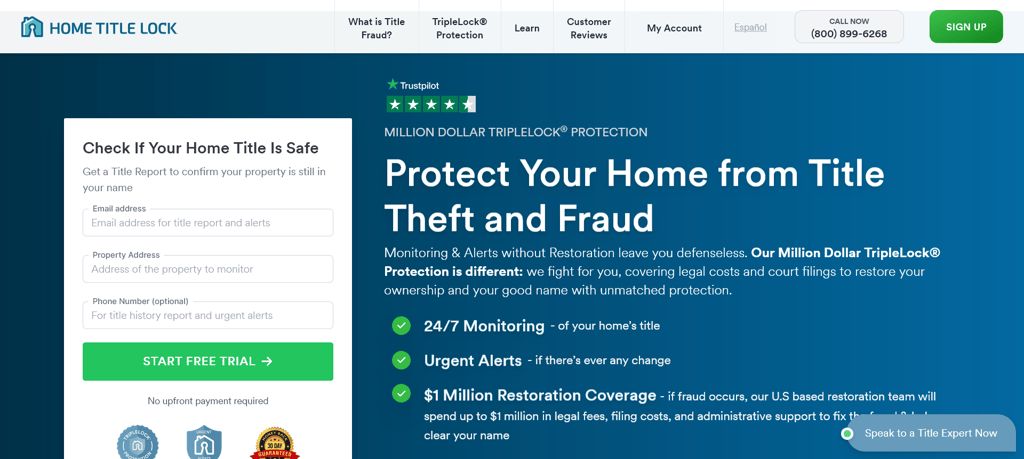
Home Title Lock markets itself as a dedicated home title monitoring service that watches public records for changes tied to a property’s deed. Since 2015, it’s worked with homeowners associations, real estate organizations, and financial institutions to help identify potential title theft or fraud. How it works is that Home Title Lock alerts you when someone tries to register a title change on a property you own.
This approach has clear limits, however, as explained in the Cybernews home title protection overview. Monitoring relies on county record updates, which means alerts usually arrive after a deed change is recorded, not before any attempt occurs. Therefore, it can’t actually prevent title theft or fraud – but it does enable you to act quickly as soon as a scammer attempts to make changes to your property records.
LifeLock vs Home Title Lock: features compared
To understand which service offers more value, the Cybernews research team and I compared LifeLock vs Home Title Lock’s key features side by side.
| LifeLock | Home Title Lock | |
| Identity monitoring | ✅ Yes | ❌ No |
| Credit monitoring | ✅ Yes (Bureau coverage depends on plan) | ❌ No |
| Bank or credit card alerts | ✅ Yes | ❌ No |
| Automated data broker removal | ✅ Yes | ❌ No |
| Dark web monitoring | ✅ Yes | ❌ No |
| Recovery support | ✅ Yes | ❌ No |
| Insurance coverage | ✅ Yes | ✅ Yes |
| Home title monitoring | ❌ No | ✅ Yes |
| Family monitoring | ✅ Yes | ❌ No |
| Family coverage | ✅ Yes | ❌ No |
| Device compatibility | Web, iOS, Android | Web, email alerts |
| Customer support | Phone, chat, online help | Phone and email |
LifeLock and Home Title Lock differ mainly in scope and automation. LifeLock continuously monitors credit, bank accounts, and dark web activity with real-time alerts. It also includes automated data broker removal across all plans, helping reduce public exposure of personal information on major data broker and people-search sites. Home Title Lock, by contrast, only tracks property deeds after public records update.
LifeLock vs Home Title Lock: monitoring capabilities
Both LifeLock and Home Title Lock provide automated alerts and continuous monitoring to detect suspicious activity.
Identity monitoring
LifeLock tracks personal information across credit bureaus, financial accounts, dark web sources, and major data broker and people-search sites. It alerts users to unusual activity such as SSN misuse or unauthorized account openings. Higher-tier plans expand coverage with 3-bureau credit monitoring, stronger scam support, and family monitoring for added protection.
Home Title Lock does not offer identity monitoring because it focuses solely on property records, leaving personal and financial data outside its coverage scope.
Credit monitoring
With LifeLock, you’ll get three-bureau credit monitoring (Advanced and Total plans), covering Equifax, Experian, and TransUnion, depending on your plan. You’ll also receive alerts for changes in credit reports, new accounts, and unusual inquiries. This coverage helps detect fraud early and supports recovery efforts if identity theft occurs.
Home Title Lock does not provide credit monitoring, as its service does not cover financial accounts.
Home title monitoring
LifeLock does not monitor property deeds or title changes as it’s designed for general identity protection.
Meanwhile, Home Title Lock covers one property per plan, tracking deed and title filings in public records. Alerts notify users of changes, and U.S.-based specialists assist with restoration after fraudulent filings. Monitoring depends on county updates, so notifications typically arrive after a record is filed.
LifeLock vs Home Title Lock: setup and ease of use
Home Title Lock and LifeLock provide users with dashboards and alert systems to track potential fraud. Each one focuses on delivering timely notifications.
LifeLock
Setting up LifeLock involves creating an account and verifying your identity, typically with a driver’s license and payment method. Users may navigate multiple Norton interfaces depending on whether they bundle LifeLock with Norton 360, which can make initial setup slightly more complex.
Reviews note that the dashboard and iOS and Android apps provide centralized access, though some users find the range of settings and constant upsells a bit overwhelming.
Home Title Lock
Home Title Lock setup requires providing property details and payment information to enroll a home for monitoring. Accuracy is important, so the address you provide must match public records. Some users feel that errors can be difficult to correct later.
Once set up, alerts are straightforward and the dashboard is simple, reflecting the service’s narrow focus on property title monitoring.

LifeLock vs. Home Title Lock: pricing and plans
When it comes to pricing, both LifeLock and Home Title Lock offer monthly and annual payment options. Check out the tables below to see detailed pricing and coverage.
LifeLock plans
| Plan | Individual plan pricing | Insurance coverage |
| Core | $10.42/month | Up to $1.05 million |
| Advanced | $16.67/month | Up to $1.2 million |
| Total | $29.17/month | Up to $3 million |
LifeLock plans offer strong value, especially the Total tier, which provides extensive identity monitoring, dark web alerts, and up to $3 million in insurance. If you’re on a tighter budget, the Core or Advanced plans still deliver useful protection. Note that LifeLock plans renew at much higher rates.
The provider now uses a simplified pricing structure with no surprise price increases after year one.
Home Title Lock plans
| Plan | Pricing | Insurance coverage |
| Monthly | $19.95/month | $1 million |
| Annual | $18.95/month | $1 million |
| 2-Year | $17.95/month | $1 million |
Home Title Lock has a simpler pricing structure, but it is more expensive given the limited scope of its service. The standard plan costs $19.95 per month, though paying annually or every two years can bring down the total price.
How we tested these services (methodology)
For this comparison, I collaborated with the Cybernews research team to review and analyze LifeLock and Home Title Lock. We based our evaluation on detailed plan information, documentation, and reputable third-party sources using a structured set of criteria:
- Functionality (30%). I assessed the range and depth of data removal and monitoring capabilities to determine how effectively each service could protect user information.
- Pricing and value (20%). I evaluated affordability and the features included in each subscription tier to determine their overall value for different types of users.
- Privacy policy (20%). I considered transparency and the company’s commitment to protecting user data to judge how trustworthy each service appeared.
- Ease of use (15%). I looked at the simplicity of setup, dashboards, and guidance provided to evaluate how accessible the service would be for the average user.
- Reputation and feedback (15%). I reviewed online opinions, third-party assessments, and trust indicators to understand how each service performed in real-world use.
This framework ensures our analysis is balanced and fact-based.
LifeLock vs Home Title Lock: which one should you choose?
For automated monitoring, alerts, and support, both LifeLock and Home Title Lock excel in their respective fields. Choose Home Title Lock if your main priority is monitoring a property’s deed or title and would like alerts and restoration guidance. This service is especially useful if free county alerts are insufficient or unavailable.
Choose LifeLock if your concern is broader identity theft, including new account openings, credit monitoring, and access to recovery specialists. Its tiered plans and insurance coverage provide comprehensive protection for personal and financial information.
The FTC emphasizes that monitoring services cannot prevent fraud from happening and do not replace title insurance. These tools are early-warning systems, so users should maintain vigilance and use them alongside other protective measures to reduce risk.
FAQ
Does Home Title Lock actually prevent deed fraud, or does it only alert me after a change?
Home Title Lock cannot prevent deed or title fraud before it occurs. It monitors public records and alerts you after a change is officially recorded.
Does LifeLock include home title monitoring, or is it a separate add-on/product?
No, LifeLock does not include home title monitoring as part of its standard plans. Home title monitoring would require a separate service, such as Home Title Lock.
Are there free property fraud alert programs from county recorders that replace paid monitoring?
No, free programs from county recorders are very limited and rarely provide comprehensive protection. They may send basic notifications of recorded deeds, but they lack guidance, insurance, and recovery support that paid services offer.
What should I do first if I get an alert about a deed/title change I didn’t authorize?
Immediately verify the alert against public records to confirm the change. Contact Home Title Lock or the county recorder to dispute the filing. Consider consulting a title specialist or attorney to guide the restoration process.
Does LifeLock increase prices after the first year?
No, LifeLock now uses a simplified pricing structure with no surprise price increases after year one. Its standalone plans are split into 3 tiers: Core, Advanced, and Total.