Best home title protection 2026: how to avoid real estate fraud
Our in-house experts test identity theft protection services themselves, using real-world scenarios and established testing methods. We look at how well each service monitors personal information, how quickly and clearly it sends alerts, what recovery support it offers, and how it handles customer data.
We assess every provider using the same criteria and explain our testing process clearly, so readers can compare services and make a more informed choice.
Learn more

In 2024, a community worker in Detroit was charged with stealing more than 30 homes through a property fraud scheme. According to reports, an employee of the United Community Housing Coalition falsely notarized fraudulent quitclaim deeds, allowing the properties to be transferred to temporary owners.
Cases like this are known as home title fraud or deed fraud. While they are relatively rare, the consequences can be devastating. Homeowners may discover that their property was transferred without their knowledge or that someone has taken out a loan using their home as collateral. The FBI’s Internet Crime Report for 2023 recorded 9,521 real estate fraud complaints, a relatively small number compared to other cybercrimes, but the potential damage makes preventive protection worth considering.
Home title protection services can help safeguard your property against title fraud and unauthorized changes to ownership. Below, I list the best home title protection services, with options to suit different needs and budgets.
Best home title protection services 2026 – our shortlist
- Coveron – best home title protection overall to avoid real estate fraud
- Norton LifeLock – best for identity restoration after title fraud
- Aura – best home title protection for families
What is home title protection?
Home title protection is a service that monitors your property records for signs of unauthorized activity. For example, providers like Aura and Norton LifeLock may alert you if someone attempts to transfer ownership of your home, add a new lender, or take out a loan using your property. The goal is to help you spot potential title fraud early and take action before the situation becomes more difficult to resolve.
Is home title protection necessary?
Home title fraud is a real risk, but that doesn’t mean everyone needs to pay for a title protection service. These services can provide an extra layer of monitoring and alert you to suspicious changes that you might otherwise miss.
However, home title protection doesn’t prevent fraud from happening. It primarily helps you detect potentially fraudulent activity sooner. You may also be able to monitor your property records yourself, depending on the services offered by your local government or land records office.
Whether it’s worth paying for comes down to your circumstances and how much you value the convenience and additional monitoring. If you’re comfortable checking your property records yourself, a paid service may not be necessary. If you prefer having a service monitor the records and notify you about potential changes, it can be a convenient way to keep an eye on your property.
Best home title protection services – detailed reviews
Below are our 3 best home title protection services. Coveron takes first place thanks to its combination of home title insurance, financial monitoring, identity theft recovery, and cybersecurity tools.
1. Coveron – best home title protection overall

| Rating: | |
| Features: | Home title insurance, title fraud recovery, up to $25,000 in eligible recovery costs |
| Pricing: | Starts from $5.69/month |
| Free trial: | No, but offers a 30-day money-back guarantee |
| Current deal: | Get up to 66% OFF with a 2-year plan + additional 5% OFF with cybernews5 |
Coveron is the best overall because it combines home title insurance with broader identity and financial monitoring. Its Identity Theft Protection and Full Protection plans include up to $25,000 in home title insurance, along with financial account monitoring, criminal records monitoring, dark web monitoring, and identity recovery support.
Coveron for home title protection
- Home title insurance: provides up to $25,000 in reimbursement for eligible costs related to covered home title fraud or deed theft.
- Title fraud recovery: helps cover eligible attorney fees, court filing costs, and title recording expenses needed to restore your legitimate property title.
- Fraudulent transfer coverage: covers eligible recovery costs if someone fraudulently transfers or alters your property ownership records.
Important: Coveron does not currently advertise home title monitoring or property ownership-change alerts as part of its home title protection. Its dedicated feature is insurance and financial assistance to help recover from covered title fraud.
Coveron pricing
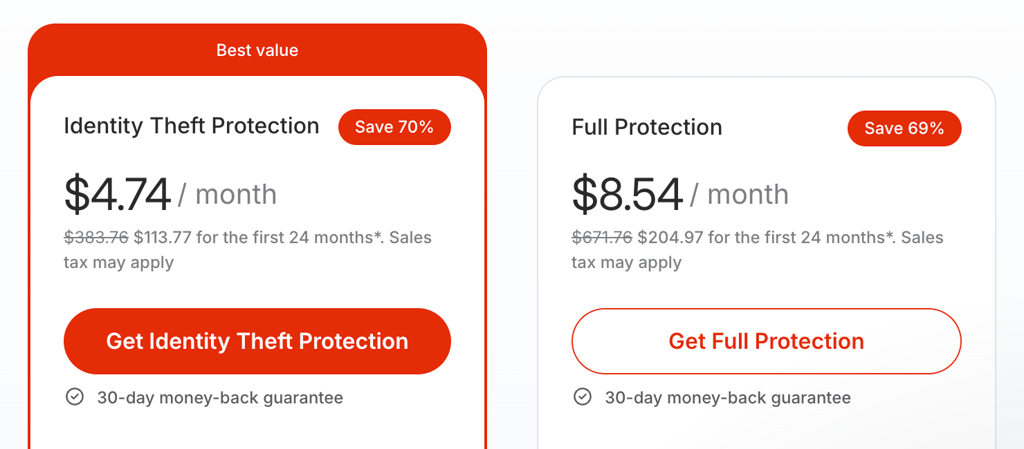
Coveron currently starts at $2.84/month for the Scam Protection plan. However, this plan does not include home title insurance. For home title protection, the Identity Theft Protection plan is the most suitable option, starting at $4.74/month. It includes up to $25,000 in home title insurance, alongside identity theft insurance, credit monitoring, financial account monitoring, and other identity protection features.
If you choose the two-year individual plan, Coveron currently lists the Identity Theft Protection plan at $4.74/month for the first 24 months, compared with the regular $17.99/month price shown for shorter subscriptions. The Full Protection plan also includes home title insurance and starts at $8.54/month for the 2-year plan.
If you want to learn more about Coveron, make sure to check out our Coveron review.
2. Norton Lifelock – best for restoring stolen home titles

| Rating: | |
| Features: | Home title monitoring, property ownership change alerts, new lender alerts, refinance alerts, notice of default alerts, identity restoration support |
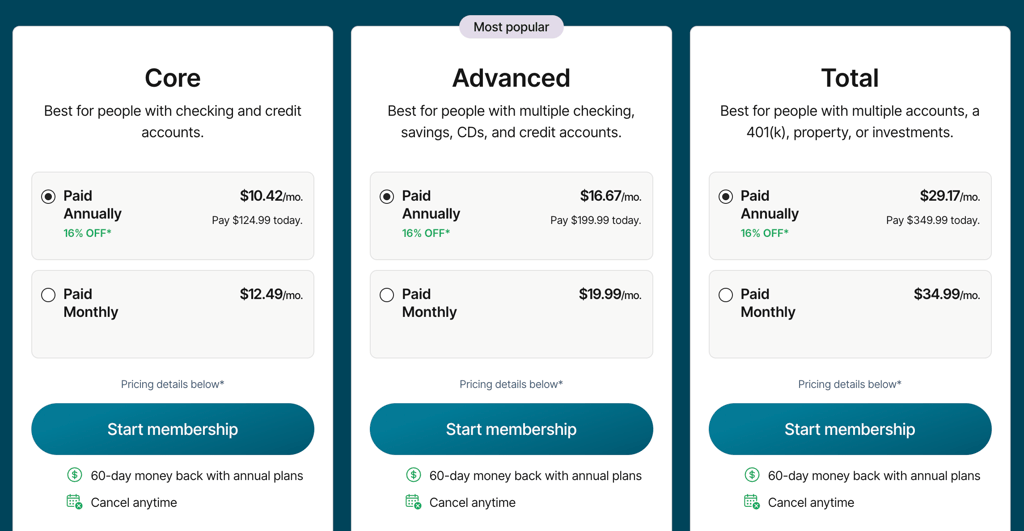
| Pricing: | Starts from $10.42/month |
| Free trial: | Yes, 7 days |
| Current deal: | Get up to 16% OFF Norton LifeLock |
Norton LifeLock is one of the strongest alternatives to Coveron if your priority is recovering from identity theft after fraud has already occurred. It checks publicly available online records for personally identifiable data leaks. You will get alerts if LifeLock notices property ownership changes, anything suspicious in your credit report, and new loans in your name.
What I like most is a dedicated identity restoration specialist. Suppose the scam is already happening, and your property is being stolen. In that case, LifeLock's support will assist with initiating legal proceedings, from freezing your credit to contacting authorities to start an investigation. You can also get up to $3 million in identity theft insurance.
Norton LifeLock for home title protection
- Home title monitoring: monitors property records for changes that could indicate title fraud.
- Ownership change alerts: notifies you when it detects changes to your property's ownership records.
- New lender alerts: alerts you if a new lender is detected in connection with your property.
- Refinance alerts: notifies you if a loan associated with your property is refinanced.
- Default alerts: sends a notification if it detects a notice of default associated with your property.
- Identity restoration support: provides a dedicated US.-based Identity Restoration Specialist to help if you become a victim of home title fraud.
- Unlimited property monitoring: Monitors unlimited properties where LifeLock can confirm that you have an ownership interest.
Norton LifeLock pricing
Norton LifeLock currently starts at $10.42/month when billed monthly. However, home title monitoring is only included with the Total plan, which starts at $29.17/month when billed annually. The Total plan also includes identity theft monitoring, three-bureau credit monitoring, unlimited bank and credit account alerts, and up to $3 million in identity theft coverage.
If you want to learn more about this provider, read our LifeLock identity theft protection review.
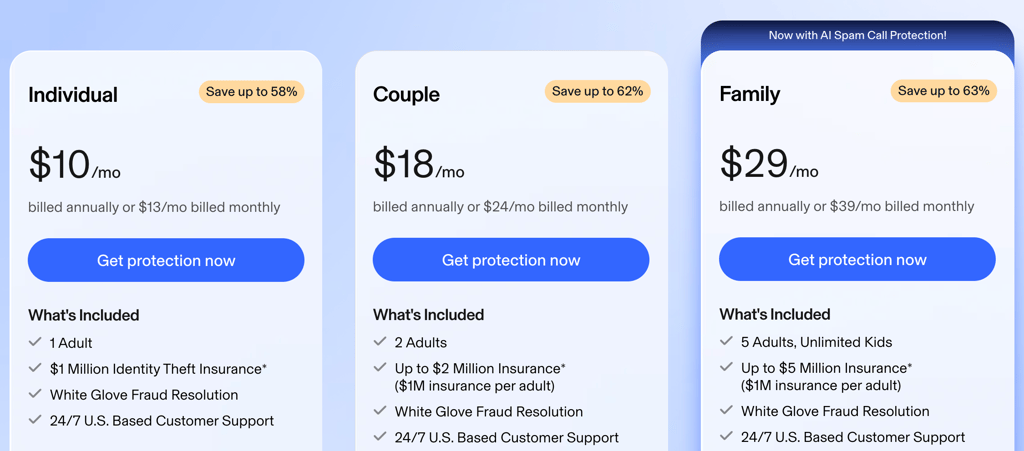
3. Aura – best for preventing home title theft

| Rating: | 4.6 |
| Features: | Home title monitoring, property ownership change alerts, title change alerts, identity theft insurance, fraud remediation support |
| Pricing: | Starts from $8.00/month |
| Free trial: | Yes, 14 days |
| Current deal: | Get up to 66% OFF Aura Identity Theft Protection |
Aura provides the best home title protection for families. It monitors the web for addresses, email, SSN, and other personally identifiable information leaks. It also scans for auto-related leaks, like a driver's license, which could also be used for home title fraud.
You get a variety of additional features. Even the most affordable Aura plan includes a VPN, a password manager, and an antivirus. Its recent addition is a personal data removal from data brokers and people search sites, so it helps limit your exposure online.
Aura for home title protection
- Home title monitoring: monitors your property title for unauthorized changes.
- Ownership change alerts: notifies you if it detects unauthorized changes to your title, such as adding a co-owner or removing your name.
- Address monitoring: Aura also monitors changes to your home address in public records, which can help identify suspicious activity connected to your identity.
- Fraud resolution support: provides access to US-based Fraud Resolution Specialists if you need help after identity theft or fraud.
- Identity theft insurance: Aura includes up to $1 million in identity theft insurance for eligible losses, although this is broader identity protection rather than home-title-specific insurance.
Aura pricing
Aura currently starts at $8.00/month. Its plans include home and auto title monitoring as part of its identity theft protection.
If you want to learn more about this provider, read our Aura review.
Other identity theft protection service worth considering
At the end of this article, I'll show you how to monitor your home title for free. But before that, take a look at two identity theft protection services with similar features. Keep in mind that if you experienced deed fraud due to stolen identity, identity theft insurance still applies.
I also recommend taking a look at IdentityIQ's identity theft protection tool. A financial intelligence company, IDIQ, developed it, so it has a different focus than services such as Coveron. For example, it offers a utility payment reporting that helps improve your credit score while paying bills.
IdentityIQ can be your top pick if you're worried about financial health. This service offers all the necessities, like credit bureau and data web monitoring, but its value increases with additional credit and financial wellness features.
Best home title protection services compared
Before we move on, take a look at the two top home title monitoring services' side-by-side comparison.
| Home title protection service | Rating | Price | Property monitoring scope | Credit monitoring | USPS address monitoring | VPN | Identity theft insurances |
| Coveron | 4.9 | Starts from $5.69/month | Up to $25,000 | Yes, up to 3 bureaus | Yes | Only with Full Protectibundle | Up to $2 million |
| Norton LifeLock | 4.7 | Starts from $10.42/month | Unlimited | Yes, up to 3 bureaus | Yes | Only with Norton 360 bundle | Up to $3 million |
| Aura | 4.6 | Starts from $8.00/month | Unlimited | Yes, up to 3 bureaus | Yes | Yes | Up to $1 million |
Why home title theft is a real risk
Although home title fraud is relatively rare, in April 2025, the FBI released a warning of increasing quitclaim deed fraud cases. Typically, these scams are a part of a broader identity theft cybercrime.
Scammers check public records and data leaks to grab a real address, date of birth, driver's license, and other personally identifiable information to impersonate the owner. Then they craft a fraudulent quitclaim deed document to transfer the property to new, illegitimate owners.
The deed is presented to the county recorder's office. Because it has the correct owner's details, often including a real signature, the recorder's office approves it. Now, the scammers can start cashing out.
They can use the stolen property to file a Home Equity Line of Credit (HELOC). Or they can start selling it for a lower price than the market average. In both cases, the real owner now risks significant financial damages and a lengthy property restoration process.
Home title insurance vs home title protection
Home title fraud insurance and title protection services are different services. In the first case, it protects newly obtained property against past issues. For example, past owners may have unpaid liens and hidden taxes, which are now addressed to the new owners. The home title insurance typically has a one-time fee.
Home title protection is essentially home title monitoring. Subscription-based services, like Norton LifeLock, check for personal data leaks and new property ownership transfers, alerting victims of suspicious activities. Home title monitoring is usually a part of a broader identity theft protection suite, alongside credit bureau monitoring.
One of the essential differences is that home title insurance is retrospective. It protects against past property issues, but some insurers now aim to include future risks, like quitclaim fraud. On the contrary, home title monitoring protects against future scams. It checks a variety of online sources for signs of potential fraud and quickly alerts victims to act.
However, you should be mindful of services that claim title lock insurance. In reality, the record's office must process all queries that provide sufficient details. So if a criminal successfully impersonates you, you can only protect your home title by disputing it in a legal process.
How title protection services work
The best home title protection services include home title monitoring in the broader identity theft protection suite. Because deed frauds require personally identifiable information, they can also be categorized as identity theft cases.
Title fraud protection starts with monitoring property ownership documents on public records, like the county recorder's office. Of course, you can do it yourself, and I will explain how to protect your home title for free shortly. But keep in mind, home deed protection services scan these records continuously, saving you a lot of time.
Another crucial advantage is quick alerts. Contacting the authorities promptly can prevent scammers from selling your property or using it as equity for a loan. Title fraud protection services also provide experienced resolution specialists to guide you through the otherwise complex restoration process.
However, even the best home title protection services cannot stop all real estate scams. Even if they claim a low home title lock cost, they can only alert you to possible scams.
The record's office must proceed with queries, like quitclaim transfers, if they consider the documentation fully signed. In this case, identity theft protection is therefore just as important as property monitoring.
Services like Coveron combine home title insurance, financial account monitoring, dark web monitoring, and identity theft recovery to help detect identity fraud that often precedes fraudulent property transfers.
What to look for in a title protection service
Identity theft and home title fraud are no laughing matters. Here are my tips on choosing the best home title protection:
- Coverage scope. Check whether the service covers only one or unlimited properties. This is especially relevant for multiple homeowners and landlords.
- Alert speed. Near real-time alerts allow you to contact the authorities and potentially stop the crime in progress. Alert scope is also essential and should cover deeds, liens, mortgages, and quitclaim changes, as well as USPS address monitoring.
- Identity theft add-ons. Seek 3-credit bureau monitoring, like Aura. Efficient dark web, SSN, and auto title monitoring significantly increase the chances of detecting identity theft scams.
- Restoration, insurance, and legal support. Look for dedicated recovery specialists together with meaningful insurance coverage. Coveron includes up to $2 million in identity theft reimbursement and $25,000 in home title insurance, while Norton LifeLock offers up to $3 million in identity theft insurance and experienced fraud restoration specialists.
- Cost and reputation. Read through home title lock services reviews to identify real cybersecurity professionals. Norton has over 30 years of cybersecurity experience. Lastly, check the pricing. Norton LifeLock may be more experienced, but Aura's prices do not increase after the first year, making it more affordable.
Tips to protect your home title manually
Our top three services are paid, but you can also monitor your home title for free. Keep in mind you will be sacrificing additional cybersecurity benefits and spending time monitoring home title changes manually.
- Monitor public records. County records and clerk offices provide free property fraud alerts. You can get a phone call or email notification. Keep in mind that it does not scan the dark web or check data leak files, so it may not notice a fraudulent home title transfer in sophisticated identity theft cases.
- Check credit reports. You get one free weekly report from Experian, TransUnion, and Equifax credit bureaus. Carefully inspect them for changes in public records, hard inquiries, and new accounts you don't remember opening.
- Monitoring your mailing address. Upon stealing property, scammers will likely change the mailing address to remain unnoticed for as long as possible. The USPS will notify you of the mailing address change, but be sure to notice it and follow up.
- Limit personal data exposure. Criminals go through data brokers and people search sites, search engines, and social media. Any personal information located there can be used for home title fraud, so it's best to keep it to the bare minimum.
Conclusion
Home title fraud is a real risk, and monitoring your property records can help you spot suspicious changes sooner. You can monitor your home title yourself for free, but dedicated services can make the process easier and provide additional protection.
Coveron is our top recommendation if you want affordable financial protection against home title fraud. Its coverage can help with eligible costs associated with recovering your property title, while its plans also include other identity protection features.
Norton LifeLock is a strong choice if you want dedicated home title monitoring and alerts for changes to your property records, along with identity restoration support and higher insurance limits.
Aura is worth considering if you want home title monitoring as part of a broader identity protection package, particularly for protecting multiple members of your household.
Other reviews you might be interested in:
Best identity theft protection for kids in 2026: top services to protect your child's data
Best identity theft protection for employees in 2026: compare features and plans
Best Identity Guard alternatives right now