Amazon’s Health AI is seeing patients before doctors do
When healthcare feels more like logistics than medicine, Amazon stepping in with Health AI feels less like disruption and more like inevitability.
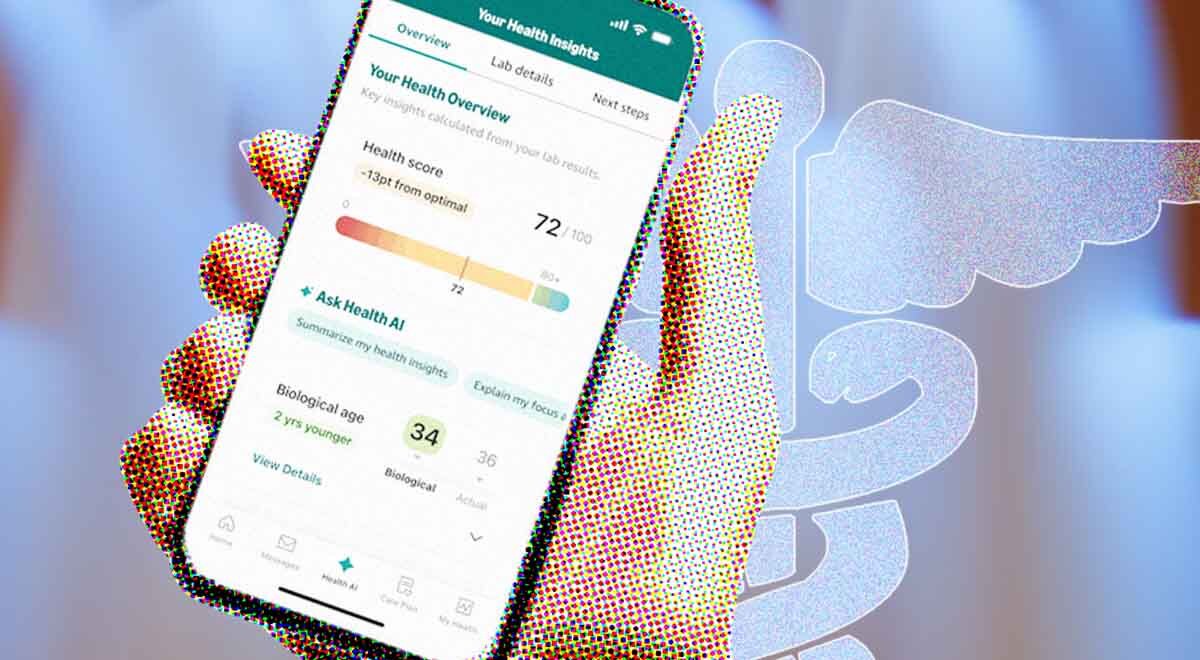
Image by Cybernews

 Follow us
When healthcare feels more like logistics than medicine, Amazon stepping in with Health AI feels less like disruption and more like inevitability.
When a health system feels so botched, fragmented, and expensive as it does in the US, it shouldn’t come as a surprise that Amazon is intervening with its Health AI service.
Each part of the traditional framework of American healthcare, whether doctor, hospital, or insurance company can feel like a fragmented patchwork, with patients being stuck in a feedback loop, or growing frustrated at communication channels.
In the US, a "referral black hole" occurs when incompatible software prevents your medical records from following you to a specialist, forcing you to manually repeat your history and retake expensive tests.
For those feeling discombobulated, paying $9 a month or a $99 yearly payment, may feel like it comes as a salvation, especially as it can explain health data, or guide you though a taboo topic like managing meds, or guiding care options.




NEW: Amazon is rolling out Health AI for One Medical members where an AI assistant, built on Amazon Bedrock, uses your medical records, labs & meds.
undefined Healthcare AI Guy (@HealthcareAIGuy) January 21, 2026
It can answer health questions, manage prescriptions & book appointments pushing Amazon deeper into this space now too. pic.twitter.com/glAsIEp4p3
Dr. Earl J. Campazzi, Jr. is a quadruple board-certified, Johns Hopkins–trained physician and author of Better Health with AI, specializing in using technology to bridge gaps in modern healthcare.
While Amazon frames the system as supportive, not substitutive, Campazzi reads it differently: “I see a wink and a nod about replacing some doctor visits.”
In other words everyone knows that’s happening, but not many people are having direct discourse about it.
The quiet shift in primary care
In the constant us vs them debate (AI and humans), Health AI doesn’t mean the end for doctors; rather, it may displace low-value visits by quietly absorbing lab explanations, symptom triage, renewals, and admin-heavy care.
Campazzi compares the model to functional substitution in medicine: “This reminds me of low-T clinics being used for longevity and performance enhancement and medical marijuana clinics being used as a source for recreational marijuana.”

The comparison highlights how tools designed with one purpose can end up replacing core functions in practice.
Primary care becomes escalation-based instead of entry-based, with AI acting as the front door. There’s less of a burden to carry, removing the need to call a clinic, with the anticipation of slow referrals, as well as a high expense.
Health AI reshapes care architecture by making AI the default entry point and human clinicians the escalation layer. Campazzi frames the cultural shift clearly: “AI health assistants will make mostly correct and understandable health information widely available.”






Potential dangers
The biggest danger of AI as your first port of call is its authoritative nature, because as Campazzi puts it “AI sounds confident when wrong.”
As Campazzi explained – we shouldn't underestimate the experience and savvy that compounds with face to face interaction that a human practitioner accrues: “AI outperforms most physicians on exams but underperforms in real-world clinical settings.”
And when AI misfires, these hallucinations could be the difference between life and death.
Visible failures trigger lawsuits and headlines, but invisible harm moves slowly through medical studies, creating weak accountability for systemic errors.
There’s also the dilution of the doctors intuition, if a practitioner is to see a patient only after an AI screening, then their role would resemble more of a data checker than a physician picking up on key symptomatic cues.

And what about the cost?
In the US at least, healthcare AI adoption will not be powered by ethics. It will be powered by economics, because “cost is a factor for virtually all goods and services.”
With an estimated 27–30 million Americans without insurance, AI becomes the most accessible first point of care for millions. Even insured patients face $20 to $50 payments for quick drop in visits or prescription authorisations making a free AI consultation the rational first step.
The result is a two-tiered reality – AI as an access tool for middle-income users, not an equity solution for low-income ones.
According to Campazzi, the future of AI healthcare won’t be decided by medicine alone, but by “cost, perception, the legal system, politics/policy and medical studies, in that order.”
Unlock more exclusive Cybernews content on YouTube