Apple sues OpenAI over alleged trade secret theft
Former Apple employees are accused of being involved.
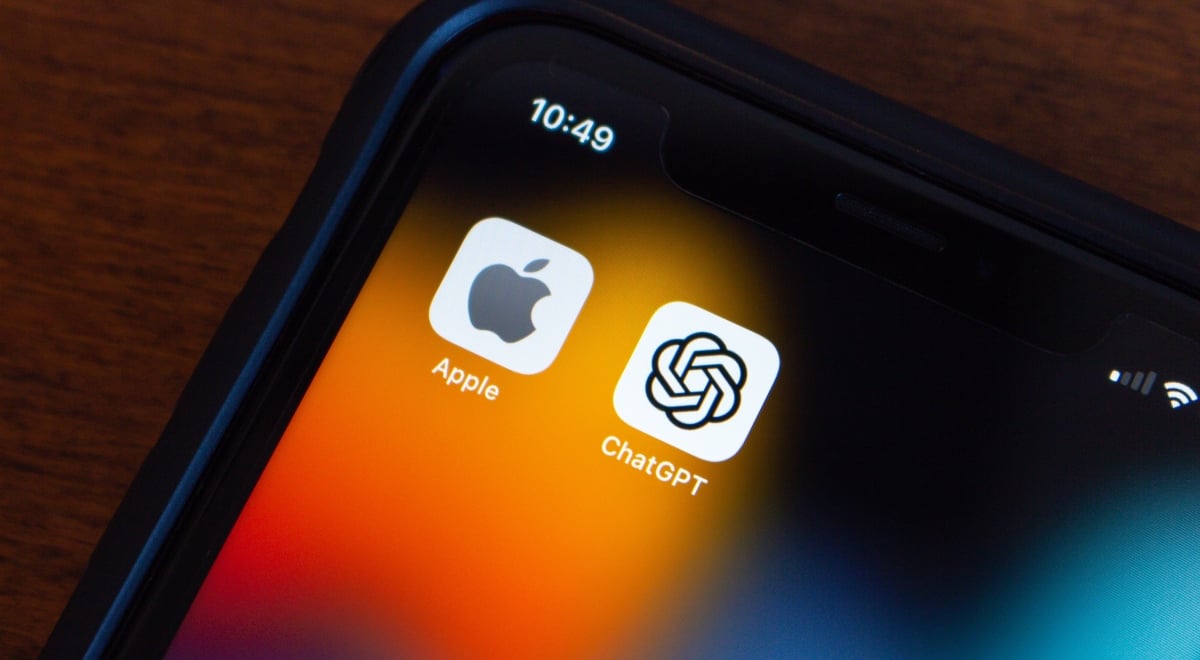
Image by Shutterstock.

 Follow us
- Apple sued OpenAI, accusing it of stealing trade secrets to speed up hardware development.
- Apple alleges former employees Chang Liu and Tang Yew Tan helped OpenAI access confidential product and design information.
- The lawsuit claims OpenAI directed Apple workers to share prototypes, design files, and supplier details during hiring.
- Apple seeks damages and court orders blocking OpenAI from using its trade secrets, straining their former partnership.
Key Takeaways by nexos.ai, reviewed by Cybernews staff.
Apple filed a lawsuit against OpenAI on Friday, alleging the company stole its trade secrets as part of a coordinated campaign to accelerate the development of its computer hardware.
The lawsuit claims Apple uncovered "a pattern of theft of Apple's trade secrets" by OpenAI employees who previously worked at the company.
“Recently, significant evidence has emerged suggesting individuals employed by OpenAI wrongfully took Apple’s secret and confidential information regarding our unreleased technologies, processes, and products,” an Apple spokesperson said in an email.
One defendant named in the lawsuit, Chang Liu, has acted as a Senior System Electrical Engineer at Apple for eight years before joining OpenAI. He has been working on some of Apple’s most sensitive product development programs.





Apple claims that Liu retained access to his Apple work laptop after leaving the company. Using the device, he allegedly exploited a previously unknown authentication bug to access Apple’s shared network folders and downloaded confidential hardware files.
He is also accused of coaching a former colleague on interview topics related to unannounced Apple products she should study before her interview with OpenAI.
Another defendant, Tang Yew Tan, acted as Vice President of Product Design for iPhone and Apple Watch and is now serving as OpenAI’s Chief Hardware Officer at OpenAI. Apple accuses him of using confidential company information to recruit Apple staff for OpenAI.
Apple claims that Tan has encouraged candidates to bring prototypes and design materials to interviews for “show and tell” sessions to get access to more confidential information.
“This is part of OpenAI’s strategy to extract Apple’s confidential information,” the lawsuit says. “OpenAI has been instructing Apple employees to bring ‘CAD/design artifacts’ and ‘prototypes’ to their interviews and to divulge details about their work such as ‘subsystem and component selection,’ the ‘tools or methodologies you use for system integration, such as CAD software, simulation tools,’ and ‘Vendor selection and communication/collaboration with vendors’.”
According to the lawsuit, OpenAI also instructs new hires on how to avoid scrutiny when they leave Apple.
It adds that this is an organized company effort rather than a single employee misconduct, which Apple calls a pattern “of misconduct at an institutional level”.
The company cites an example of when OpenAI approached one of Apple's manufacturing partners and asked it to carry out a trade secret metal-finishing technique, while “misleading the partner to believe they had Apple’s permission to do so.”



Stay updated with our latest stories and follow us on social media
Be the first to discover new stories, ideas, and updates from our team.
Apple said it had attempted to discuss its concerns with OpenAI in February but never received a response. The company is now seeking unspecified damages, injunctions, and an order to prohibit OpenAI from using its trade secrets.
In a post on X, Director of Communications at OpenAI Drew Pusateri, said OpenAI has "no interest in other companies' trade secrets."
The lawsuit marks a sharp reversal for the two companies, which announced a partnership in 2024 to bring ChatGPT to Apple devices. The deal involved integrating ChatGPT into the operating systems for iPhones, iPads, and Macs. But in the end, Apple chose Google's Gemini models to power its revamped voice assistant Siri, which was showcased last month.