Google CEO hits a booing trifecta at Stanford while addressing graduates
Booing prominent speakers during commencement addresses at US universities is now a regular thing, and the Google CEO checked all the sensitive boxes for booing: defense contracts, Israel policy, and AI, even if the latter was only mentioned indirectly.
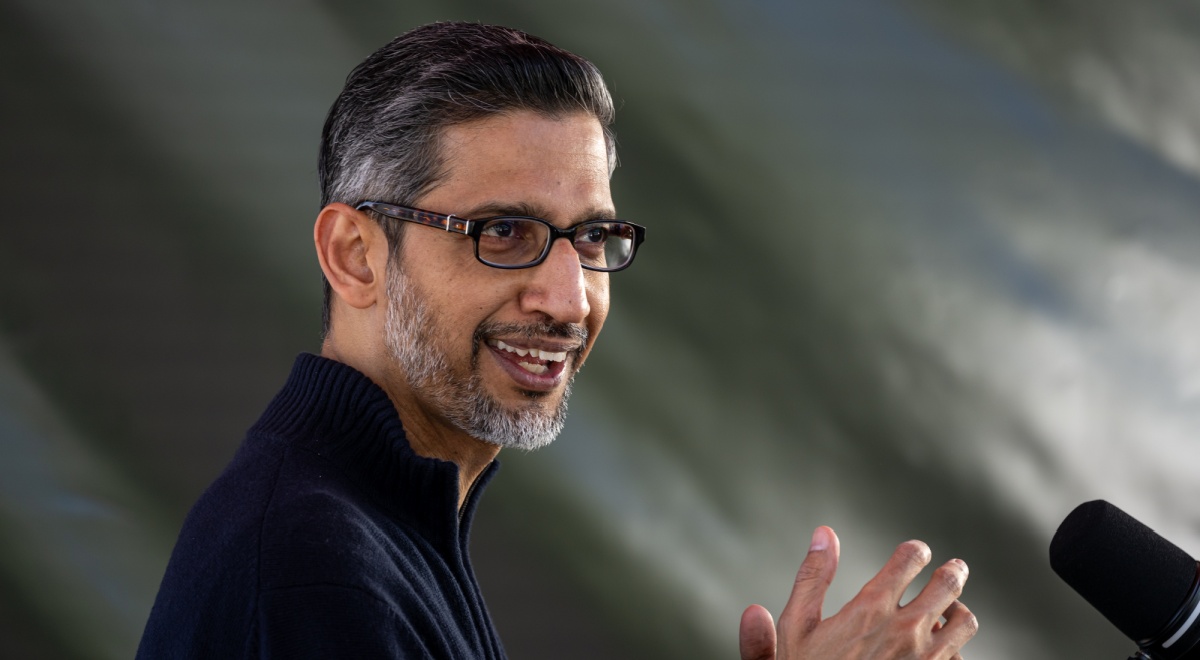
Sundar Pichai, chief executive officer of Alphabet. David Paul Morris/Bloomberg via Getty Images.

 Follow us
Booing prominent speakers during commencement addresses at US universities is now a regular thing, and the Google CEO checked all the sensitive boxes for booing: defense contracts, Israel policy, and AI, even if the latter was only mentioned indirectly.
- Some Stanford graduates walked out and booed during Sundar Pichai's commencement speech.
- Protesters criticized Google's ties to Israel and its AI-related activities.
- Pichai largely avoided discussing AI and focused on career and life advice.
- Stanford's official commencement coverage did not mention the protests.
Key Takeaways by nexos.ai, reviewed by Cybernews staff.
Multiple reports from the ceremony at Stanford, the alma mater of Google CEO Sundar Pichai, show students booing, while the number of those who walked out ranges from "dozens" to around 200. Per Stanford, more than 20,000 people, including 3,600 students, gathered at Stanford Stadium for the ceremony.
Videos from the stadium show students walking out, while some of them were carrying protest signs, such as "ICE SPIES WITH GOOGLE AI" and "GENOCIDE RUNS ON GOOGLE," and waving Palestinian flags.





Protests against Israeli policy in Palestine happen regularly at Stanford, while walkouts during commencements have been organized for a third year in a row. This time, the protest was likely over Project Nimbus, a $1.2 billion contract Israel signed with Google and Amazon in 2021, which grants the Israeli military access to cloud computing and AI software.
As noted above, Google AI was also targeted by students, despite Pichai attempting to avoid the topic that recently got other prominent figures booed while addressing students at the University of Arizona and the University of Central Florida.
In Arizona, former Google CEO Eric Schmidt was booed for speaking about the rise of AI, comparing it to the rise of computers.
Meanwhile, Pichai joked that people had been giving him a lot of advice on what to say, and just as importantly, what not to say.






"People thought it would be really difficult for me – it is the last two letters of my last name, after all. In all honesty, that topic is truly immaterial to what I want to share with you. The most timeless advice, I’ve learned, is technology agnostic," the CEO said.
In his speech, which, according to reports, was well received by the public who stayed after the walkouts, Pichai acknowledged that very few of life's moments are truly make-or-break and framed the speech around three personal filters for navigating them. These include choosing optimism, working on hard things, and doing what excites you.
"The important thing isn't to get them all right; it's to find a way to keep moving forward," Pichai concluded.
In its report about Commencement 2026, Stanford Report, the official news publication and information channel for the university, did not mention the protests or walkouts.
FAQ
Is Sundar Pichai an American citizen?
Yes. Sundar Pichai was born in India, but he later became a naturalized U.S. citizen and has publicly referred to himself as an American citizen. He is often described as an Indian-born American executive and currently serves as CEO of Alphabet and Google.
Does Sundar Pichai own a cricket team?
No.Sundar Pichai does not own a cricket team.He is a tech executive (CEO of Google’s parent company Alphabet) and has no known ownership stake in IPL or other professional cricket franchises.
Can Sundar Pichai code?
Yes. Sundar Pichai can code.He studied metallurgical engineering at IIT Kharagpur, later did engineering and business studies in the US, and early in his career at Google he worked on technical products like Google Toolbar and Chrome, which required strong programming and systems understanding. He’s not a day-to-day software engineer now, but he has a technical background and understands coding and product architecture.
Unlock more exclusive Cybernews content on YouTube.