Jared Isaacman: from billionaire space tourist to NASA chief
NASA has confirmed its 15th administrator, Jared Isaacman, the first private-sector astronaut to lead the agency. The US Senate voted by a majority 67-30 votes to confirm the appointment.

Image by Cybernews

 Follow us
NASA has confirmed its 15th administrator, Jared Isaacman, the first private-sector astronaut to lead the agency. The US Senate voted by a majority 67-30 votes to confirm the appointment.
Far from being a passive space tourist, Isaacman commanded two historic missions, both for Elon Musk’s SpaceX: Inspiration4 in 2021 and Polaris Dawn in 2024.
During Inspiration4, he led the world’s first all-civilian orbital mission, reaching an altitude of 364 miles – well above the International Space Station (ISS), which orbits at roughly 250 miles.
On the Polaris Dawn mission, Isaacman personally performed the first private spacewalk in history and reached an altitude of 870 miles, the highest any human has flown since the Apollo Moon missions.
Both missions were privately operated by SpaceX and funded by Isaacman himself.




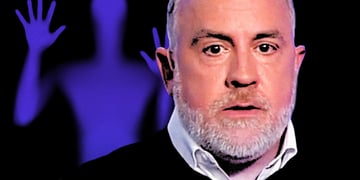

Rocky road to being hired
NASA’s atypical appointment comes as the agency is under pressure to get astronauts back to the Moon.
This pressure centers on the Artemis program, NASA’s multi-billion dollar campaign to establish a permanent base on the lunar surface and use it as a launching pad for the first human missions to Mars.
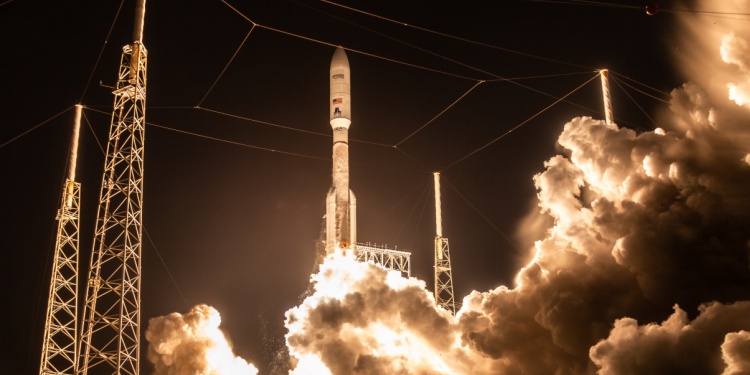
Isaacman's journey to becoming NASA’s head has been something of a political rollercoaster, originally tapped for the role in 2024, Isaacman’s nomination was removed following a rift in May 2025 between President Donald Trump and Musk.
In an agency that hasn’t had a clear leader in 2025, Isaacman has been tasked with implementing Project Athena, a 62-page manifesto aiming to remove bureaucracy and pivot towards more commercial-looking enterprise.
Isaacman also brings a philanthropic legacy to NASA from his time as a private commander. He turned the 2021 Inspiration4 mission into a massive fundraising platform for St. Jude Children’s Research Hospital, raising over $250 million.
This was achieved by combining his personal $125 million donation with a public sweepstake for a seat on the SpaceX-operated flight.
Lofty goals
Another primary goal is to meet the Trump administration’s aggressive "Moon-before-China" timeline, aiming for a crewed landing before the presidential term ends in early 2029.
He takes the helm during a proposed 24% budget cut for 2026, forcing him to decide which science programs (like Mars Sample Return) must be sacrificed to save the lunar landing.
Isaacman is expected to apply the same "flat" organizational structure he used to build Shift4 Payments (which he established in 1999 when he was just 16), aiming to eliminate layers of committees and review boards that slow NASA down.
His biggest challenge, however, will be navigating the "Musk connection."
He must prove to a skeptical Congress that his NASA is an independent public agency, not a subsidiary of the private space industry.
Isaacman has also never run a federal agency, which may clash with his previous commercial interests with SpaceX, yet time will tell if he can strike the right balance of institutional and modern leadership.






Unlock more exclusive Cybernews content on YouTube.