Scalper bots snapped up tickets to Eurovision – summer events will be next target, says expert
While sneakers remain the favorite purchase by scalper bots this quarter, during the upcoming summer the automated online purchasers are expected to target festivals and other big events, a cyber-analyst forecasts.

Image from Shutterstock

 Follow us
While sneakers remain the favorite purchase by scalper bots this quarter, during the upcoming summer the automated online purchasers are expected to target festivals and other big events, a cyber-analyst forecasts.
The scalper bot industry is staying active and searching for new targets. Netacea, a cybersecurity firm specializing in detecting and mitigating bot attacks, has predicted that as the weather gets warmer, scalpers will likely follow consumer habits and target in-demand festival and concert tickets.
Organizers should mitigate the risks
In March, scalper bots were to blame for the disappointment of Eurovision fans, as the tickets to the grand final in Liverpool sold out within 36 minutes. Thousands of tickets were scraped, and underground ticket-touting communities were found reselling them at over £11,000 apiece, infuriating many.
Cyril Noel-Tagoe, principal security researcher at Netacea, told Cybernews that festival and concert organizers should prepare and mitigate the potential risks of scalper attacks in advance. It could be done by using online tools to familiarise with the tactics and techniques used by scalper bots.






“Once scalper bot capabilities are understood, organizers should look at their release strategies and site architecture to identify how scalpers might attack their site and implement mitigation strategies to counter these attack vectors. For example, stronger authentication at the account registration phase and restricting the number of purchases made per user,” explained Noel-Tagoe.
Sneakers still in the top five
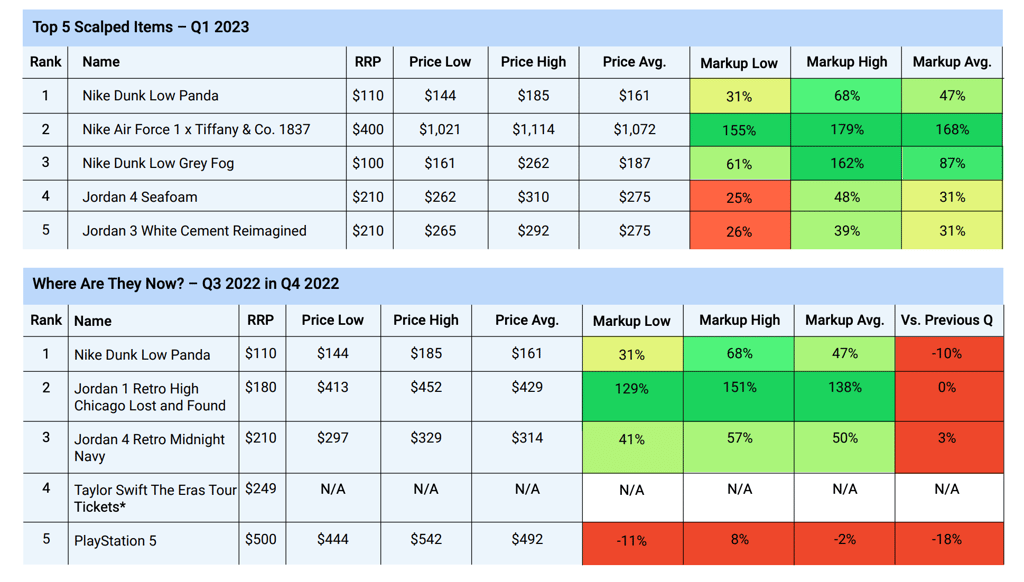
During the first quarter of 2023, shopping bots heavily targeted the Nike Dunk Low “Panda” sneakers. After that the second most popular target were Nike and Tiffany “Air Force 1 1837” trainers, followed by Nike Dunk Low Grey Fog footwear.
There has been a visible change, with PlayStation 5 (PS5) pushed outside the top five of most scalped items: it used to be the primary target, with scalper bots responsible for inflating the gaming consoles market.
In contrast to 2022, the current situation marks a significant shift as the competition for electronics has eased, according to Netacea. The distribution of PS5s has stabilized and the demand for graphics cards by gamers and crypto miners has decreased, resulting in this change.
Scalping various items
The firm’s report on scalper bot activities revealed that whilst sneakers were by far the most popular purchases for the machines, resellers used them to buy various other types of items as well.
Among these were designer clothing from streetwear brands like Stussy and Broken Planet, while some bot users set their sights on Lionel Messi Argentina jerseys following the football superstar's triumph in the World Cup.
Collectables, such as Funko POP! figurines, Supreme Tamagotchis, and signed copies of Elton John's Honky Chateau 50th Anniversary Gold album were also highly sought after, with the latter fetching a whopping 32,000% profit when resold.
Scalper bots even targeted drinks, with packs of the Logan Paul and KSI sports drink, Prime Hydration, being snapped up in bulk.
Scalper bots are damaging businesses
In 2022, Netacea commissioned an independent survey of 440 enterprise organizations across the UK and US to understand their experiences dealing with bot attacks.
Of the respondents, 96% who had experienced a scalper bot attack said it had negatively impacted their customer satisfaction. On average, these attacks resulted in a loss of 2.8% of the annual online revenue for the respondents.
“Scalper bots have an unfair advantage since they can make purchases much quicker than humanly possible. This frustrates legitimate customers, and would-be customers, who end up waiting in queues only to reach an out-of-stock page and having to turn to the scalper to purchase the item at a marked-up price,” said Noel-Tagoe.
He asserts that if a first-time customer is unable to make a purchase from a given business, they are unlikely to return to it, especially if they feel that the outlet could have done more to prevent bot attacks.
“Loyal customers may also be lost to competitors who offer a fairer shopping experience if they repeatedly can’t make purchases,” he said.
