Ukrainians first to get Starlink "Direct to Cell" satellite service in Europe
The rival for satellite connectivity over Earth continues in full force on Monday as Musk’s Starlink launches Europe’s first-ever "Direct to Cell" service in Ukraine, giving citizens there peace of mind when it comes to staying safe and connected.

Image by Cybernews.

 Follow us
The rival for satellite connectivity in low-Earth orbit continues in full force on Monday as Starlink launches Europe’s first-ever "Direct to Cell" service in Ukraine, giving citizens there peace of mind when it comes to staying safe and connected.
The Elon Musk-owned SpaceX satellite division announced the new ‘Direct to Cell’ offering in partnership with Ukraine’s Kyivstar – the war-torn nation’s largest telecommunications carrier, serving more than half the population at 22.5 million subscribers.
"In Ukraine, staying connected means staying safe," Kyivstar CEO Oleksandr Komarov said about the announcement on Monday.
The service, which comes at no extra charge to Kyivstar customers for now, allows mobile users on the carrier's 4G network to seamlessly connect to the Starlink constellation when traditional connectivity is unavailable, “even where there are no towers.”
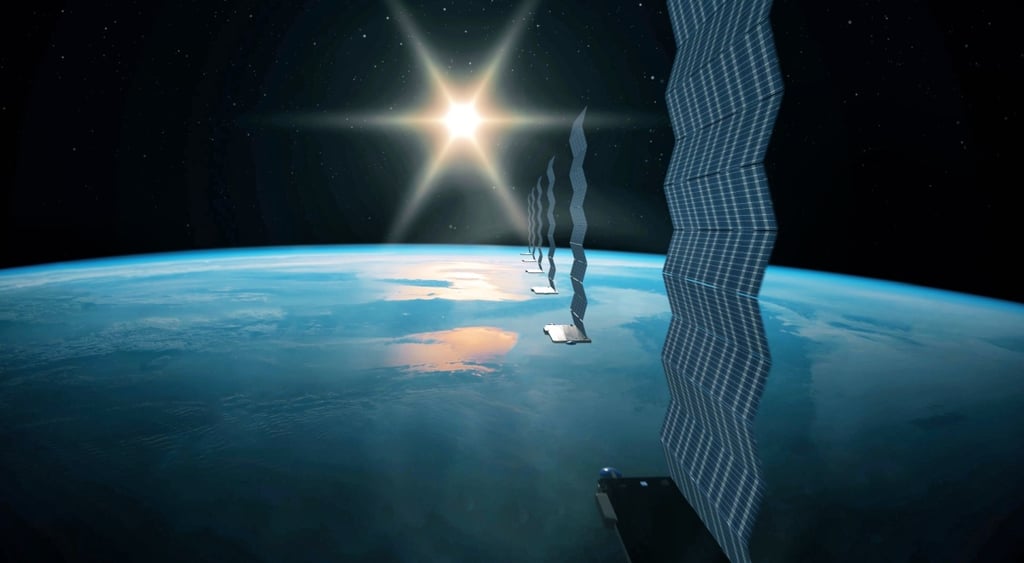






The Starlink satellites, acting as “cell towers in space” whenever the user is under open sky, will help guarantee that “as many Ukrainians as possible stay connected during this difficult time,” Kyivstar said.
“The technology will work in territories under the control of the Ukrainian government. After the beta testing is completed, we will provide more precise information about its use in frontline regions,” the Veon-owned telco said.
SpaceX President and COO Gwynne Shotwell praised the joint partnership in a statement reposted by Musk on X. "The satellite-to-mobile service is powering life-saving connectivity when and where people need it most - during prolonged blackouts or in areas where terrestrial networks are often damaged," Shotwell wrote.
Today marks an incredible milestone as Ukraine becomes the first European country to make @Starlink Direct to Cell available to customers!!
undefined Gwynne Shotwell (@Gwynne_Shotwell) November 24, 2025
The satellite-to-mobile service is powering life-saving connectivity when and where people need it most - during prolonged blackouts or in… https://t.co/5aSswl259N
To access the Kyivstar SpaceX supplemental network, 4G users will also have to upgrade to new SIM cards.
The company additionally noted that during the initial beta phase, “Internet and voice calls will be unavailable - only SMS will work.”
Kyivstar further states that the service is only operational on smartphones running Android OS, but it is “actively working" to make the service available to iPhone users in the future.
Protecting critical infrastructure
It’s not the first foray into Ukraine for Musk’s satellite service.
Wartime blackouts and disrupted infrastructure have plagued major Ukrainian cities and outlying areas, as well as the military, ever since the war began.
In the months following the February 2022 Russian invasion of Ukraine, Musk, with the help of the US government, delivered thousands of Starlink receivers to the Ukrainian front lines to help the military stay connected to the internet on the battlefield.
“‘Starlink is the only non-Russian communications system still working in some parts of Ukraine,” Musk said at the time.
Starlink has resisted Russian cyberwar jamming & hacking attempts so far, but they’re ramping up their efforts https://t.co/w62yCsDA5w
undefined Elon Musk (@elonmusk) May 11, 2022
Kyivstar has already ramped up its measures to keep its network online by adding batteries and generators to provide more than 10 hours of continuous coverage when grid power is unavailable due to prolonged blackouts, Komarov said.
Still, it's unclear whether the Kyivstar SpaceX service – an acknowledged part of Ukraine’s critical infrastructure and a continuous target of Russian hackers – would remain available in the event of a direct cyberattack on the telecommunications network.
In December 2023, Russian-linked hacktivists were able to take out the Kyivstar network for weeks, causing what Komarov and other leaders have called “the biggest cyber attack on telco infrastructure in the world."






Only two other carriers currently offer Starlink's Direct to Cell service: T-Mobile in the United States and OneNZ in New Zealand. The service will eventually launch in Australia, Canada, Japan, Chile, Peru, and Switzerland via select mobile carriers.
SpaceX has about 7,500 satellites in its low-Earth orbit constellation, and an estimated 50,000 Starlink terminals already operating in Ukraine.
Unlock more exclusive Cybernews content on YouTube.