A Thoughtful Look at FamiSafe V9 AI Parental Controls
 Follow us
At some point, many parents begin to notice subtle changes in how their children interact with screens—and tools like FamiSafe are becoming part of that awareness.
A child who once put their phone down easily may now seem restless without it. Screen time stretches later into the evening, family conversations grow shorter, and moods can shift quickly after a single message or notification.
None of this automatically means something is wrong. Screens are a natural part of growing up in today’s digital world. However, for many families, these small shifts raise important questions: Is this just a phase, or could my child be facing challenges online that I cannot fully see?
Why Screens Can Be Harder for Kids to Manage Than We Realize
Experts agree that kids and teens are still developing the skills needed to regulate impulse, emotion, and attention. Digital world—especially social media—are designed to capture those very systems.
That doesn’t mean parents need to panic. But it does help explain why kids may not always recognize when screen use is starting to affect their sleep, mood, or relationships. For many parents, the challenge isn’t enforcing stricter rules—it’s knowing when screen use is simply part of modern life, and when it may signal stress or emotional overload.
When Parents Look for Extra Support
Some families turn to parental-control tools not because they want to watch everything their child does, but because they’re trying to make sense of patterns they’re already noticing. Changes in screen time, app use, or online behavior can raise questions—especially when kids aren’t always ready to talk about what’s going on.
Tools like Wondershare FamiSafe are designed to offer that kind of high-level visibility. Rather than relying on constant check-ins or focusing on individual messages, FamiSafe brings together information about social media apps monitoring, manage screen time, app use, real-time location tracking, block harmful websites, and 15 more features in one place.
How FamiSafe V9 Approaches Digital Safety
FamiSafe has long included basics like screen-time limits, activity reports, and location history. With version 9, the app puts more emphasis on clarity and context, rather than adding layers of complexity.
A Broader View Across Social Platforms
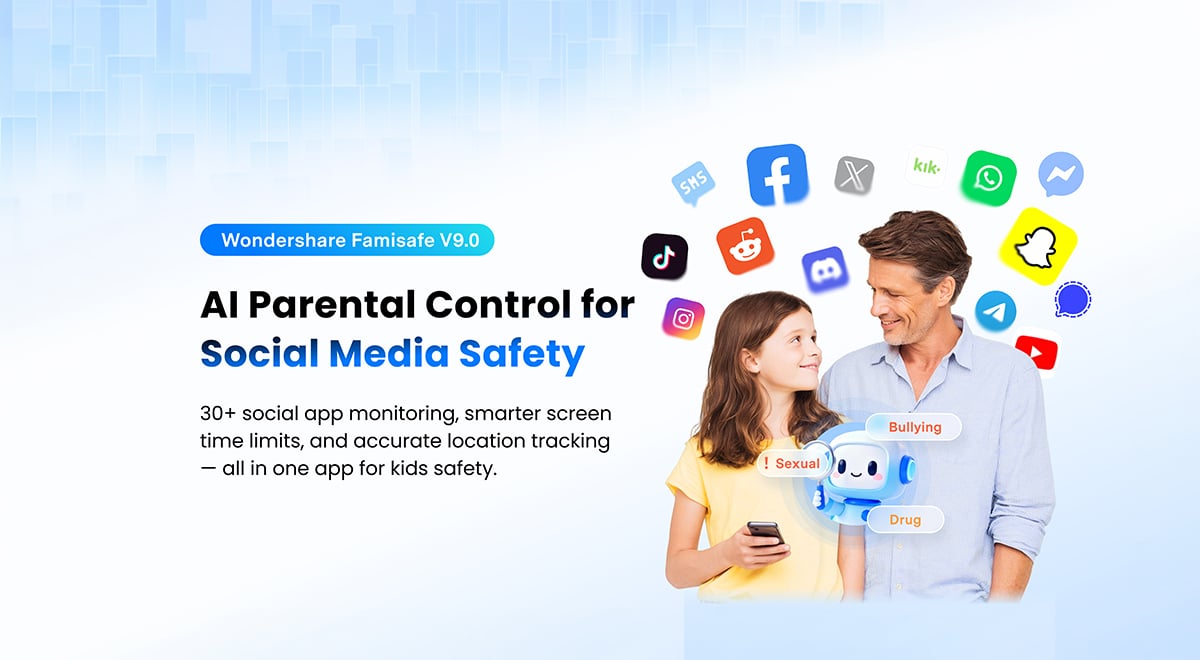
FamiSafe V9 broadens its reach across 30+ major social platforms, including many of the apps kids and teens use most often. Today’s kids don’t live on just one or two platforms—their digital world spans social media, messaging apps, gaming platforms, short-video apps, and online communities, often changing faster than parents can keep up. And risks don’t exist in just one place. Cyberbullying, online predators, inappropriate content, and harmful challenges can surface across multiple platforms.
This expanded coverage not only protects kids wherever they spend time online, but also gives parents a more consistent, holistic view of their kid’s digital interactions. With clearer context, parents can have better conversations, set healthier boundaries, and offer more informed guidance—rather than reacting after problems arise.
AI-Powered Analysis for Early Risk Awareness
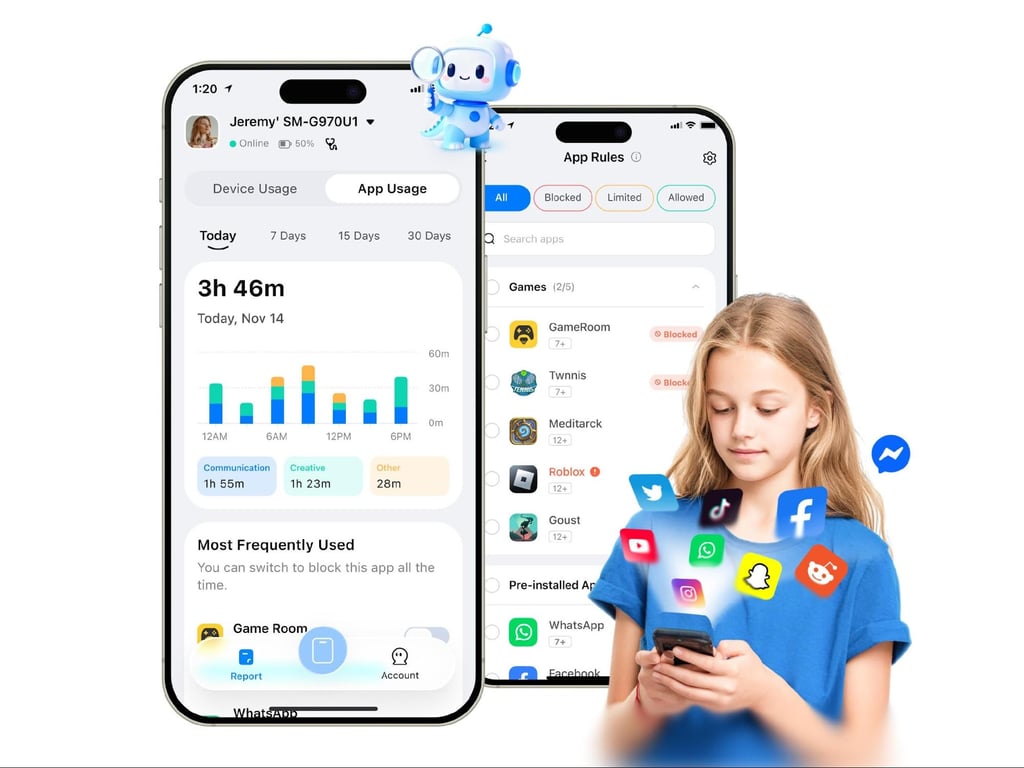
In addition to broader platform coverage, FamiSafe V9 leverages advanced AI semantic analysis to look beyond individual words and focus on patterns, tone, and repetition over time. This approach enables 24/7 identification of potential online risks, deep content scanning and alerts parents instantly when a potential risk occurs—such as cyberbullying, online predators, self-harm signals, mood swings, drugs, violence, or exposure to inappropriate content. FamiSafe also allows parents to block harmful or inappropriate websites, filter online content, and receive alerts if your kids attempt to access restricted material.
Rather than overwhelming parents with constant notifications, AI helps surface meaningful early warning signs—such as concerning interactions or sudden changes in behavior—giving parents time to step in with guidance, support, and constructive conversation when it’s needed, while remaining mindful of a kid’s privacy and personal boundaries.
Parent-Friendly Reports: Everything That Matters, at a Glance
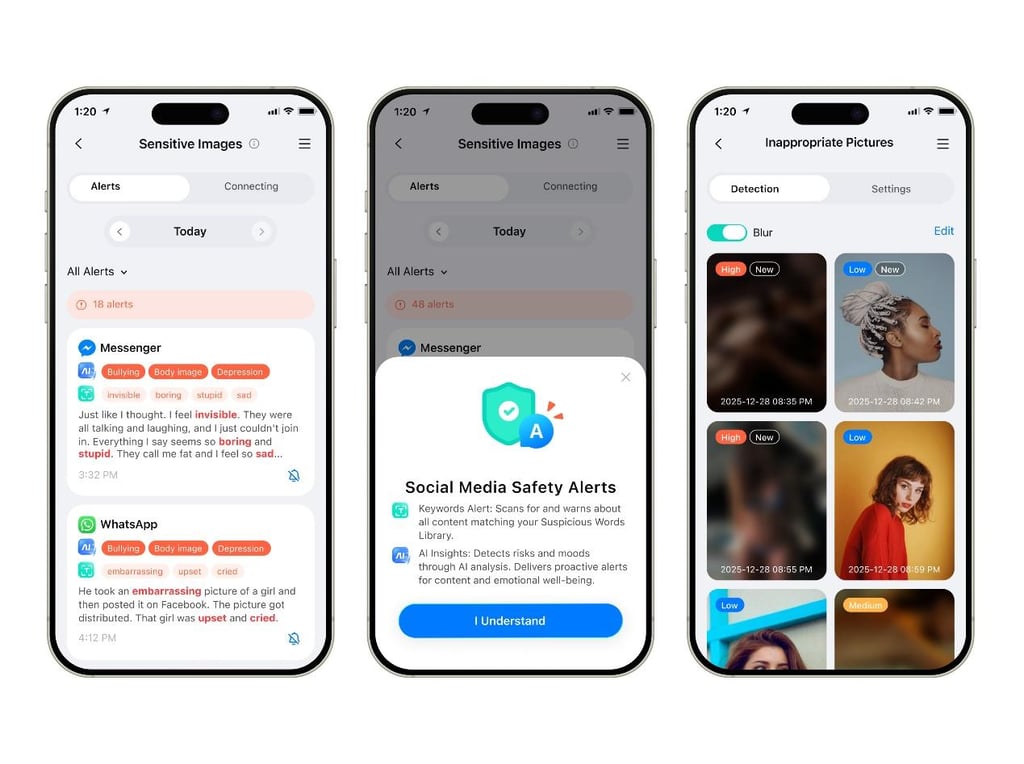
FamiSafe V9 summary reports provide parents with a clear and concise view of their child’s digital life, including social media, messaging apps, web content, calls and messages, email, location, screen time, and app usage. Instead of sifting through endless notifications, parents receive actionable insights into potential risks—all in a single, easy-to-read report.
With FamiSafe, staying informed is simple and stress-free, helping parents guide kids toward healthier digital habits while giving them the space they need to explore and grow safely online.
Parents can more easily spot things like:
- A sudden increase in screen time
- New apps becoming daily habits
- Changes in routine that may reflect stress or distraction
Used this way, the dashboard reports support awareness without encouraging parents to monitor every hour of their child’s day.
Ease of Use Makes a Difference
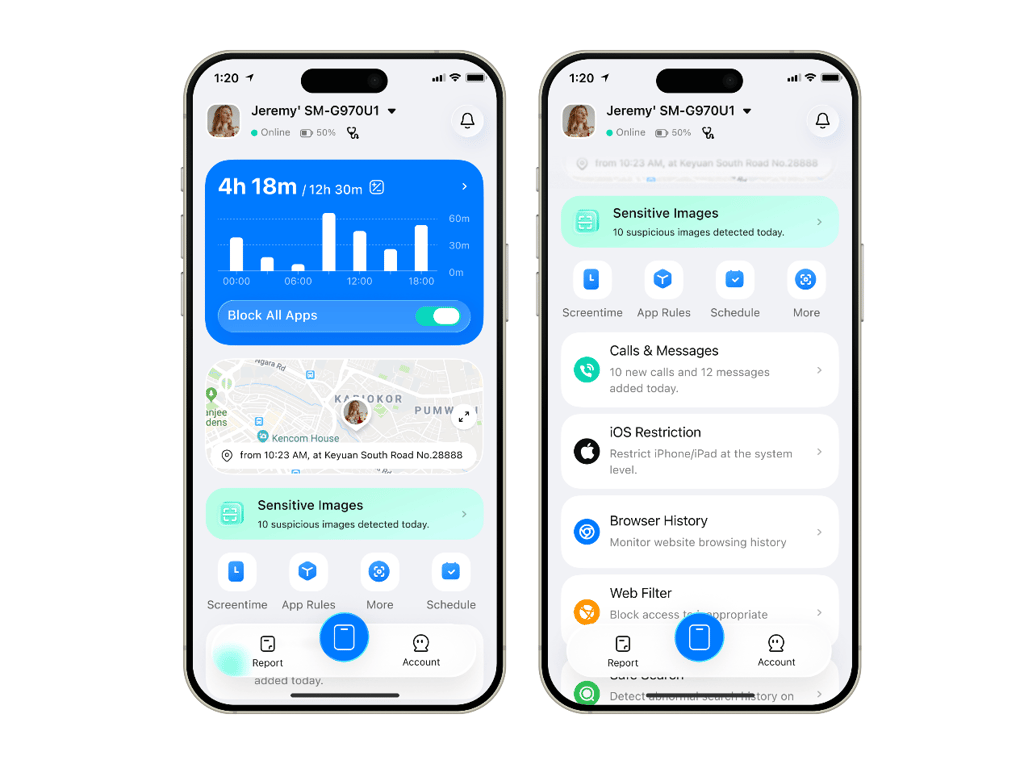
Tools that feel complicated tend to get ignored. FamiSafe V9’s interface is intentionally simple, with straightforward setup and navigation.
That simplicity matters. When parents aren’t overwhelmed by settings or data, they’re more likely to use the app consistently—and more likely to treat it as a support tool rather than a source of tension at home.
The Bottom Line
FamiSafe V9 doesn’t promise perfect control, and that’s a good thing.
By focusing on patterns, context, and clarity, it offers parents a calmer way to stay informed about their children’s digital lives and well-being. For families looking for a single tool to support healthier online habits—without turning monitoring into a full-time job—FamiSafe V9 is a reasonable option to consider.
Used thoughtfully, it can help parents notice early warning signs, start better conversations, and keep the focus where it belongs: on understanding and supporting their kids as they grow.