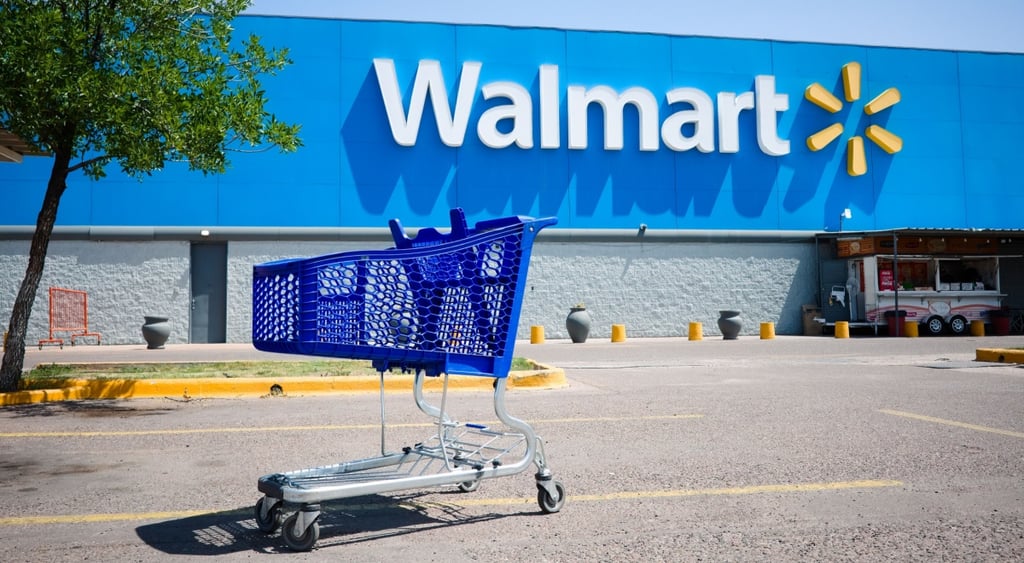
How is this even possible? Can Amazon really read your Walmart receipts?
When Amazon started recommending ant traps a day after a shopper bought them at Walmart, the internet demanded answers. How is this even possible? Every week, our team selects one pressing and common reader issue and deconstructs it to help you stay safe online.

 Follow us
When Amazon started recommending ant traps a day after a shopper bought them at Walmart, the internet demanded answers. How is this even possible? Every week, our team selects one pressing and common reader issue and deconstructs it to help you stay safe online.
A Reddit user recently sparked a lively debate after Amazon recommended them outdoor ant bait. All of this directly after they bought similar products from Walmart.
“The recommendation came from Amazon. In the Amazon app. Amazon claimed it was based on a 'recent purchase.' I didn't buy ant baits or any bug-killing related thing from Amazon (I double checked),” the user said.
The Redditor swore they hadn’t even searched for pest control items on Amazon and began to wonder: did Amazon somehow buy their Walmart purchase history?
The situation raised eyebrows across Reddit, with users offering a range of theories, from data brokers to cookies to credit card tracking. In this week's questions and answers rubric, let’s unpack what likely happened.





Redditors have many theories
The community’s theories narrowed down to a couple of possible scenarios.
“Walmart itself would never have sold the information to Amazon because Amazon is considered its number one competitor above all others,” Redditors ruled out this option straight away.
Some speculated that the information could come from credit or debit card companies selling your transaction history.
“More likely it is your credit or debit card selling your information to Amazon than Walmart,” raged one Redditor.
Others blamed data brokers' services.
“They could've also ‘shared’ it with a data broker that Amazon works with, and got that info that way. Depending on your bank, they might have also gotten that information from them,” one Redditor wrote.
“They share purchase history and things to target ads,” another Redditor said. They pointed out that your location or IP overlap can cross-contaminate purchase recommendations.
“In the huge amount of data, you aren't personally identified, it's just guessing and algorithms,” they added.
Others suggested AWS connections. Phone apps often use AWS servers, which Redditors speculated might be related to the data being transferred to Amazon.






Gmail was also blamed. Redditors pointed out that Google AI collects certain data from things like purchase invoices that go to your email.
“If your Walmart order information went to a Gmail email address, that is the second most likely source that Amazon got the information from,” one wrote.
“Almost certainly a third-party tracking cookie that both companies use,” said another.
“Please block third-party cookies by default and always opt out of unnecessary cookies.“
What Cybernews researchers say
The bottom line is that Amazon probably didn’t buy your Walmart shopping list.
“Such sharing would be commercially illogical and would likely break internal policies and competition rules,” our researchers explained.
But the digital ad ecosystem might have connected the dots for them. It’s most likely that third-party tracking cookies are to blame for Amazon obtaining this kind of data.
Third-party cookies allow advertisers to place a small data file on users' browsers while they are visiting different websites.
Many retailers use the same digital advertising ecosystems. They profile users across multiple platforms via cookies or trackers such as Google's mobile advertising IDs and Meta's pixels.
Over time, these cookies build a profile of your interests and habits, allowing advertisers to deliver highly targeted ads even on platforms you’ve never directly interacted with.
“When one platform records a purchase, that information can feed into audience segments such as 'interested in pest control products' or similar, which other companies can target without direct data exchange between the retailers themselves,” our research team said.
How to stay safe
If the idea of such tracking makes you uneasy, there are ways to limit it.
- Block or delete third-party cookies in your browser settings.
- Use privacy-focused browsers such as Firefox or Brave, which block trackers by default.
- Turn off ad personalization in your Google and Amazon ad settings.
- Use different emails or payment methods for different retailers to reduce data linkage.
- Review your mobile ad ID settings on iOS or Android and reset or disable them regularly.
Unlock more exclusive Cybernews content on YouTube.
