Man uses GrapheneOS feature to wipe his phone during border search
Samuel Tunick’s attorneys say the case should be thrown out.
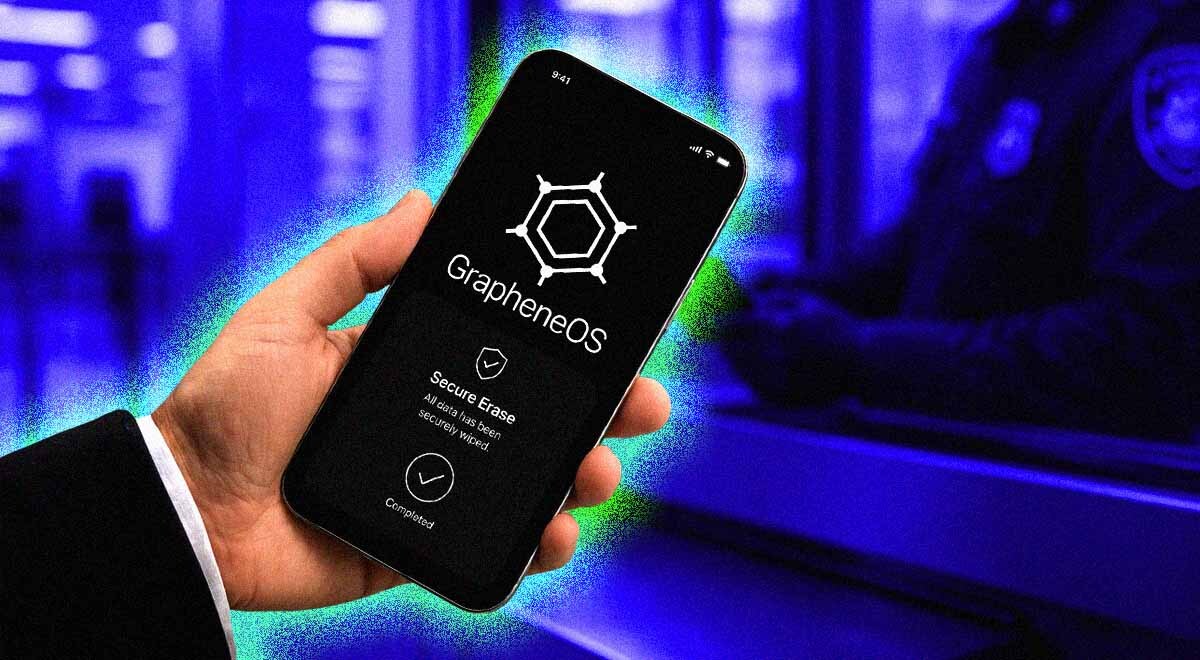
Image by Cybernews.

 Follow us
- Samuel Tunick used GrapheneOS's duress passcode feature to wipe his phone during a border search in January 2025
- The DOJ is prosecuting Tunick under a federal statute that criminalizes destroying property to prevent government seizure
- Tunick's lawyers argue the phone seizure was unconstitutional and that he was denied access to an attorney
Key Takeaways by nexos.ai, reviewed by Cybernews staff.
What do you do when the border authorities stop you at the airport and want to seize your phone, but you think that’s illegal? Tell them a “duress” passcode, a feature kindly provided by GrapheneOS, that wipes the device, of course. The US Department of Justice (DoJ) disagrees.
The DoJ is prosecuting one Samuel Tunick, an Atlanta resident, who the authorities say provided them with a passcode that destroyed the data on his smartphone.
As court documents show, Tunick is accused of using the aforementioned feature included in GrapheneOS, a custom Android operating system that you can choose to run in place of the software on most modern Google Pixel devices.
The feature allows the phone owner to set a passcode that wipes the data on the device if entered instead of the user’s unlock passcode.





In other words, when the US Customs and Border Protection agents were about to seize Tunick’s phone as he arrived back at Atlanta’s Hartsfield-Jackson airport in January 2025, he played that particular trick on them, and the contents of the phone were instantly deleted.
Has your password leaked?
“On or about January 24th, 2025, in the Northern District of Georgia, the defendant, SAMUEL TUNICK, before and during the search for and seizure of property by Customs and Border Patrol Tactical Terrorism Response Team Supervisory Officer, a person authorized to make such search and seizure, did knowingly destroy, damage, waste, dispose of, and otherwise take any action to delete the digital contents of a Google Pixel cellular phone, for the purpose of preventing and impairing the Government’s lawful authority to take said property into its custody and control,” reads the indictment.
The Cybernews community is talking about this. Be a part of the conversation.
This is thought to be the first known case of its kind in the US. Tunick and his attorney are fighting the charges, though, saying that it was simply unlawful for border authorities to seize the defendant’s phone.
Tunick’s lawyers also filed a motion to suppress the evidence, saying he was repeatedly denied access to an attorney and wasn’t informed of his legal rights.
The case centers on a little-known US federal statute that makes it illegal to destroy property in an effort to prevent it from being seized.
“Because the officers violated Mr. Tunick’s constitutional rights during their interrogation of him, evidence obtained from Mr. Tunick’s phone – or lack thereof – should be suppressed as fruits of unlawfully obtained evidence,” the attorneys say.
The motion also argues that authorities wanted to seize Tunick’s phone over his association with an environmental movement called Defend the Atlanta Forest, which opposes plans for a large police training center in Atlanta, “Cop City.”
According to Tunick’s lawyers, the agents also claimed they didn’t need any warrant to search the phone as he hadn’t yet crossed into the US. That’s a long-standing claim by the government – until you’re permitted entry, no warrants are needed to search you.




Stay updated with our latest stories and follow us on social media
Be the first to discover new stories, ideas, and updates from our team.
However, the government has its own arguments. First, the case centers on a little-known US federal statute that makes it illegal to destroy property in an effort to prevent it from being seized.
Second, the US Court of Appeals for the Fourth Circuit recently ruled that border agents can check anyone’s phone without a warrant, adding that phone checks are essentially the same as checking luggage.
Privacy activists are up in arms. The Electronic Frontier Foundation commented: “A person’s privacy interests in the personal data on a phone or laptop are extraordinarily different from their limited privacy interests in the contents of their suitcase.”
