Xfinity routers are now motion detectors able to tell on you to the police
Is the privacy trade-off worth it?

Xfinity routers can now detect motion in set areas. Image by Comcast/Cybernews.

 Follow us
- Comcast launched opt-in WiFi Motion, turning Xfinity Gateway routers and connected devices into home motion sensors.
- The feature creates timestamped movement data that Comcast may disclose for subpoenas, warrants, legal disputes, or emergencies.
- Comcast doesn't actively monitor motion data, but retains some information generated by the feature.
- Users may not be notified when law enforcement seeks data from inside their homes.
Key Takeaways by nexos.ai, reviewed by Cybernews staff.
Comcast has introduced a new motion-detection feature in its Xfinity Gateway routers, but a footnote in the advisory says law enforcement could access the data without you even knowing.
At first glance, Comcast’s move to transform the Xfinity routers inside millions of American homes into always-on motion sensors looks great. The update is free, and the feature has genuine protective value.
In this week’s press release, Comcast says that the motion detection feature is part of Xfinity Shield, a new offering designed to "redefine intelligent home protection."
The feature is called WiFi Motion. It turns Xfinity Gateway – the router – and the connected devices into motion detectors inside the home.





The detectors work by “detecting changes in the home’s radio frequency signal between the Xfinity Gateway and a WiFi-connected device,” Comcast’s announcement reads. The Xfinity app will signal the user if or when activity is detected.
Has your password leaked?
Sounds great – but all good press releases do. Unfortunately, there’s a gap between what the marketing calls “free home security” and what the terms of service actually establish.
The clause buried in Xfinity’s support documentation clearly states that by enabling the motion feature, a subscriber creates a timestamped household movement record that Comcast may hand to law enforcement or disclose in litigation.
“Comcast may be required to disclose information generated by WiFi Motion in response to a valid subpoena, court order, search warrant, or other lawful legal process, as required by law. In limited situations permitted by law, information may be disclosed in connection with legal proceedings, dispute resolution, or emergency situations,” the company says.
In other words, disclosure will be triggered in the event of a police investigation, a legal dispute involving Comcast, or a court order or subpoena. Most importantly, none of those 3 conditions requires that the subscriber be notified.




Stay updated with our latest stories and follow us on social media
Be the first to discover new stories, ideas, and updates from our team.
Comcast, however, separately states that it doesn’t actively monitor motion data or notifications – but it does retain information generated by the feature. It’s unclear what specific data Comcast keeps, though.
Thankfully, WiFi Motion is an opt-in feature and is not enabled by default.
If you do opt in, remember that your router is now detecting every movement in your home – when you wake up, when you go to bed, when you walk, crawl, or dance, or when there’s something nefarious going on.
That log will exist at Comcast. And if the cops want that information, Comcast isn’t required to tell you even that the request was made.
How does it work? The motion-sensing areas are formed between the Xfinity WiFi equipment and up to 5 WiFi-connected devices.
“To visualize your motion sensing area, picture an oval connecting your Xfinity WiFi equipment and the selected WiFi-connected device. That oval is your motion-sensing area,” Comcast explains.
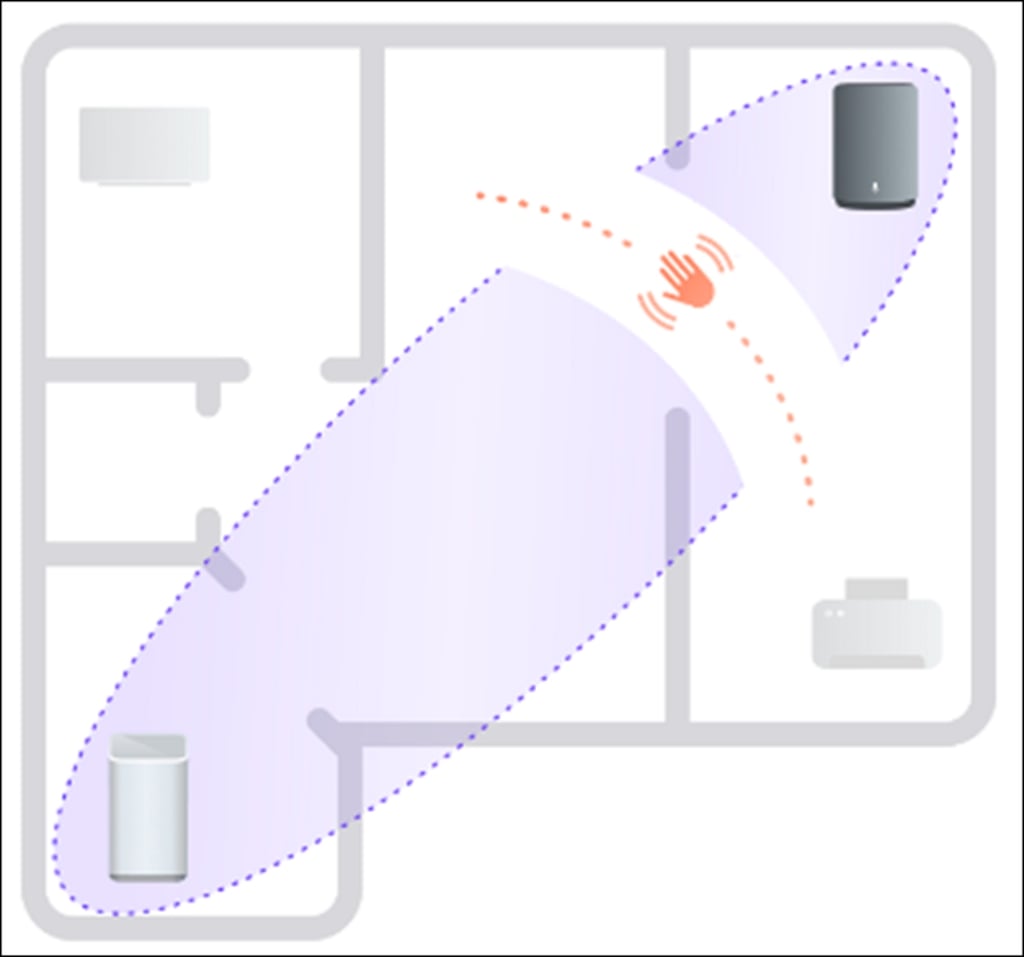
Motion is detected within the sensing area when movement disrupts the wireless signals. If the notifications are too frequent, you can adjust your pet and motion sensitivity settings.
WiFi Motion doesn’t use cameras, capture images or video, or record audio. It’s not professionally monitored, the supporting FAQ article insists.
But you can upgrade to a premium tier, Shield Select, which actually adds an indoor camera and AI-powered camera identification of people, pets, packages, and vehicles.
