Activists, journalists, abuse victims can now get "untraceable" cell service that masks user location for free
The Electronic Frontier Foundation (EFF) and Cape Mobile are throwing a digital lifeline to activists, journalists, and human rights defenders, as well as their victims, by offering an ultra-private cellular service that can mask users’ locations – all for free.


 Follow us
Worried about heading to your next Trump or ICE protest? The Electronic Frontier Foundation (EFF) and Cape Mobile are throwing a digital lifeline to activists, journalists, and human rights defenders, as well as their victims, by offering an ultra-private cell service that can mask users’ locations – all for free.
“Government and law enforcement have demonstrated that they are willing to use every tool available to spy on protesters, people seeking abortions, immigrants, and many others,” the EFF says.
The digital privacy advocates say the secure mobile service will help protect political activists and human rights defenders, whether fearful of government persecution or being outed or attacked by opposition groups.
Journalists in the media will no longer have to worry about harassment and can be assured the names of their sources, including at-risk whistleblowers, will be fully concealed. At the same time, victims of domestic abuse and human trafficking will be guaranteed safety from their abusers.
“Private and secure communications are fundamental to free expression, civil liberties, as well as national security,” Cape CEO John Doyle told Cybernews in a recent interview about the new program.






“We're proud to support journalists, activists, and all those who contribute to a free society,” said Doyle, noting that although they are heavily partnered with EFF on the project, Cape defers to the non-profit organization “to eliminate our own biases, such as who's a legitimate journalist or activist."
How it works?
Cape only launched the privacy-first Obscura smartphone and cell service to the public barely a year ago, to what Doyle described as “overwhelming demand,” along with “feedback from non-government customers – journalists in particular – but also activists and domestic abuse survivors.”
Obscura’s cellular service is run on a customized Android operating system that rotates the phone's network identity daily.
The service just happened to win Time Magazine’s Best Invention of 2025 for Privacy & Security in October and has already been in use by certain government officials, high-profile individuals, and the US military.
And while some privacy gurus on Reddit have balked at a “secure” mobile service in use by the US government, labeling it a “potential FBI honeypot,” one of Cape’s main features is its ability to bypass being tracked by active cell-site simulators, which EFF says are “commonly used by law enforcement.”

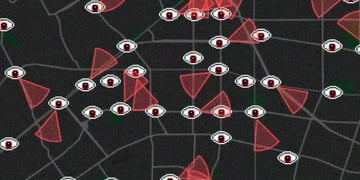
Cell size simulators – also called Stingrays, IMSI catchers, or false base stations – are basically “fake cell phone antennas that either trick your phone into attaching or just passively listen to what your phone is transmitting and receiving on the air, and whatever is not encrypted, the attackers can detect,” explains Doyle.
“Imagine you’re a politician, and you're going to the White House, where there've been reports of cell site simulators around the capital. But you need your phone because that's how you do your job, how you communicate. Until now, you had to just accept the fact that there is this risk associated with it,” Doyle says.
Cape’s enhanced signaling protection utilizes a proprietary proxy to verify that the physical location of a device matches the network to which it is attempting to connect. If anything looks suspicious, the service blocks the connection.
Doyle says when it comes to cell site simulator attacks, “it’s something the average consumer doesn't always have on top of mind, but it is a well-known long-running issue in the privacy and security community. EFF has written a ton about it.”

And Doyle is correct. Founded in 1990, EFF has previously stated that the organization “spends a lot of time thinking about the tech used by police and authorities to spy on you while you’re going about your everyday life.”
"More broadly, MAC address randomization was introduced to prevent passive Wi-Fi tracking, various web browsers have started rotating and purging cookies, and VPNs and other solutions now obfuscate IP addresses," Doyle says about the evolution of location tracking and device security.
The CEO also hinted to Cybernews about an upcoming service Cape is perfecting right now in their labs that will build upon these concepts. The new feature is to be launched sometime next year, Doyle says, and Cybernews will have first access to all the details, so stay tuned.
Cell site simulator attacks
From a security standpoint, “Your phone is programmed to prefer attaching to a really close, really strong tower," Doyle points out, adding that the user can then “be compromised in a bunch of different ways.”
According to EFF, data collected by cell-site simulators can reveal intensely personal information about anyone who carries a phone, regardless of whether they have ever been suspected of a crime.
Examples include identifying your IMSI number (a unique 15-digit mobile subscriber identifier# stored on your SIM card), collecting your call metadata (such as who you call and how long you spend on a call), intercepting the content of your calls and texts, and intercepting your data usage (such as the websites you visit).
Frighteningly, EFF lists that cell site simulators are currently in use by the US Federal Bureau of Investigation (FBI), Drug Enforcement Administration (DEA), National Security Agency (NSA), Secret Service, Marshals Service, and Immigration and Customs Enforcement (ICE), as well as the US Army, Navy, Marine Corps, and National Guard.

What’s more, a cell site simulator is “a fairly low-level type of device,” says Doyle. “You don't have to be a nation-state hacker. You can buy the software and find radios on Amazon for 50 or 100 bucks.”
However, the former US Army Green Beret and head of US national security business at Palantir Technologies also notes that the simulator devices can become more sophisticated.
“There are whole industries mostly selling to defense and law enforcement, making them more sophisticated, and there's a little bit of an arms race around it. But they can get deployed to protests. I have even found trucks with cell site simulators on them,” Doyle said.
Doyle cites the 2020 murder by Minneapolis police officers of George Floyd and subsequent Black Lives Matter protests, in which civil rights groups, like the ACLU, have filed myriad lawsuits against police departments across the nation for deploying the simulators to disrupt communications and build lists of individuals attending or organizing the demonstrations.

A previous EFF investigation, using the open-source Rayhunter cell site simulator detection tool for 4G networks, developed by Cape, had also identified possible cell site simulator use at the 2024 Democratic National Convention (DNC). The tool itself monitors behavioral patterns to help determine fake cell towers.
“So that is a real vulnerability, that law enforcement is allowed to do that. Ice is doing it right now,” Doyle said.
Protecting identities
Besides enhanced signaling protections, other exceptional privacy-focused features include minimal data collection, including payment information, SIM swap protection, and encrypted voicemail.
For data collection, the user, even to sign up, is not required to provide a name, address, or Social Security number. Additionally, for payments, the user only provides a card number and zip code once, and as this information is tokenized, all subsequent payments are then processed through Stripe.
Sim swap attacks are automatically prevented because the user’s phone number is tied to “a 24-word phrase that generates a private key” – the only way to port your number to a new device or carrier.
Not just for journalists and activists, domestic violence advocates are also praising the service.

Christine Mulhern, Licensed Clinical Social Worker (LSCW) and former domestic violence advocate at the Center for Safety and Change, a non-profit agency that helps victims of domestic violence, sexual assault, and human trafficking, says it is paramount that abuse victims can feel safe.
“It’s not uncommon for abusers to put tracking devices on their victims' phones. We suggest victims get new phones, get new numbers to protect their whereabouts,” says Mulhern.
“The first thing when we pick up the Center's 24-hour hotline is to ask, ‘Are you in a safe space? Are you calling from a safe phone?'" says Mulhern. If they're not safe, you can't even begin to work with them on any significant level because they're still in a state of trauma, Mulhern explains.
Mulhern also lauds the fact that the service is free. “Oftentimes, finances are controlled by the perpetrator, and because they often have only a small window of time to flee their abuser, they leave with nothing. These women (or men) leave with just the clothes on their backs. They don't have the money to afford to pay for cell service,” she said.






Doyle says he has witnessed those who use Cape's service "benefit just as much in terms of psychological safety as in terms of technical safety. People kind of intrinsically and inherently know that if they're trying to move privately and secretly, their phone is one of their biggest points of risk.”
“I've talked to some survivors who have really had issues, having to change their phone numbers all the time. That's huge,” Doyle says.
Cape – which has partnered with Operation Safe Escape to help survivors escape technology-enabled abuse – says it relies on the non-profit’s judgment and expertise to provide both standard Cape service and Obscura to victims at nearly no cost.
To help keep participants safe, Cape and EFF further state that the names of applicants and recipients of the free services will not be shared without their explicit permission.
When asked if he envisions the future of all consumer mobile services to move towards this type of privacy-first model, given that data is now one of the world's largest commodities, Doyle points out that “historically there has been a history of innovation in consumer privacy where stable digital identifiers become dynamic.“
“Telco is the one area that’s been left far behind,” he says.
To find more about the Cape/EFF program for journalists and activists, you can click here, and for domestic abuse or trafficking survivors, click here.
Unlock more exclusive Cybernews content on YouTube.