US judge denies FBI's “tower dump” request, deeming it unconstitutional
Attitudes towards law enforcement's mass data requests are changing.
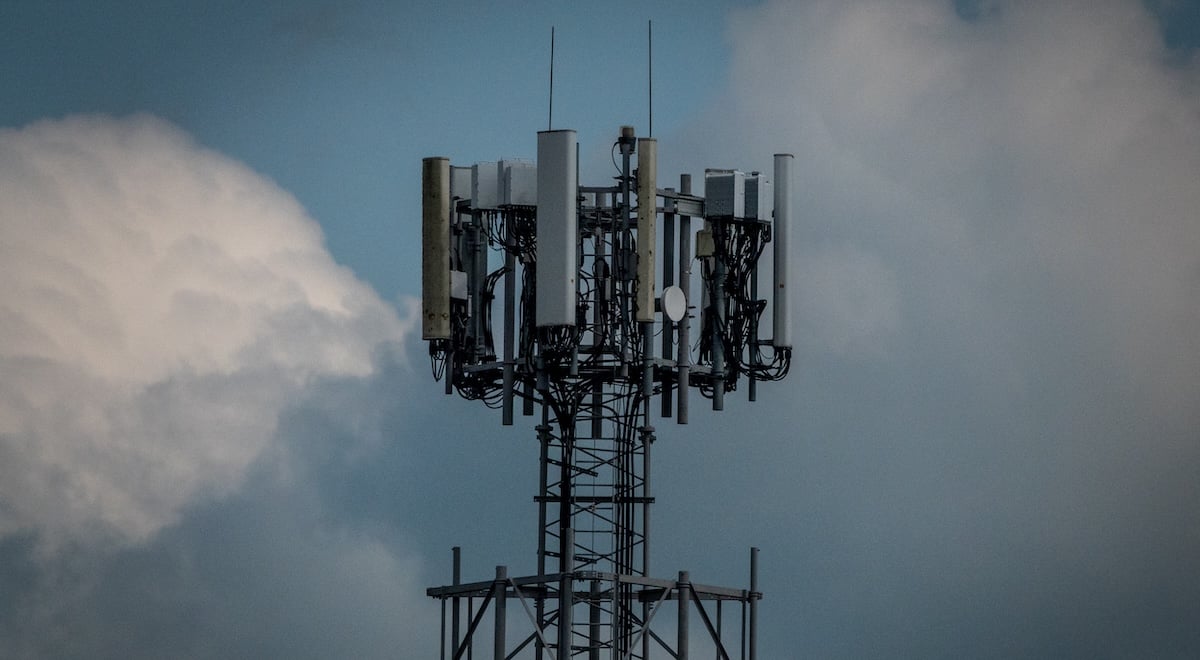
Image by Getty/Anna Barclay

 Follow us
- A federal judge rejected an FBI tower dump request, ruling broad cell location searches can violate the Fourth Amendment.
- The FBI sought cell tower data while investigating crimes in Jackson, Mississippi, but courts said such requests need stronger justification.
- Tower dumps can expose location data from many innocent people who were near a crime scene at the wrong time.
- The decision may slow some investigations, but it strengthens privacy protections against broad government access to digital location data.
Key Takeaways by nexos.ai, reviewed by Cybernews staff.
US lawmakers are challenging the legality of tower dumps, arguing that law enforcement's request for large amounts of sensitive data is unconstitutional.
While investigating a string of crimes in Jackson, Mississippi, the FBI requested data from cell towers, also known as a tower dump, to help in the investigation.
Magistrate Judge Harris, who was assigned to the request, denied the warrant based on the Fifth Circuit’s (US Court of Appeals) decision, which changed the standard of geofence searches.
Geofence searches function similarly to tower dumps. They both fall under reverse location searches, and both allow authorities to identify potential suspects based on their time and location.






The Supreme Court recently changed the standard for geofence searches, saying that authorities must have probable cause before requesting broad location data.
The FBI appealed the decision, and United States District Judge for Mississippi Carlton W. Reeves supported the initial decision on the grounds that tower dumps violate the Fourth Amendment, arguing they fall under “unreasonable search,” according to the court order.



Stay updated with our latest stories and follow us on social media
Be the first to discover new stories, ideas, and updates from our team.
What are tower dumps?
Whenever you’re out in public, your smartphone will connect to a cell tower, which transmits information such as the time the ping occurred and the location.
Law enforcement then uses this data to either prove a suspect was lying about their location at the time of a crime or to narrow their search to a pool of suspects if none have been identified prior.
Some lawmakers have taken issue with how broad tower dumps are, as they provide police with innocent people’s data, specifically cell site location information (CSLI).
Tower dumps are used by law enforcement to investigate severe crimes such as homicide, burglary, or acts of terrorism.
Authorities often obtain location data and other information from tower dumps without strict warrants, increasing the likelihood that law enforcement will collect innocent users’ sensitive data, according to the CDT.
“The government cannot have access to an entire haystack because it may contain a needle”
The court documents have since been unsealed after Court Watch, which first reported the story, successfully argued for the case to be made public.
The document indicates a growing trend among lawmakers in securing the digital privacy of their citizens.
For law enforcement to identify and catch a suspect of a serious crime this way, they would also need “access to the cellular records of countless individuals, the vast majority of whom were merely passing by a location at the ‘wrong’ time,” Judge Reeves argues.
The Cybernews community is talking about this. Be a part of the conversation.
This is deemed by various lawmakers to be unconstitutional, as “the government cannot have access to an entire haystack because it may contain a needle.”
While Judge Reeves agrees that tower dumps are useful in cases that require quick action with little evidence, this doesn’t outweigh citizens’ right to privacy under the Fourth Amendment.
“The cost to law enforcement is the price we pay to be free from arbitrary Government intrusion into our everyday movements.”
While this could slow investigations or make it harder for law enforcement, that is the price of protecting the rights of US citizens.