San Francisco wants to police its people with Israeli-made tech
Facial recognition technology is outlawed in the city.

The SFPD has purchased BriefCam technology. By Cybernews.

 Follow us
- SFPD paid $198,000 for a three-year BriefCam contract that began in August.
- BriefCam can compress hours of video and track people, vehicles, movements, and license plates.
- The city bans facial recognition, but watchdogs say BriefCam can still filter people by identifying traits.
- Privacy advocates call the deal a surveillance workaround, citing limited public disclosure and civil liberties concerns.
Key Takeaways by nexos.ai, reviewed by Cybernews staff.
Officially, cops in San Francisco cannot use facial recognition tools. However, they’ve now purchased powerful Israeli-produced surveillance technology capable of tracking people with nearly the same accuracy.
The platform BriefCam, developed by Israeli researchers, can synthesize thousands of hours of video using AI.
The San Francisco Police Department’s version of the software doesn’t include facial recognition tools, which are outlawed in the city. But BriefCam is powerful enough to track people with nearly the same detail.
According to The San Francisco Standard, the SFPD began using BriefCam in August after paying $198,000 for a 3-year contract.





Reportedly, the deal is controversial. There was no formal, proactive public announcement from the SFPD, but the contract’s disclosure, only reported after media inquiries, coincided with a broader local conversation about public safety and surveillance technology.
Just a few days ago, Mayor Daniel Lurie announced strict new privacy policies for San Francisco’s Flock license plate readers.
They’ve become the target of protestors across the country, who are unhappy about mass surveillance. As elsewhere, San Franciscans were furious to learn of hundreds of unauthorized inquiries into their data in the SFPD's Flock systems.
But BriefCam’s abilities – deployed by Israeli authorities to track Palestinians in East Jerusalem – could be seen as equally worrying for privacy-minded citizens.
“Turn hours of video into minutes and combine results with filters to narrow down evidence,” BriefCam’s website boasts.
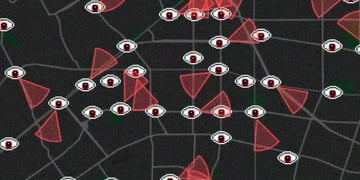
Indeed, the SFPD can use BriefCam to quickly review thousands of hours of video feed from live and recorded footage from a number of sources, including its nearly 500 Flock cameras.
“Surveillance maximalism”
The platform can also recognize vehicles and their movement patterns, track a person’s movement over time, and set up alerts for individuals it flags. Just like Flock, BriefCam can also read license plates.
“BriefCam enables rapid and targeted review of video footage with the ability to filter specific vehicle attributes such as make, model, color, and direction of travel, as well as the ability to compress hours of footage,” the SFPD wrote in a September status update to the Board of Supervisors, according to documents obtained by the San Francisco Standard.
“Without BriefCam, SFPD investigators will be limited to labor-intensive manual review processes, which hinders the department’s ability to reduce violent vehicle-based crimes and dismantle organized crime networks.”
Has your password leaked?
However, watchdog organizations say that BriefCam’s surveillance tools, which can track people using biometrics like height, gender, and race, can be misused.
For instance, even though facial recognition technology is currently outlawed in the city, BriefCam itself claims that the platform can be used to filter videos for specific identifying features, such as a little girl wearing a red dress.
Good to see reporters calling what's happening in San Francisco what it really is: Surveillance maximalism. The leadership of the city sees no problem they can't solve by defunding resources that prevent crime and pouring all their money, plus all the money offered by billionaires, into policing.
undefined Matthew Guariglia (@mguariglia.bsky.social) October 5, 2026 at 6:16 PM
[image or embed]
According to Matthew Guariglia, a spokesperson for the Electronic Frontier Foundation, the BriefCam contract is an illustration of law enforcement finding a workaround.
“This speaks to the fact that even when the city seems to acknowledge that there are some civil liberty issues with this technology, they are still in on this surveillance maximalism,” Guariglia told The San Francisco Standard.
