Developer says TSA stole his SSD drive with data after flight
Could the TSA access the private data on your device?
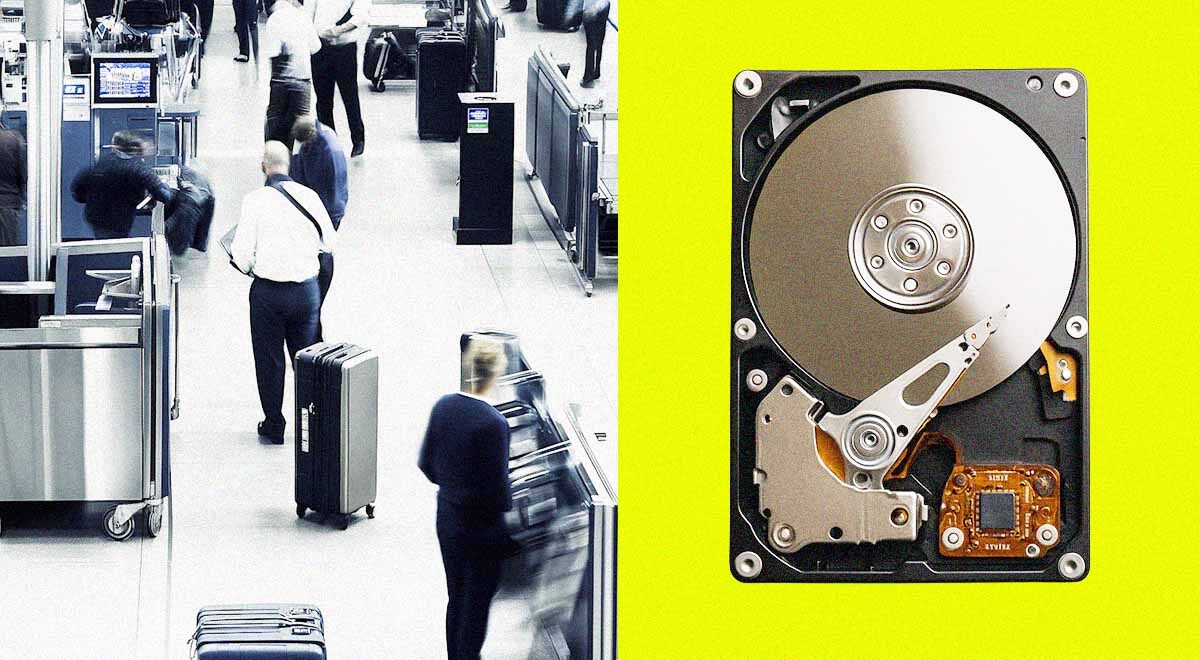
Collage by Cybernews

 Follow us
- Developer Tyler Mayberry says an encrypted SSD disappeared after TSA searched his checked bag.
- TSA can physically inspect electronics for flight safety, but it cannot review stored digital content.
- CBP has broader border powers and may inspect or copy device data under certain conditions.
- Travelers report missing or damaged valuables after baggage checks, but responsibility can be hard to prove.
Key Takeaways by nexos.ai, reviewed by Cybernews staff.
A missing hard drive from your baggage is one thing. However, if airport authorities can access and copy the data on your devices, the stakes are much higher than a lost gadget.
Losing a memory drive can be devastating, as often it means losing work, credentials, source code, or an entire digital life. Of course, not to mention the privacy concerns if the data lands in the wrong hands.
That is what developer Tyler Mayberry says happened after a recent flight.
“Hey, TSA, my SSD is missing after my flight yesterday. Who do I talk to?” Mayberry wrote on X.




Upon arrival at his destination, Mayberry received bad news: a note stating that the Transportation Security Administration (TSA) had searched his bag. Mayberry said the paperwork inside his luggage indicated that his belongings had been returned to the bag.
However, that may not be entirely true, as his SSD drive was missing, and there was no warrant or documentation stating confiscation.
Mayberry also said some of his belongings had been damaged, although he had deliberately kept his expensive equipment out of checked luggage.As he claims in some of his responses in the discussion on X, the missing SSD was encrypted and contained no sensitive data on it. It had been used on a machine dedicated to computer-use agents.
After contacting the TSA, Mayberry said he was directed to the airport's lost-and-found department. We reached out to TSA for a comment, and we will update the article once a response is received.
TSA is a nightmare for many
Several people responding to Mayberry described their own experiences with checked electronics.
One user claimed that the TSA had opened an electronics case, repacked it badly, and forced the lid shut.
“Everything was still there, it's just smashed,” the user wrote.
Another said they now travel with cheap, low-capacity Linux machines and connect remotely to their home computer rather than carrying valuable hardware.
Others recommended always encrypting drives before traveling.
“This is why I encrypt drives I travel with, though I am sure you did the same. This is a bad look,” one user wrote.
“Traveling to the USA seems to look like traveling to a third-world country,” raged another.
“Next time, take a drive with malware with you, at least they will have an adventure off it,” and “TSA = They Steal Anything .................they want,” joked some X users.
Can the TSA actually check your devices?
The TSA is responsible for screening passengers and baggage for transportation security threats, including weapons and explosives.
Its own guidance states that officers may physically open checked baggage when necessary for screening, and that a Notice of Baggage Inspection may be placed inside.
This includes physical inspection of an electronic device to determine if it is safe to take on an aircraft, but it has no authority to check the digital content stored on the device.
However, US Customs and Border Protection (CBP), which operates at international borders and ports of entry to the country, has a higher authority and may be going through your devices.
This includes a manual inspection of photos or messages without a warrant or suspicion when you cross an international border.
To make things even worse, CBP can connect your device to external equipment to copy or download its data. However, such actions generally require reasonable suspicion or a national security justification, depending on current agency guidelines.
What options remain for travelers who refuse to open their devices to authorities? Well, US citizens cannot be denied entry for refusing to unlock a device at the border, but CBP can temporarily seize the device for days or weeks.
Foreign visitors or visa holders have more at stake. Refusing to show what they store on their devices may result in denial of entry or deportation.
Travelers report thefts at TSA checkups
Redditors have been actively sharing stories showing that it’s not uncommon for their items to disappear from luggage after TSA checkups. Passengers have reported discovering missing cash, electronics, and other valuables after collecting their bags at their destination.
One Reddit user, for example, claimed that TSA employees stole an expensive camera from their luggage, writing that they had bought it specifically for the trip. There are other documented cases in which TSA employees have been accused of stealing from passengers and subsequently arrested. In one case discussed on Reddit, security footage reportedly showed a TSA employee taking cash from a passenger's belongings, leading to an arrest.
However, the absence of an item does not automatically mean the TSA was responsible. Checked luggage can pass through several hands between the curb and the aircraft, making it difficult for passengers to know exactly where something disappeared.
Other travelers point the finger beyond the TSA, saying ramp workers and baggage handlers can handle luggage out of passengers' view, and travelers on Reddit frequently suspect these areas when something is missing.
TSA itself acknowledges that it screens checked baggage and that passengers can file claims when they believe loss or damage resulted from TSA employee negligence. Its claims guidance also distinguishes between potential TSA negligence and losses caused by an airline.