Best GPS tracker for cars in 2026: how to choose the right one for theft protection and peace of mind

Car ownership is getting trickier – with phone-based location sharing not always enough to keep your car safe and within your reach. Whether you’re worried about a potential theft, want to keep an eye on your family members borrowing the vehicle, or just want some piece of mind for long-term parking, GPS trackers for cars offer a solution. However, it’s important to choose the right model.
Together with the Cybernews research team, I reviewed publicly available specifications, provider statements and user feedback to better understand what makes a good GPS tracker – and which is best for you. In this article, I’ll guide you through some of the models available on the market, when you need a GPS tracker, what the main criteria are, and which legal aspects you should keep in mind.
Remember that GPS tracking should only be used for vehicles you own or have permission to monitor, while any misuse may be illegal and punishable by law.
Best GPS tracker for cars – shortlist
- iTag Pro – best DIY-installation
- Tracki Pro – best price
- SpaceHawk GPS – best warranty terms
- Spytec GPS – best for smaller budget
- Koyetubs – best for flexible use
- Bouncie – best for families and businesses
- Planetbod – best tracking accuracy
5 best GPS trackers for cars – my detailed list
Below is a close look at some of the popular models available on the market, based on provider statements and user feedback. Here’s how they compare against each other:
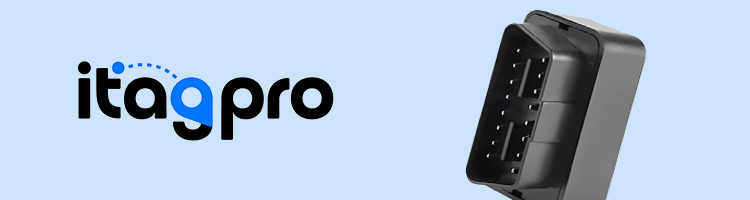
1. iTag Pro – best for easy setup
| Key features: | Real-time tracking, geo-fencing alerts, plug-and-play interface |
| Price: | High |
| Best for: | Users who need a quick setup |
iTag Pro claims to be an advanced tracking solution that offers 24/7 monitoring, real-time movement detection, anti-theft alerts and a weather-proof build. According to the brand, it’s also easy to install and use – plugged directly in your OBD port, with no monthly subscription required.
However, user reviews are split on the device, as many customers note that the product description is misleading, with only Bluetooth and no GPS tracking available, while the app is often inaccessible. They also struggle to get in touch with the support team, which complicates troubleshooting and refunds.
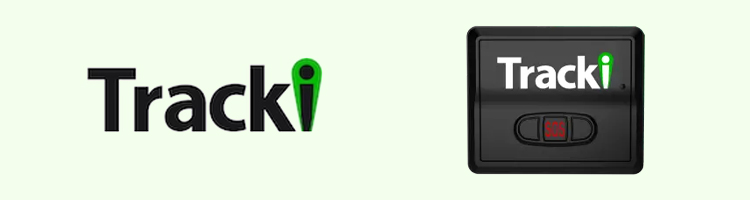
2. Tracki Pro – best price-to-quality balance
| Key features: | Instant alerts, travel history records, geo-fence safe zone |
| Price: | Affordable |
| Best for: | Businesses, frequent travellers |
Tracki Pro is considered a good pick for businesses and frequent travelers thanks to its personalizable tracking modes, availability across 180+ countries, rugged, water-proof build and extensive battery life, up to 7 months per charge. According to the brand, it also boasts an advanced alert system, with speed, movement, fence crossing, and battery alerts available via email, SMS, or app. Meanwhile, the safe area feature allows you to mark ‘acceptable’ zones for the car and sends out an alert as soon as the vehicle goes beyond those boundaries.
Another plus is the lifetime warranty, which makes up for the fact that most features are locked behind a subscription. However, recently Tracki has also been a subject of public scrutiny due to security vulnerability in devices that led to real-time location data and user information being exposed – and made some question the brand’s overall reliability.
3. SpaceHawk GPS – best for reviewing travel logs

| Key features: | Route history, geo-fencing, real-time alerts |
| Price: | Medium |
| Best for: | Fleet management, users who need extensive route history reviews |
SpaceHawk advertises itself as a durable solution designed to withstand various extreme weather conditions, with real-time tracking, worldwide coverage and a lifetime warranty added to the offer. It also says to store your route history up to a year, which can be helpful for business owners in need of extensive travel log reviews.
Meanwhile, user reviews are somewhat split, with some praising the performance and others noticing issues with real-time updates and travel logs. Its battery life is also somewhat limited compared to other models – with charging required in 2-4 weeks when not in the energy-saving mode.
4. Spytec GPS – best for users on a budget

| Key features: | Real-time tracking, custom boundaries, travel logs |
| Price: | Affordable |
| Best for: | Entry-level solutions |
With Spytec, you only need to pay for a subscription, with a free tracker and SIM-card included in the purchase, placing it among more affordable options. According to the manufacturer, it also boasts worldwide coverage and a durable, weatherproof build that fits cars, trucks and motorcycles.
Some users compliment the device’s ease of use and tracking quality, while others point out inaccuracies, unresponsive support and limited battery life, with charging required after 14 days. It’s also worth noting that Spytec dealt with a data leak in 2024, when partial customer information was leaked.
5. Koyetubs – best compact option
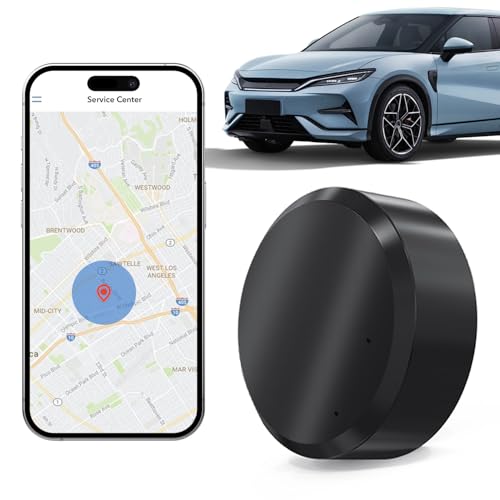
Koyetubs stands out due to its compact and portable design, making it a promising pick not just for tracking cars but also for keeping an eye on your pets, kids or even valuables. According to the provider, the tracker has advanced anti-theft features as well, including vibration alerts and sound monitoring. Users also get to decide themselves on how often they want to receive security updates – every 10, 5, minutes or even 30 seconds.
Note that to use the tracker you’ll need a SIM card which is not included in the bundle, with many users also informing they weren’t able to activate the device even after trying several cards. Some customers also criticized the GPS tracking features, citing inaccuracies – and one person even claiming it interfered with other trackers in the area.
6. Bouncie – best for all-rounded protection
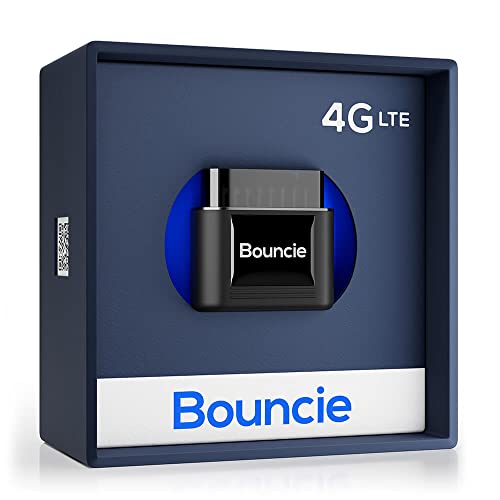
Bouncie is an all-in-one solution for businesses and families thanks to its feature set that goes beyond theft threats. Its OBD tracker monitors speed, acceleration, hard braking, idle time – and even sends alerts when detecting unsafe driving. It also tracks vehicle health, alerting you about potential maintenance issues, and quickly detects impact, sending out SMS alerts in case of accidents. All of this in addition to classical tracking and protection features, such as trip logs or geo zones that lets you create custom safe areas around your vehicle or its usual routes.
Users also compliment the tracker for its quality GPS tracking, ease of use and advanced features – as most don’t even find the monthly subscription fee a turn-off, pointing out a strong quality-to-price balance. However, keep in mind that the tracker’s coverage is limited to North America, meaning you won’t be able to use it overseas.
7. Planetbod – best for Apple devices
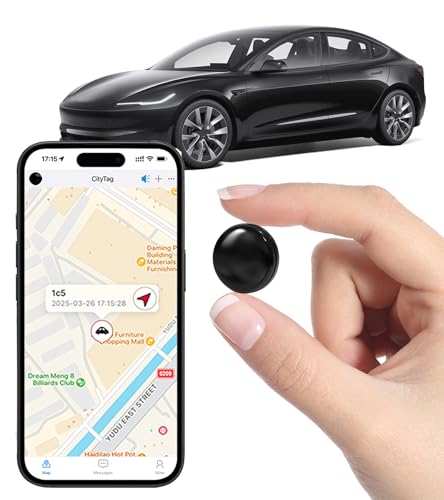
According to Planetbod, it uses end-to-end encryption to protect user data and a precision hybrid tracking technology with 200 ft proximity alerts and unlimited range for GPS mapping, which makes it especially fit for dealing with vehicle theft. Additionally, it puts an emphasis on durability – with a 1-year battery life and impressive weather resistance, including underwater submersion and extreme temperatures.
Planetbod is also a great pick for Apple users thanks to the integration with the ‘Find My’ network, although that’s also where the problem lies. As the manufacturer itself notes, using an iPhone is preferable for better app performance and accurate location tracking – while for Android owners, the experience can be less smooth.
My methodology
For this article, I worked together with the Cybernews research team to better understand what makes a good GPS tracker for cars and how different models compare against each other. While we did not test these trackers ourselves, we examined product specifications, customer support policies, expert reviews, and user feedback patterns to see a wider picture.
Here are the criteria I paid attention to:
- Tracking reliability (25%). I looked at tracking precision, how consistently trackers work across different locations and how frequently they provide updates in real time.
- Power and installation type (20%). I considered whether the device is OBD-II, hardwired, or battery-powered, and how that affects the ease of setup and use, as well as overall durability.
- App experience and alerts (15%). I paid attention to how user-friendly the app is and how it works with different devices.
- Total cost of ownership (15%). I looked for potential subscription or hidden fees and how they affect the overall cost and quality-to-price balance.
- Accuracy and location history (10%). I analyzed the device’s accuracy and attention to detail when it came to location tracking and travel logs.
- Privacy and security posture (10%). I reviewed how the company handles user data, including encryption, data protection and data sharing policies.
- Customer support reputation (5%). I looked at how responsive the customer support is, and what users’ general experience with it was.
What is a GPS tracker for a car and how does it work?
A car GPS tracker is a device that determines a vehicle’s location using global navigation satellite systems (GNSS) such as GPS, and sends this information to an app, typically via cellular networks.
GPS trackers operate by using a satellite antenna for positioning, a cellular module to send location data, and a companion app or dashboard for vehicle owners to receive location information, alerts, travel history and other data in real time. Depending on the device, it may also include advanced features like vehicle health tracking or driving habits monitoring that are not connected to its GPS capabilities.
There are multiple types of GPS trackers. For example, OBD-II devices are plugged directly into the vehicle, drawing power from the car itself, which allows minimal setup and ease of use. Meanwhile, hardwired trackers offer stable power and reliable performance by connecting to the electrical system, although they usually require a professional setup. Finally, there are battery-powered models that stand out for their portability but require charging.
And while Bluetooth trackers also exist, they are considered a weaker option due to the limited tracking range, and are not the same as GPS trackers.
What are car GPS trackers used for?
Car GPS trackers are popular among vehicle and business owners who want to keep a closer eye on the car and its movements, as well as prevent potential theft – or, in some cases, recover the stolen vehicle. Here are some of the most popular use cases:
- Theft recovery. A tracker can provide location data to help owners and authorities locate vehicles faster, or at least narrow down the area of interest.
- Fleet management. For small businesses (and, sometimes, even bigger enterprises) GPS trackers can be a great way to monitor company cars, vans, or service vehicles, tracking their movements, overseeing the routes, and looking out for potential accidents or risky situations.
- Teen or elder driver monitoring. Big families may use GPS trackers for consensual safety check-ins, when oversight over elderly or younger members may be needed.
- Asset tracking. Apart from vehicles, trackers can also be used to monitor pretty much anything – for example, tools and equipment stored in them. It’s also a helpful solution for people who live in trailers and want to strengthen their house security.
- Trip and mileage logging. Some models may also support business expense and tax reporting, which can be helpful for businesses.
Families often use trackers to keep an eye on shared vehicles, while business owners rely on them for operational visibility. Nevertheless, it’s important to remember GPS trackers have their limits and are only a supporting tool.
While they can’t guarantee theft prevention and vehicle recovery, trackers can support these efforts by providing alerts, location history, and helpful vehicle data – just be sure not to think of them as an insurance or a full-scale security system.
How to use a GPS tracker for cars
Using a GPS tracker for a car is pretty straightforward, although your exact steps will depend on the tracker’s installation type.
OBD-II trackers come with the easiest setup process, usually limited to 3 simple steps. All you have to do is plug the device into the vehicle’s diagnostic port, download and log into the companion app, and pair the tracker. Then, it’s only left to set up the alerts, customize settings if needed, and go for a test drive to make sure the device is working.
Hardwired trackers are trickier to deal with, since they require connecting the device to the vehicle’s electrical system underneath its lower dash, requiring an incredibly careful positioning according to the user manual. Mistakes can result in short circuits, which is why most users prefer professional setup. After this, you’ll just need to install the app and test the device similarly to how you would with other trackers.
Battery-powered trackers must be fully charged before placement. Users should then place them into the car securely, check if they move during driving (which they shouldn’t) and test update intervals. It’s also worth setting up low-battery alerts.
Additionally, there are steps that you should follow regardless of your tracker type. For example, when installing an app be sure to create a strong account password and enable two-factor authentication if available. Confirm how often the tracker should update and how you want to receive your notifications – through push alerts, SMS, or email. Finally, check if you set up all the alerts you wanted, such as geofencing or speed monitoring.
Last but not least, remember about basic safety and responsible use. To avoid accidents, your device should never interfere with pedals, airbags, or wiring. Overrelying on it will also do more harm than good, since trackers are supporting tools, not substitutes for a security system.
What to consider when choosing a GPS tracker for cars
When choosing the best GPS tracker for cars, there are several factors you should focus on. Below are the key aspects to consider:
- Coverage. Check which cellular networks and regions the tracker covers. Look out for possible coverage gaps, as they may become a problem for theft recovery and users who travel a lot.
- Update rate. Pay attention to how often location data updates and remember that, with certain brands, live tracking doesn’t necessarily mean real-time – and refreshes will take a few minutes if not more.
- Power and installation. Each option has its benefits. For example, OBD-II trackers are easier to install, while hardwired models are known for their reliability, and battery-powered options are usually compact and portable.
- Alerts. Apart from location tracking, useful alerts may include geofencing, towing or movement detection, low-battery warnings and even reckless driving behaviour or vehicle maintenance required. Go for a toolset that fits your goals best.
- App usability. Look for user-friendly apps that work well with different devices, are lag-free and offer intuitive interface – especially important if managing multiple vehicles.
- Subscription cost. Most trackers require a subscription to access the key feature, so be sure to review monthly and annual fees, as well as any other potential charges.
- Privacy and security. Pay attention to how the manufacturer encrypts and shares your data to ensure it’s safe from leaks. Safety features like two-factor authentication for the app also matter.
Are GPS trackers for cars legal?
The legality of GPS trackers for cars heavily depends on jurisdiction so it’s always worth double-checking a specific area’s regulations. However, the key rule to using such devices will always be consent.
For example, in most regions using a GPS tracker on a vehicle you own is generally acceptable, especially if it’s for theft protection and recovery. However, if the car is driven or owned by someone else, it increases legal risks even if the tracker itself is purchased legally. Keep in mind that tracking another person’s vehicle without their knowledge or consent will most definitely trigger privacy, harassment, or anti-stalking laws, potentially leading to criminal responsibility.
If the GPS tracker is being used in a shared vehicle, transparency is also essential, with experts recommending to clearly inform other drivers about tracking. It’s especially important for employers, with written policies and signed acknowledgments usually required.
Keep in mind that laws change over time. Before installing a tracker, review local regulations, check with official government guidance, clearly communicate your intentions with other parties and consider seeking legal advice to reduce potential risks.
Privacy and anti-stalking safety
Vehicle location data is highly sensitive, with GPS trackers easily revealing your daily routes, movement patterns, and home and work locations. This makes privacy and security essential to a good GPS tracker – especially as data breaches expose thousands of drivers’ sensitive information.
When choosing a device, remember to review the provider’s privacy policy in detail. Look for clear explanations of what data is collected, how long it is stored, and whether it is shared with third parties. Pay attention to the data encryption approach as well, and be sure to check the company’s history when it comes to breaches, leaks and other vulnerabilities. Account-level protection also matters, with strong passwords and two-factor authentication reducing the risks.
Sadly, GPS trackers can also present a threat to your data and safety even if you’re not using them – with unauthorized tracking and stalking threats on the rise. However, even a simple check can help, so be sure to inspect common areas where the trackers can be placed, such as under seats, inside the trunk, near the OBD-II port or under the vehicle. Unexpected battery drain or unusual alerts may also be warning signs.
Most importantly, if you suspect harassment or stalking, do not try to handle the situation alone. Contact local authorities or support organizations as soon as possible, so they can support you in your next steps or legal action.
Bottom line: which GPS tracker for cars is the best?
When it comes to choosing the right GPS tracker for your car, there isn’t a single solution for all vehicles – as your choice should depend on your travel habits, installation preferences and overall goals.
For example, an OBD tracker like Bouncie can be worth considering if you prefer ease of use and DIY installation, while battery-powered models like Tracki will be a better choice for users who prioritize portability, and hard-wired trackers will stand out for reliability and durability.
For users on a tight budget, an option like Koyetubs may also seem tempting, but remember that affordability often comes at the price of user privacy and overall tracking quality. Be sure to double-check the product and its customer policies before purchasing.
Consider the tracker’s coverage and tracking capabilities, user feedback patterns, and your own travel preferences – and choose a model that fits you best.
Other reviews you might be interested in:
Best GPS tracker for a bike in 2026: expert picks to keep your ride safe
Best GPS trackers for dogs: keeping your pet safe and secure
Best handheld GPS devices in 2026: what to know before choosing one
SpotOn GPS Dog Fence review: is it worth it in 2026?
FAQ
Can I legally put a GPS tracker on a car I own if someone else drives it?
While in most cases you can place a GPS tracker on a vehicle you own, the overall legality can still depend on the person’s consent and the broader context. Informing the other party about tracking and obtaining permission is the safest approach, as even owners may face legal consequences if the tracking can be qualified as surveillance or tracking.
Do car GPS trackers work without cell service?
No, most car GPS trackers rely on cellular networks to transmit location data to apps and third devices, with satellite options among the more rare and pricey. This means that without cell coverage, even if the tracker records the vehicle’s location, it will not send you live updates until connectivity is restored.
What’s better for theft recovery: OBD-II, hardwired, or battery-powered trackers?
Hardwired trackers are often preferred for theft recovery because they are more discrete and harder to disable. Meanwhile, OBD-II trackers may not be the best choice since they are easy to locate and uninstall.
How much does a car GPS tracker cost per month including subscriptions?
While the device cost may vary from affordable to premium, monthly subscription prices typically depend on the specific tracker model and whether you’re opting for a monthly, yearly or by-yearly subscription. Finding a plan within a 10$ monthly range is more than possible, with annual packages often reducing the total cost.
How can I tell if there’s an unauthorized tracker on my car?
Start by looking for unfamiliar devices near the OBD-II port, under seats, in the trunk, or underneath the vehicle. Remember not to deal with the threat alone – if you suspect tracking, it’s best to contact authorities for help.