Best indoor air quality monitor 2026: expert picks for a healthier home

Breathing clean air indoors isn’t always guaranteed. Dust, volatile organic compounds, and even carbon dioxide can quietly build up in your living space, affecting your health, comfort, and productivity. That’s where indoor air quality monitors come in – they track pollutants, humidity, and gases so you know when it’s time to ventilate or purify.
As a Cybernews expert, I worked with our research team to evaluate today’s top monitors. From my perspective, I know how easy it is to overlook indoor air problems until they start affecting your daily comfort. That’s why we compared sensors, usability, and smart features to highlight options that actually make life easier – whether you want peace of mind for your family, better focus while working from home, or just a simple way to know when to open a window.
Best indoor air quality monitors – shortlist
- Aranet4 HOME – best overall air quality monitor for accuracy and reliability
- VEWIOR Air Purifier – best large-room air purifier for big households
- Temtop Air Quality Monitor – best compact monitor for high-precision readings
- bonoch 16 in 1 Air Quality Monitor – best multi-sensor monitor for full indoor coverage
- AQItech Professional Indoor Air Quality Monitor – best for real-time alerts and continuous monitoring
- YNAK 16 in 1 Air Quality Monitor – best for detailed air-quality trend tracking
- Amazon Smart Air Quality Monitor – best budget-friendly monitor for Alexa households
The best indoor air quality monitors compared
Before diving into individual reviews, here’s a side-by-side look at the top models.
| Product | Product dimensions | Power source | Mounting type | Floor area | Filtration system | Air quality map | Best for |
| Aranet4 HOME | 2.76 x 2.76 x 0.94 in | Battery powered (2 AA batteries) | Desktop, shelf, or wall mounting | N/A | N/A | ✅ Yes (Aranet4 app for iOS and Android devices) | Any room for monitoring ventilation and CO₂ levels |
| VEWIOR Air Purifier | 14 x 9 x 20 in | Corded electric | Floor | 1800 ft² | HEPA filtration | ✅ Yes | Large rooms and families |
| Temtop Air Quality Monitor | 5 x 3 x 1 in | Battery powered | Portable | N/A | N/A | ❌ No | Compact accuracy |
| bonoch 16 in 1 Air Quality Monitor | 7 x 5 x 1.5 in | Rechargeable battery | Tabletop | N/A | N/A | ❌ No | Multi-sensor versatility |
| AQItech Professional Indoor Air Quality Monitor | 6 x 4 x 2 in | Battery powered | Portable | N/A | N/A | ❌ No | Real-time AQI alerts |
| YNAK 16 in 1 Air Quality Monitor | 7 x 5 x 1.5 in | Rechargeable battery | Tabletop | N/A | N/A | ❌ No | Detailed multi-data readings |
| Amazon Smart Air Quality Monitor | 2.6 x 2.6 x 1.8 in | USB-C powered | Tabletop | N/A | N/A | ❌ No | Alexa households |
7 best indoor air quality monitors – our detailed list
Choosing the right air-quality monitor can feel overwhelming, so I’ve narrowed it down to the 7 models that actually deliver reliable, real-world insights. Below, you can find a breakdown of each device – what it measures, who it’s best for, and why it deserves a spot on this list.
1. Aranet4 HOME – top overall pick for highly accurate, dependable air-quality monitoring

| 💵 Price: | Mid-tier |
| 📐 Floor area: | N/A |
| 🌀 Filtration system: | None (monitor only) |
| ⭐ Best for: | Any room for monitoring ventilation and CO₂ levels |
The Aranet4 HOME is built for people who don’t need fancy purification features. Instead, the device focuses entirely on measuring CO₂, temperature, humidity, and pressure using a high-precision NDIR sensor.
It sits quietly on a desk or wall, runs for years on AA batteries, and gives you an instant read on whether your room needs fresh air. What makes it so practical is how effortless it is. You drop it on a shelf, and it becomes your early-warning system for stuffy air, poor ventilation, or conditions that affect sleep and focus.
Through the dedicated Aranet app, you can track trends or place multiple units throughout the house to build a clear picture of how your indoor environment actually behaves.
It's especially useful in bedrooms, offices, classrooms, or any space where CO₂ buildup sneaks up on you. If you care more about understanding your air than purifying it, Aranet4 HOME is easily one of the most reliable tools you can own.
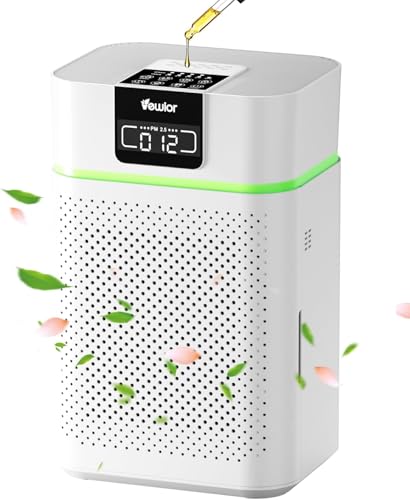
2. VEWIOR Air Purifier – ideal large-room purifier for families and spacious homes
| 💵 Price: | Mid-tier |
| 📐 Floor area: | Up to 1800 ft² |
| 🌀 Filtration system: | True HEPA |
| ⭐ Best for: | Large households |
This purifier-monitor combo is designed for people who want more than just readings. It doesn’t stop at detection – it actively filters the air in large rooms. The HEPA system captures dust, allergens, and smoke, while its onboard sensors adjust fan speed automatically based on pollution levels.
I found that this kind of hybrid model is practical if you don’t want separate gadgets for monitoring and purifying. Families with kids, allergy sufferers, or anyone living in a busy city will appreciate its coverage and automatic mode.
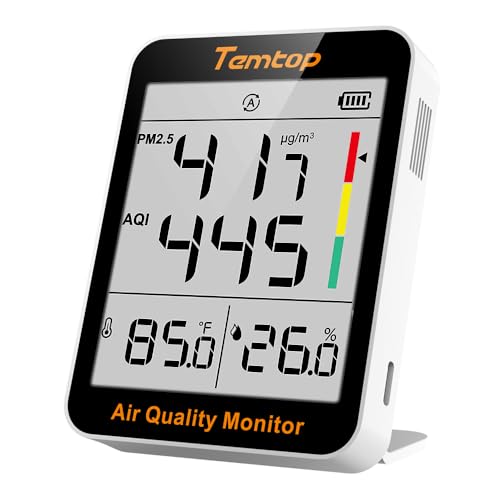
3. Temtop Air Quality Monitor – best small-format device for precise air-quality readings
| 💵 Price: | Affordable |
| 📐 Floor area: | N/A |
| 🌀 Filtration system: | None (monitor only) |
| ⭐ Best for: | Compact portable use |
The Temtop monitor focuses on precision over frills. It measures temperature, humidity, and particulate levels with accuracy in a handheld form. It’s small enough to place on a desk or carry around the house.
If you’re worried about specific rooms – like a child’s bedroom or home office – this model gives you quick, trustworthy data. It doesn’t filter, but it helps you decide when to open a window or run an air purifier.
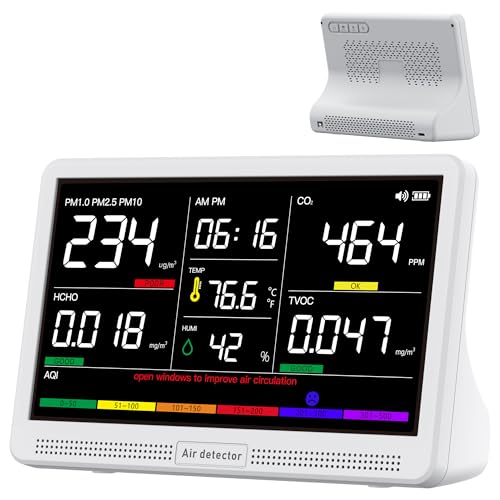
4. bonoch 16-in-1 Air Quality Monitor – best all-in-one multi-sensor option for whole-home coverage
| 💵 Price: | Mid-range |
| 📐 Floor area: | N/A |
| 🌀 Filtration system: | None (monitor only) |
| ⭐ Best for: | Comprehensive home data |
The bonoch monitor is ideal if you like detail. With 16 types of measurements, including PM2.5, CO2, VOCs, humidity, and temperature, it provides a complete indoor air picture. The 7-inch display makes readings easy to check at a glance.
This model suits households that want to understand trends, not just spot problems. If you’re managing asthma, allergies, or simply want fine control over indoor comfort, bonoch’s data depth is a plus.
5. AQItech Professional Indoor Air Quality Monitor – best choice for instant alerts and continuous tracking
| 💵 Price: | Mid-range |
| 📐 Floor area: | N/A |
| 🌀 Filtration system: | None (monitor only) |
| ⭐ Best for: | Instant notifications |
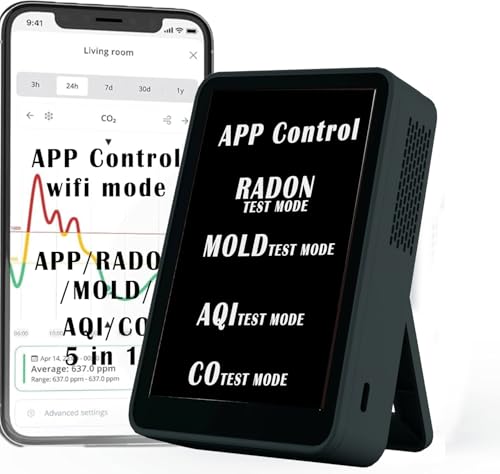
This professional monitor stands out for its audible AQI alarms. When pollution spikes, it beeps, making it impossible to ignore. That real-time feedback can be life-saving if you’re sensitive to pollutants.
It’s useful for people who don’t want to constantly check a screen. If your air suddenly drops in quality – from cooking fumes, candles, or nearby traffic – this monitor will tell you right away.
6. YNAK 16-in-1 Air Quality Monitor – best monitor for in-depth air-quality data and long-term trends
| 💵 Price: | Mid-range |
| 📐 Floor area: | N/A |
| 🌀 Filtration system: | None (monitor only) |
| ⭐ Best for: | Tracking historical data |
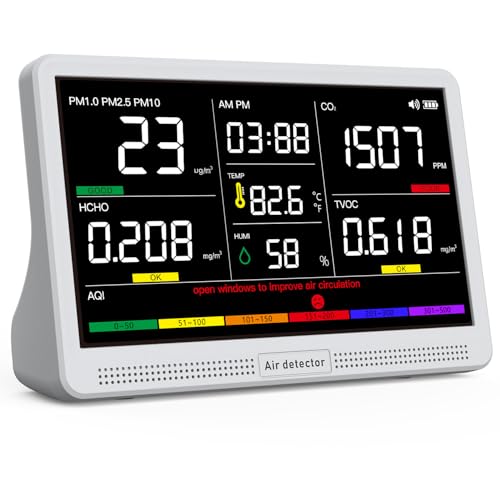
This monitor offers 16 sensor types and a large display, making it similar to the bonoch model. Its strength lies in historical tracking – you can spot patterns over time and see how daily habits affect your air quality.
It’s a good option for households managing asthma or allergies, since long-term data helps link symptoms with environmental triggers. Even if you’re simply curious, it’s reassuring to see how cooking, cleaning, or seasonal changes influence your indoor air.
7. Amazon Smart Air Quality Monitor – best affordable option for households using Alexa
| 💵 Price: | Budget-friendly |
| 📐 Floor area: | N/A |
| 🌀 Filtration system: | None (monitor only) |
| ⭐ Best for: | Smart home integration |
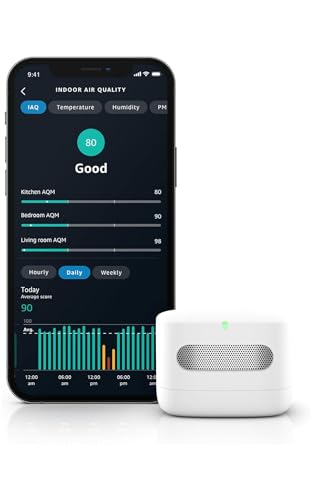
Amazon’s monitor is a natural fit if you already use Echo devices. It tracks PM2.5, VOCs, CO, humidity, and temperature, with readings available in the Alexa app or through voice commands.
This model keeps things simple. Instead of overwhelming you with lots of metrics, it focuses on core readings that matter most for day-to-day comfort. For many people, that’s enough – especially if you want quick updates without diving into graphs or charts.
Our methodology
To find the best indoor air quality monitors, I worked with the Cybernews research team to evaluate each option based on these weighted criteria:
- Accuracy and sensors (35%). We evaluated how precisely each monitor detects pollutants like PM2.5, VOCs, and CO2, along with how quickly it responds to changes in indoor air conditions.
- Ease of use (20%). This factor covers setup, clarity of the display or app, and how simple it is to use daily. A user-friendly monitor means less frustration and more consistent monitoring.
- Connectivity (15%). We looked at Wi-Fi, Bluetooth, and integration with ecosystems such as Alexa or Google. Smart connectivity allows seamless alerts, voice commands, and data syncing across devices.
- Features (15%). Beyond the basics, we considered whether devices offered alerts, historical data tracking, or extra sensors like humidity and temperature.
- Pricing and value (10%). We weighed cost against performance and long-term reliability, factoring in things like replacement parts and durability.
- Customer feedback (5%). Verified user reviews give insight into real-world durability, ease of calibration, and overall satisfaction.
This ensures we recommend monitors that meaningfully improve indoor comfort, safety, and awareness.
What is an indoor air quality monitor and how does it work?
An indoor air quality monitor is a sensor-based device that measures a range of pollutants, including particulate matter (PM2.5), volatile organic compounds, carbon dioxide, humidity, and temperature. Many models also track additional factors like formaldehyde or radon, depending on their sensor suite. The collected data is displayed on a built-in screen or synced to a mobile app, where you can view real-time updates and historical trends.
By continuously measuring these often invisible elements, the monitors help you spot sudden spikes, track long-term patterns, and make smarter choices about when to open windows, switch on purifiers, or adjust humidifiers. Over time, they provide a clearer picture of how your indoor environment impacts health, comfort, and productivity.
The importance of air quality monitors
Here are the main reasons why using an air quality monitor can make a real difference in your daily life:
- Health. Tracking allergens, dust, and toxins helps protect respiratory well-being, reducing risks for asthma, allergies, and long-term respiratory problems.
- Safety. Early detection of gases like CO2 or VOCs prevents dangerous buildup, giving you time to act before air quality reaches harmful levels.
- Comfort. Monitoring humidity and temperature supports a balanced indoor climate, helping you avoid dryness in winter or stuffiness during summer.
- Awareness. Seeing the numbers makes you more proactive about ventilation and filtration, turning invisible problems into actionable insights you can respond to immediately.
Even if you feel fine, small pollutants can have long-term effects – these monitors keep you informed.
Do you need an air quality monitor?
Yes, in many cases, it’s a smart investment. Families with children or older relatives benefit from healthier indoor environments, since these groups are more vulnerable to poor air quality and can experience stronger reactions. Allergy and asthma sufferers can directly link flare-ups to pollutants, making a monitor a valuable tool for managing triggers and preventing unexpected health issues.
People working from home also notice improved productivity when air is fresh, since stale or polluted air can reduce focus and energy levels over time. If you live in an urban area with higher outdoor pollution, a monitor helps you respond quickly when quality dips indoors, whether from traffic, construction, or seasonal smog. Even in seemingly clean suburban or rural homes, everyday activities like cooking or using cleaning products can affect air quality, making monitoring a helpful safeguard.
Factors to consider when choosing the best indoor air quality monitor
Before buying, it helps to know what features really matter in daily use. Here are the most important factors to consider when choosing an indoor air quality monitor:
- Accuracy and sensor range. A reliable monitor should capture multiple pollutants – from fine particles to VOCs and CO2 – giving you a clearer picture of your environment. The broader the range, the more comprehensive your insights will be.
- Ease of use and mobile app. Monitors should be simple to set up and read. Clear screens and intuitive apps make it easier to act on the data without frustration.
- Connectivity. Wi-Fi and smart home integration let you automate actions, receive push notifications, or even ask Alexa or Google for updates.
- Data tracking and alerts. Historical records and real-time alarms help you see long-term patterns while also responding instantly to sudden drops in air quality.
- Size and portability. Smaller devices can move between rooms, while larger tabletop models provide more stable, long-term readings. Choose what suits your lifestyle best.
- Price vs features. Balance your budget with the functions you’ll actually use. A lower-cost unit may be enough for casual tracking, while premium devices justify their price with deeper insights.
Taken together, these factors ensure you pick a monitor that fits your needs – covering the features you expect while also reflecting the daily practicality and long-term value that truly matter.
Final word on the best indoor air quality monitors
After reviewing a rather saturated field of gadgets together with the Cybernews research team, I can confirm that the Aranet4 HOME stands out as the best indoor air-quality monitor in 2026.
It’s exceptionally accurate, has a long battery life, and a gold-standard NDIR CO₂ sensor. Plus, it delivers reliable data you can actually trust. From what I’ve seen, no other monitor matches its combination of precision, simplicity, and long-term dependability.
Still, every device on this list brings meaningful value. Indoor air-quality monitors matter because they reveal what you can’t see – CO₂ buildup, humidity shifts, and environmental changes. These factors can affect your sleep, focus, comfort, and overall well-being.
Once you have real data, you can take simple actions that immediately improve your environment. Whether you want deep insights, smart-home integration, or a unit that purifies and monitors, there’s an option here that fits your space, your habits, and your budget.
Other reviews you might be interested in:
Best podcast equipment in 2026: expert picks for every creator
Boya BY-M1 microphone review: affordable audio for creators?
Most secure cloud storage in 2026: expert picks for ultimate data protection
Ratepunk review 2026: can this travel app really save your money?
FAQ
What does an indoor air quality monitor measure?
Indoor air-quality monitors track things like PM2.5, VOCs, CO₂, humidity, and temperature, depending on the model. Some offer broad pollutant coverage, while others focus on high-accuracy environmental data. My number 1 choice, the Aranet4 HOME, for instance, excels at precise CO₂, temperature, humidity, and pressure readings, making it easy to understand when your space needs fresh air.
Are air quality monitors accurate?
Yes, most monitors are accurate within their designed ranges, but calibration matters. Higher-end models use precise sensors that track small changes, while budget units may be less responsive.
Do air quality monitors detect mold?
No, they don’t directly detect mold spores. Instead, they measure humidity and particulates that can indicate conditions favorable for mold growth.
Can I connect an air quality monitor to a smart home system?
Yes, some monitors integrate with Alexa or Google Home. For example, the Amazon Smart Air Quality Monitor syncs directly with Echo devices for voice-based updates.
How often should I use an air quality monitor?
Daily use is recommended for best results. Keeping the monitor on continuously gives you the clearest picture of long-term trends and sudden changes.