iPhone’s camera will cryptographically prove a photo is real
Raw pixel data leaves the device to be processed in the cloud, where Apple can be sure the software hasn’t been tampered with.
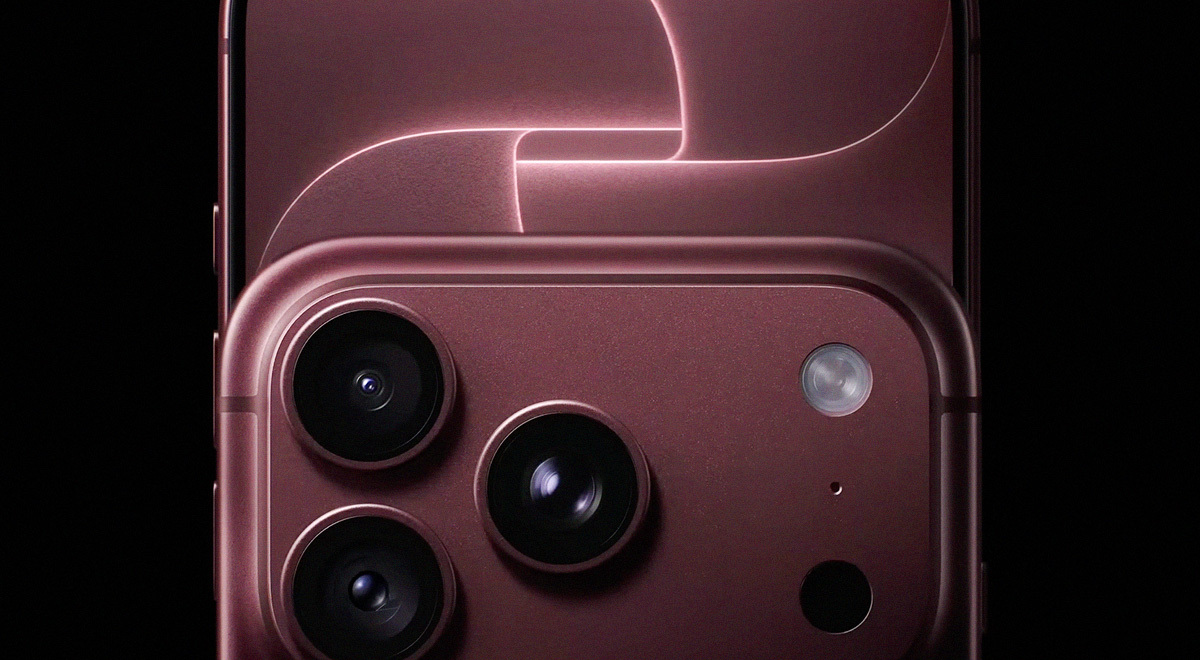
iPhone 18 Pro. Screenshot from Apple via Youtube.

 Follow us
- Apple Reference Image will cryptographically seal photos captured on the iPhone 18 Pro and Pro Max.
- Editing the final JPEG changes its pixels and breaks the verification seal.
- Apple processes reference images in Private Cloud Compute to verify each step from capture to final image.
- Apple says the system hides photographer identity and prevents public linking of photos to a sensor.
Key Takeaways by nexos.ai, reviewed by Cybernews staff.
Apple is tackling trust erosion caused by AI-generated or manipulated photos – the iPhone’s camera will cryptographically vouch for what it captured. The opt-in and privacy-preserving mode, called “Apple Reference Image,” debuts on the main camera sensor of the iPhone 18 Pro and Pro Max.
Apple announced a solution for verifiable photography – adding a cryptographic seal to the image, proving that it was captured untampered. To achieve this, Apple has secured an entire chain of trust, from the camera sensor to final processing in its cloud. Any edit to the final JPEG changes the pixels and breaks the seal.
The tech giant also assures that this tech won’t expose the photographer’s identity, will be resilient against compromise attempts, and will hopefully set a new standard for verifiable digital photography.
Viewers of the photo will know that the photograph is surely real, captured by a real sensor in an iPhone camera at a specified time.




“Apple Reference Image offers a trustworthy, scalable guarantee that a reference image is what it claims to be,” Apple Security Engineering and Architecture said in a blog post.
“iPhone is the world’s most popular camera and the most secure consumer mobile device, and as such Apple is uniquely positioned to take on this challenge.”
Only the latest Pro devices will have the main camera sensor with “the specialized, secure reference mode.”
To ensure the image is untampered with at any stage, Apple opted to process it in Private Cloud Compute (PCC) rather than on the phone itself.
Apple explains that the problem is complex because the final image is produced after multiple steps, each of which must be independently verified in the chain of trust.
We designed the core reference image pipeline to withstand a compromise of the operating system, or a data injection attack on the sensor bus,Apple said.
How does it work?
Enabling the Reference mode reboots the sensor into the specialized capture mode
First, the camera sensor signs the raw negative and the original metadata at the moment of capture, before any software can touch it. A few metadata values are added by the device, like digital zoom boundaries and focal lengths – these are signed by the Secure Enclave Processor (SEP), a dedicated security chip.
Apple’s cryptographic timestamp service ensures that timestamps are untampered – it regularly provides timestamps, on average every 15 minutes. The device keeps only one and uses it as a lower bound after the picture is taken, then requests another timestamp as an upper bound. Both timestamps are embedded in and signed with the sensor data, protecting it from device-level compromise.
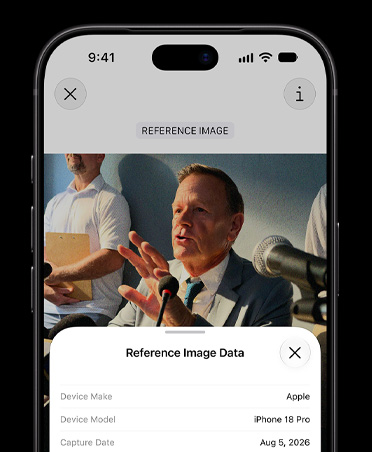
“While prior industry systems have included a timestamp provided by the general device operating system, we believe this plainly falls short of the real-world assurance need,” the company explains.
Apple doesn’t trust the iPhone to process the negative into a user-visible reference image – it can be compromised. Instead, the device uploads the data to the PPC to run all the required processing steps – demosaicing, tone mapping, and compression – and only if all checks pass.
The conversation on this topic is live. Join in the discussion.
Apple assures users that the environment is “highly secure, private, and verifiable.” External experts can examine the software and verify that the image wasn’t altered using a cryptographically tamper-proof transparency log.
“In designing Apple Reference Image, we considered a broad range of attacks, and constructed the system so as to resist compromise from multiple vectors,” the blog post reads.



Stay updated with our latest stories and follow us on social media
Be the first to discover new stories, ideas, and updates from our team.
All the final images are signed by Apple’s signing service, and no two pictures can be linked to the same sensor or author.
However, Apple’s service still maintains private records of photo GUIDs and their associated sensors to enable revocation. These identifiers have no access to the image data and are not accessible to the public.