Scammers milking Google Play’s Early Access: no reviews, no ratings, no way to spot the deception
Many deceptive apps don’t steal money outright, but simply try to maximize ad impressions while the user believes they’re earning a reward.
Image by Eza_Nanda | Shutterstock

 Follow us
- Scammers use Google Play Early Access to block public ratings and reviews on potentially deceptive apps.
- Bitdefender found fake casino, reward, utility, and trademark-themed apps with hundreds of thousands of installs.
- Misleading social ads use celebrity deepfakes and free-spin offers to drive users to these apps.
- Google confirmed it is investigating after Bitdefender reported its findings.
Key Takeaways by nexos.ai, reviewed by Cybernews staff.
Scammers are increasingly operating under the Early Access banner on Google Play, which disables public ratings and reviews. Bitdefender identified potentially deceptive apps with hundreds of thousands, or even a million, installs that impersonate popular franchises, offering to multiply your money or dubious casino-style games.
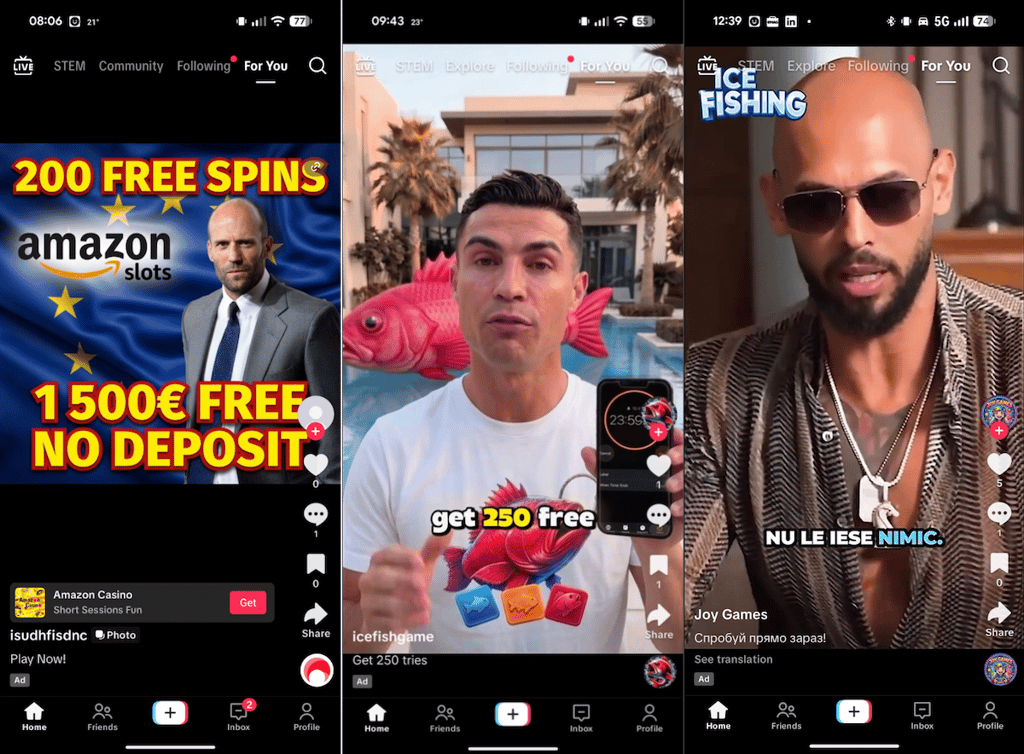
Random TikTok or Facebook accounts are running misleading ads, such as an AI-generated deepfake of Cristiano Ronaldo or other celebrities offering 250 free spins. Platforms quickly take down deceptive ads, but attackers come up with new scenarios.
Many such ads aggressively promote questionable software – potentially deceptive apps in Early Access on Google Play.
“An analysis of Google Play apps installed by Bitdefender users reveals thousands of Early Access applications that appear to include fake casino games and reward apps, as well as titles that may infringe on third-party trademarks and potentially misleading utilities,” Bitdefender, a cybersecurity firm, warns in a new report.





The intended use of the Early Access program is for developers to gather feedback and fix bugs before releasing the finished app. However, deceptive developers abuse it to shield apps from public scrutiny, because users can’t leave public reviews or ratings.
“Early Access removes one of Google Play's most important trust signals,” Bitdefender said.
The cybersecurity company provided screenshots of games trying to copy the Grand Theft Auto franchise – for a while, they even carried the name before changing it to something else. One of these potentially deceptive games had over a million downloads with zero ratings or reviews.
Other games with hundreds of thousands of installs lure people to earn money by helping a chicken cross the road or through ice phishing.



Stay updated with our latest stories and follow us on social media
Be the first to discover new stories, ideas, and updates from our team.
A recurring pattern is that many fake money-making apps promote cash rewards, earnings, or payouts, while serving one ad after another. They slow down the earning progression dramatically as it approaches the withdrawal threshold.
Bitdefender’s data suggest the problem is widespread, and potentially deceptive ads span multiple recurring categories, such as casino games, slot machines, fake reward or “earn money” apps, PDF readers, QR scanners, phone trackers, utility apps, or trademark-themed games.
Some developers release multiple apps, and many games are virtually identical, differing only in minor ways.
The company notified Google about its findings, and the tech giant confirmed it’s investigating the situation.