Hacker dump millions of Expedia customer records: Here is what attackers leaked
The data leak could lead to account takeovers.

Image by Cybernews, source: Unsplash

 Follow us
- Hackers published a 500MB dataset allegedly stolen from Expedia after claiming they stole one billion records.
- Cybernews researchers found emails, booking events, loyalty details, fraud records, traveler profiles, and spending estimates.
- The exposed data could help scammers target travelers with convincing phishing messages tied to bookings.
- Expedia has not confirmed the alleged breach, and Cybernews is awaiting a response.
Key Takeaways by nexos.ai, reviewed by Cybernews staff.
Hackers dump millions of travel records belonging to Expedia customers, exposing their booking information.
Hackers have dropped a massive dataset of over 500MB containing travelers' information allegedly exfiltrated from Expedia, potentially creating a serious privacy nightmare for impacted users.
The n0n ransomware gang first listed the US travel technology giant on its dark web leak site in early October, claiming to have stolen a billion records.
It is likely that negotiations with the company failed, prompting the attackers to publish the dataset and increasing the risk that the leaked data will be exploited in targeted social engineering attacks against travelers.






Expedia Group operates some of the world's best-known travel platforms, including Expedia, Hotels.com, Vrbo, Travelocity, Orbitz, Hotwire, and Trivago.
The company generates nearly $5 billion in revenue and connects millions of travelers with hotels, airlines, car rentals, and other travel services.
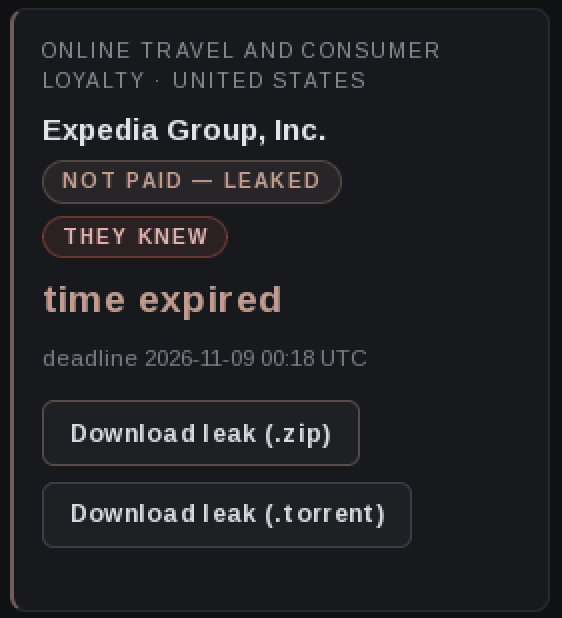
What Expedia data was allegedly leaked?
Cybernews researchers examined multiple CSV files posted by attackers and found several databases containing data linked to Expedia customers.
Researchers identified that the leaked data includes:
- Approximately 150,000 consumer account records with email addresses dating from 2011 to 2018
- bcrypt password hashes
- 100,000 booking order events from 2018, including booking confirmations and customer email addresses
- Approximately 400,000 loyalty program account records dating up to 2025, containing customer email addresses, program details, and plan names
- Around 200,000 cruise passenger emails, with a filename indicating they are dated October 2024
- Approximately 500,000 fraud evaluation records, containing email addresses and associated statuses
- Around 120,000 traveler profiles, containing email addresses and timestamps
- Approximately 350,000 records containing reference information that could help connect different datasets and build more detailed customer profiles
- Around one million records describing estimated customer spending patterns on accommodation, car rentals, and other travel services
What are the risks?
The exposed records provide criminals with a treasure trove of sensitive information that could be used for targeted scams.
Travelers' emails and booking information could enable scammers to build detailed profiles of individual victims and target them with convincing phishing messages.
Scammers can send messages pretending to come from Expedia, hotels, airlines, or cruise operators.
“There’s a wealth of info that can be leveraged for social engineering campaigns. Additionally, the leaked emails could be combined with other breached datasets to build detailed profiles of individuals and track their current travel plans,” researchers said.
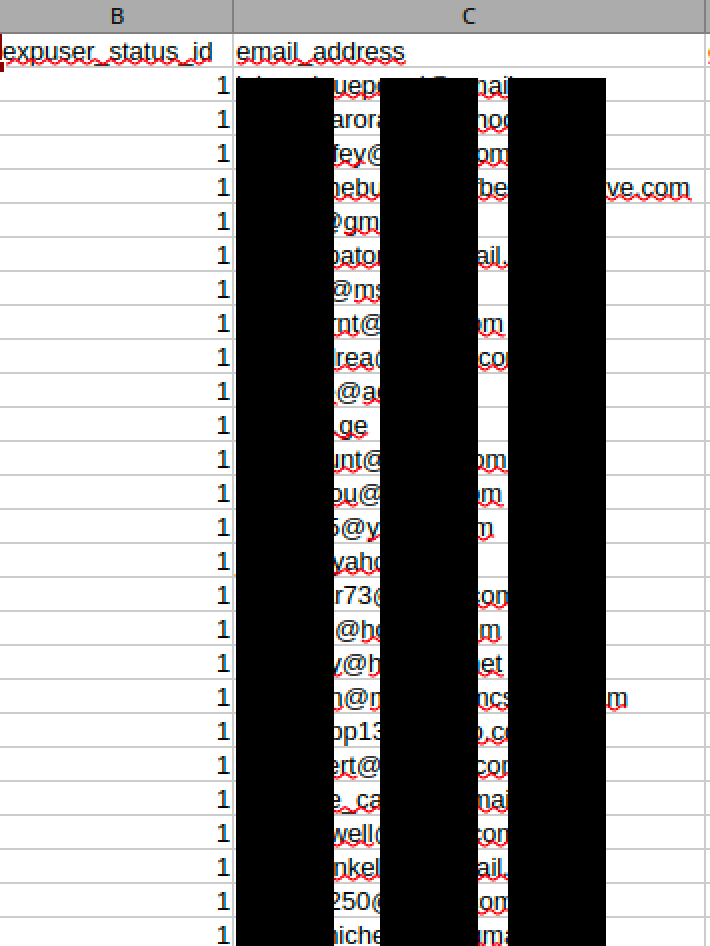
The leaked archive includes old account credentials and bcrypt password hashes. While bcrypt is designed to make password cracking more difficult, stolen hashes can still become a target for attackers attempting to recover the original passwords.
Forgotten accounts pose a particularly high risk. Customers who set up Expedia accounts years ago may have never updated their passwords. If those credentials were reused across other services, attackers could gain unauthorized access to unrelated accounts.
“Account takeovers are a major threat as well. Old, inactive accounts are often forgotten by users, meaning their passwords likely remain unchanged to this day,” the Cybernews research team added.
Cybernews has previously reported on the alleged Expedia data breach. We have not received any confirmation from Expedia at this time.
We reached out again and will update the article once we receive a response.


Stay updated with our latest stories and follow us on social media
Be the first to discover new stories, ideas, and updates from our team.