Data leak exposed 150 million Kik images, some depicting kids: should you be worried?
Who is accountable when a company cannot be reached about a leak?

Messaging app Kik allegedly left a database exposed. By Cybernews.

 Follow us
- A researcher found an exposed database tied to Kik with about 75 million unique images.
- Most images appeared to show children or teenagers; 66 in a 2,000-image sample appeared to contain CSAM.
- The researcher reported suspected CSAM to NCMEC and the Connecticut Attorney General’s office.
- Kik’s parent company did not respond, and it remains unclear how long the images were exposed.
Key Takeaways by nexos.ai, reviewed by Cybernews staff.
Upon discovering a data exposure containing millions of images linked to the popular app Kik, a cybersecurity researcher observed that the vast majority depicted children or teenagers. Furthermore, an analysis of a 2,000-image sample revealed that 66 of them appeared to contain child sexual abuse material (CSAM).
According to Jeremiah Fowler, a non-password-protected and unencrypted database contained a little more than 150 million images.
They were marked as thumbnails and originals. This means that the database contained around 75 million unique images spanning 2021 to 2026. The images appear to be profile pictures from Kik, a popular messaging platform.
The researcher says the files were hosted in a cloud storage database and could also be viewed in any web browser through the direct hosting URL and a subfolder on the primary Kik domain.






Many images contained CSAM
In his report, shared with ExpressVPN, Fowler points out that the name of the database and the fact that the image resources were also hosted on a Kik-associated subdomain provided strong evidence that the exposed records were associated with Kik.
Kik is far less mainstream than major platforms like WhatsApp or Snapchat. Still, it has approximately 15 million active users and more than 120 million registered users. More than one-third of American teens use Kik today.
Moreover, it’s mostly popular with children, teens, and young adults who are drawn to Kik’s anonymity features.
However, millions of images shared on Kik have long been publicly exposed, Fowler’s discovery indicates. The researcher says that quite a few of those images appear to depict “children, teens, or very young-looking individuals.”
The apparent age of a person in a photo doesn’t actually establish the age of the account folder. They can be an adult who appears younger or someone whose picture has been used by another person.
But, alarmingly, Fowler also saw a large number of images containing nudity or adult-themed content. Additionally, in the sample of approximately 2,000 images, 66 profile images appeared to contain child sexual abuse material (CSAM).


Stay updated with our latest stories and follow us on social media
Be the first to discover new stories, ideas, and updates from our team.
The researcher immediately reported the images containing CSAM to the National Center for Missing & Exploited Children (NCMEC) and the Connecticut Attorney General’s office.
That’s also because in September, the Connecticut Attorney General announced an official state investigation into MediaLab AI Inc., the parent company of Kik, describing the platform as a “predator’s paradise” and a “parent’s worst nightmare” due to severe child safety and moderation concerns.
Kik historically didn’t require users to authenticate their identity with an email or phone number.
Even today, the platform uses no tools to monitor for underage users and relies on reactive reviews – even though data shows that Kik and MediaLab have been reporting suspected CSAM to authorities.
Has your password leaked?
According to Connecticut investigators, Kik has subjected minors to “serious documented online and offline harms” – and the content of the exposed database certainly doesn’t hurt their case.
Radio silence from Kik and MediaLab AI
Fowler is worried about privacy. According to him, there’s a real concern that a large collection of profile images was accessible outside the application without authentication, including to individuals who don’t use the platform.
“Profile images may appear harmless when viewed individually. However, the privacy implications change when millions of images are stored in a publicly accessible database where they could potentially be collected, indexed, analyzed, or redistributed in bulk,” writes Fowler.
While the images don’t contain names, email addresses, or passwords, the faces themselves can be exploited to identify individuals with the help of facial recognition systems leading to impersonation, stalking, or harassment.
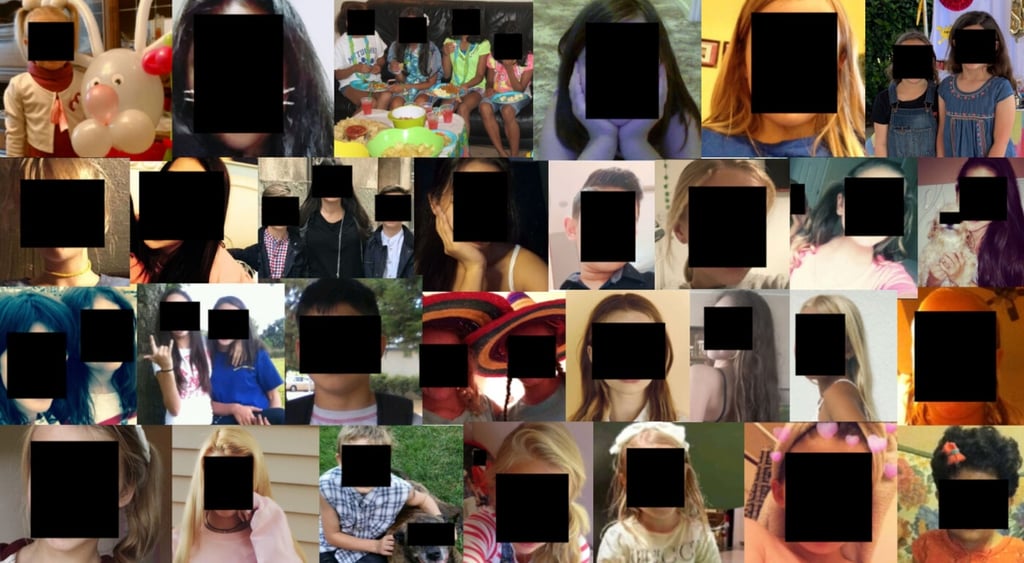
AI could increase the risks since AI-powered tools can easily and swiftly analyze images at scale, identify visual similarities, group photographs by characteristics, and compare faces across different datasets or sources.
“An exposed collection of profile images could hypothetically be used to train AI without the individuals depicted ever knowing or consenting to their images being accessed or used in this way,” Fowler also points out.
Bizarrely, most of the researcher’s emails to Kik and MediaLab bounced. A support ticket got no reply or follow-up.
The good news is that the database was quietly secured several days after Fowler’s discovery. But no one still knows how long the images were exposed or whether anyone else accessed them.
According to Fowler, an internal forensic audit would be useful. Then again, it isn’t even clear whether the database was directly managed by Kik, MediaLab AI, a contractor, or a third-party service provider.
We have reached out to MediaLab AI for comment and will update the article once we receive a reply.