Google urges Android users to update their phones to combat takeover flaw
Google is urging Android users to update now after discovering a critical flaw that could allow attackers to compromise their devices without needing extra permissions or user interaction.

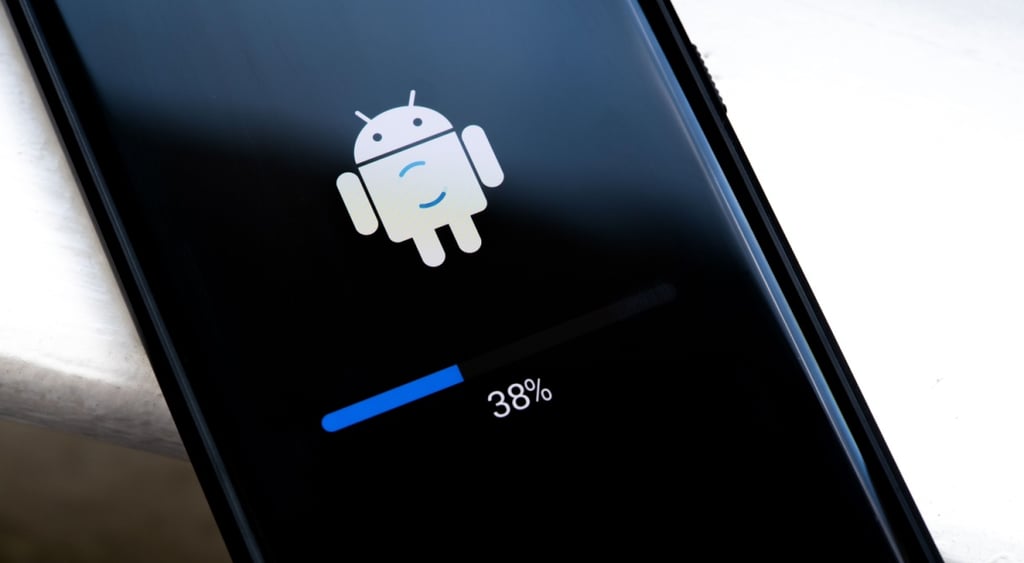
Image by Cybernews.

 Follow us
Google is urging Android users to update now after discovering a critical flaw that could allow attackers to compromise their devices without needing extra permissions or user interaction.
The bug, tracked as CVE-2026-0073, has been patched in Google’s latest security update.






However, protection depends on device manufacturers pushing the fix to users – meaning many Android owners will need to check manually and update their software to be fully protected.
The vulnerability affects recent versions of Android, specifically Android 14, 15, and 16 (including newer interim releases), and can be fixed with the May 1st 2026 security update.






Bug could lead to phone takeover
What makes this vulnerability concerning is that it has been given a zero-click rating (no phishing attacks or social engineering is required), meaning the bug has been labeled “critical.”
According to Google’s Android security bulletin, the bug affects the core part of the Android operating system.
Curious what others think about this story? Contribute your thoughts to the debate below.
Vulnerabilities at this level are particularly serious because they sit beneath apps and user controls and can affect the entire device.
According to Google, the issue could be exploited by an attacker in close proximity or on the same network as the target device.
“The vulnerability in this section could lead to remote (proximal/adjacent) code execution as the shell user, with no additional execution privileges needed. User interaction is not needed for exploitation,” the company said in its advisory.
Developer feature exposed
The weakness lies in Android Debug Bridge (ADB), a built-in feature that allows developers and engineers to communicate with a device from a computer.
While ADB is not intended to be exposed in everyday use, the flaw could allow attackers to access it in ways that open a path.
Adam Boynton, senior enterprise strategy manager at Jamf, said this developer tool was clearly never meant to be exposed or accessible on live devices in a way that attackers could exploit.
“May’s Android security bulletin is light in volume but notable in shape. The single critical issue, CVE-2026-0073, allows remote code execution with no user interaction required, exploiting a debug interface that should never have been a production attack surface.
The security expert added that the flaw reflects a pattern seen in more advanced forms of mobile surveillance.
“It is the same architectural pattern commercial spyware operators have built mobile exploit chains on for years: system-level access, no user action, no obvious indicator.”Adam Boynton, security expert, Jamf.
Limited visibility for users, the best thing to do is update
Because the vulnerability does not require hackers to interact with users or trick them into clicking links or downloading apps, it is hard for users to avoid these types of threats.
Boynton said the only protection depends on ensuring devices are kept up to date and, for high-target users, monitored at the system level.
“The defenses that work are device-level, including visibility into what is running, enforcement of patch state, and the recognition that the phone in an executive’s pocket is as much of an enterprise endpoint as the laptop on their desk,” he said.
No known exploitation, but concerns remain
Google said it was not aware of any active exploitation of CVE-2026-0073 at the time of disclosure, although the company has faced a series of recent security issues affecting Android.
In March, it confirmed that a separate flaw, CVE-2026-21385, had been actively exploited. That flaw, affecting the Qualcomm graphics component, could allow access to sensitive data stored in memory. Google did not disclose details of those attacks.
Has your password leaked?
Google said it would release source code fixes for CVE-2026-0073 to the Android Open Source Project (AOSP) within 48 hours of this month’s bulletin, which was published on Monday. This should enable device manufacturers to incorporate the patch in their own updates.
As with previous releases, Pixel devices are expected to receive the first update, with other manufacturers, including Samsung, rolling out patches on a staggered basis.
The advice is to install updates on these devices as they become available.
Unlock more exclusive Cybernews content on YouTube.